The history distinguishes documented findings from unresolved questions about Techstar’s products, business relationships and personnel.
Company Snapshot
- Company: Techstar, Inc.
- Florida filing: July 8, 1981
- Document number: 694060
- Verified officers: William E. Olliges; Betty Lou Olliges
- Latest verified arcade product in the present catalog: Lizard Wizard (1985)
- Corporate status: Involuntarily dissolved November 4, 1988
- Verified commercial videogame families: Eyes, Macho Mouse, Mr. TNT / Gorkans, The Spirit of ’83 / Spirit Casino lineage, Trivia Quest, Lizard Wizard
- Confirmed limited operator shipments: Rockball and It were shipped to operators in the Miami / Fort Lauderdale area; broader sales and distribution remain unknown.
- Other verified or evidence-backed projects/products: CCT-1 Convertible Countertop Cabinet, Suzie & the Shogun / Sasuki & the Commander, De’ Fuzz / Da’ Fuzz, and the Cards-n-Quiz / Little Las Vegas development lineage.
1. Techstar’s short and varied arcade business
Techstar was a small Florida arcade company that left behind a surprisingly difficult history. Its name appears on games, conversion kits, circuit boards, advertisements, copyright records, and licensing agreements, yet those appearances do not always mean the same thing. Sometimes Techstar controlled the rights to a game. Sometimes it marketed or licensed someone else's work. In other cases it sold hardware or conversion products. At least some game software and specialized arcade hardware were also created directly for the company.
The corporate trail begins in Florida on July 8, 1981, when Techstar, Inc. was filed as a Florida corporation. William E. Olliges served as president and was also the company's registered agent. Betty Lou Olliges was another officer and director. Surviving records place the company in the Miami area, and Techstar-marked arcade hardware from the period also carries a Miami identification.
Its recognizable arcade activity was concentrated into only a few years. The surviving game record begins in the early 1980s, with titles and projects such as Eyes, Macho Mouse, Mr. TNT, Gorkans, Rockball, and The Spirit of '83. The latest verified Techstar arcade product currently known is the 1985 Lizard Wizard conversion kit. The corporation itself remained on Florida's books longer and was not involuntarily dissolved until 1988, but exactly when Techstar stopped actively pursuing amusement products is still unknown.
That short catalog is deceptive because Techstar was not simply a conventional arcade developer making every game internally and then placing its name on the cabinet. The evidence instead shows a company working through a web of independent programmers, developers, manufacturers, licensees, and distributors. Names including Digitrex, Amenip, Rock-Ola, Zaccaria, Game Plan, Telko, Sunn International Industries, and even SNK enter different parts of the story. These were separate organizations, and their relationships with Techstar varied from game to game. That distinction matters. Treating every Techstar-associated title as a game "developed by Techstar" would produce a tidy history, but it would also produce the wrong one. The company could be a copyright claimant on one project, a licensing or commercial partner on another, a conversion-kit supplier on a third, and a hardware producer on yet another. Some of the people involved moved through several of these relationships, making the surviving credits even easier to blur together decades later.
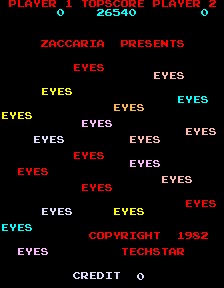
Eyes provides a particularly well-documented example of this business model. In 1982, the maze game’s giant eyeballs, colored dots and pursuing monsters reached the American coin-op market through Techstar’s licensing agreement with Rock-Ola.
The Corporate Record Behind The Name
The surviving Florida corporate record gives Techstar a firmer outline than the games alone might suggest. Techstar, Inc., document number 694060, was filed in Florida on July 8, 1981. The record identifies William E. Olliges as president, secretary and director and as the registered agent; Betty Lou Olliges appears as vice president, treasurer and director. The company's federal identification number is recorded as 59-2103441. Later addresses in the corporate record include 16740 NW 81st Avenue, Miami Lakes, Florida 33016, together with a Miami post-office box. Annual reports survive in the state index for 1985, 1986 and 1987. The corporation was involuntarily dissolved on November 4, 1988.
Those dates are useful boundaries, but they are not a complete operating history. A corporation can remain on the books after its most visible product activity has ended, and no surviving record establishes the exact day Techstar stopped pursuing amusement products. The latest verified arcade product in the present catalog is Lizard Wizard in 1985, while the corporation itself remained legally alive for several more years.
Commercial games, hardware and unfinished projects
The catalog distinguishes commercial videogame products from completed programs with uncertain distribution, hardware, unpublished rights material, and development projects. The current evidence supports six commercial videogame families: Eyes; Macho Mouse; the Mr. TNT / Gorkans family; the casino-game lineage documented publicly as The Spirit of '83 and remembered internally as Spirit Casino; Trivia Quest; and Lizard Wizard. The CCT-1 Convertible Countertop Cabinet is a verified hardware product. Suzie & the Shogun / Sasuki & the Commander is verified unpublished rights material. Rockball and It are now confirmed by firsthand testimony to have been shipped to operators in the Miami / Fort Lauderdale area, although the scale, sales terms and any distribution beyond South Florida remain unknown. De' Fuzz / Da' Fuzz is strongly supported as an arcade-origin or prototype project. Cards-n-Quiz / Little Las Vegas belongs to the Tech-II casino-and-quiz development lineage rather than representing two unrelated games.
Two names that once tempted inclusion are deliberately excluded. Lil' Hustler / Video Hustler remains outside the current catalog because no period Techstar evidence has been found. Eggor is also excluded: technical similarity or a Telko connection is not enough to make it a Techstar title. A hypothetical TECH-I is likewise only an unconfirmed hardware hypothesis, not a product.
Sources for this chapter
Florida corporate records and the game, rights and product evidence discussed in this chapter.
2. Eyes — Digitrex, Techstar and Rock-Ola
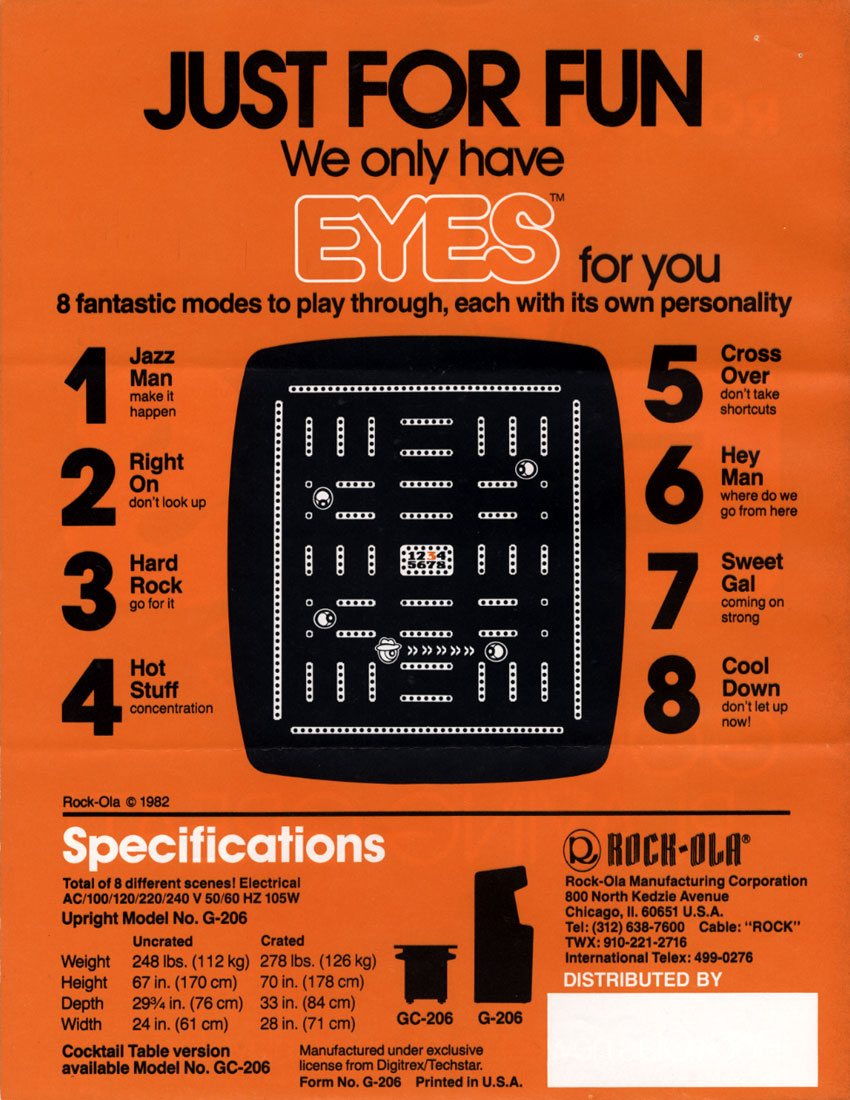
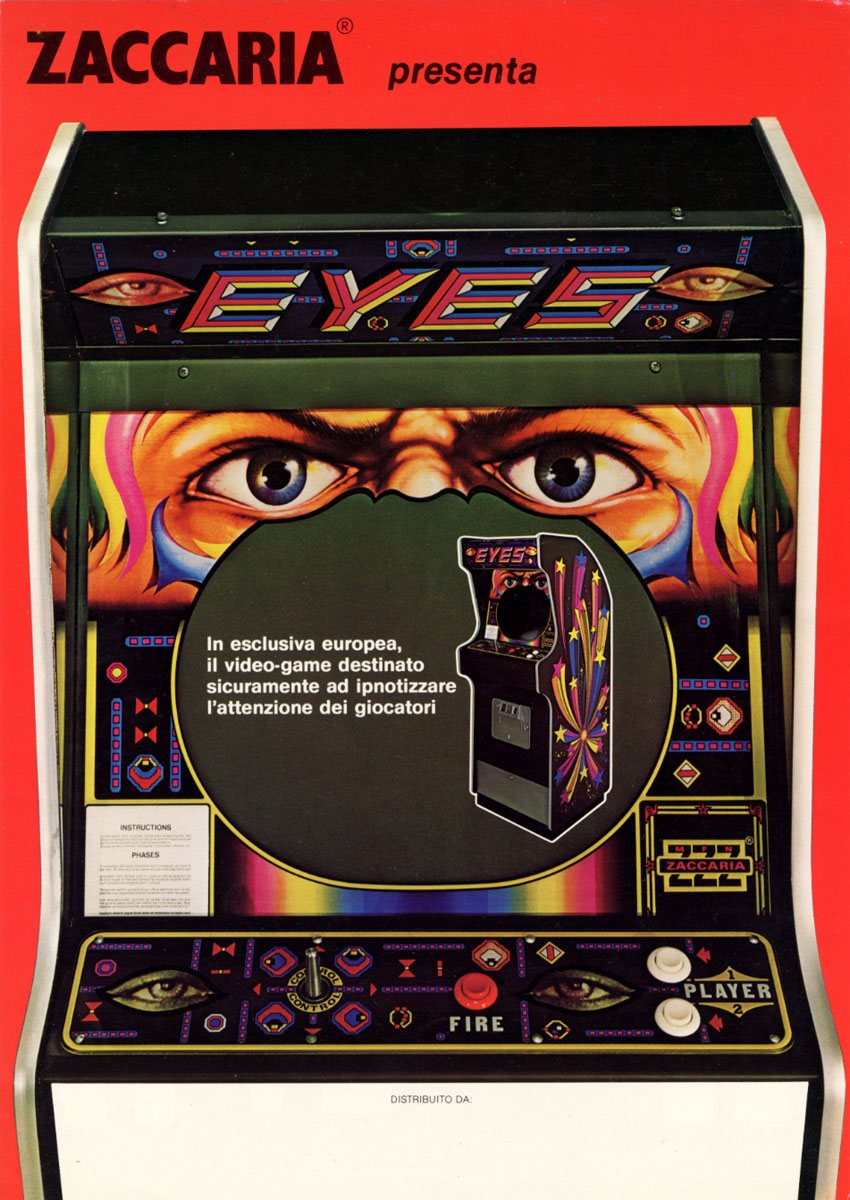
“Zaccaria presents Eyes. A European exclusive: the video game sure to hold players’ attention spellbound.” The lower distributor field reads “Distributed by.”
If one game can be used to explain how Techstar operated, it is Eyes. Released in 1982, the colorful maze game became Techstar's best-documented arcade title and brought the small Miami company into business with two established coin-op manufacturers: Rock-Ola in the United States and Zaccaria in Europe. It also demonstrates why Techstar's history has to be handled carefully. Depending on which surviving cabinet, title screen, advertisement, or database entry is examined, Eyes can appear to be a Rock-Ola game, a Zaccaria game, a Techstar game, or a Digitrex game. Each description contains part of the truth.
Sanchez, Digitrex, And Techstar
The clearest starting point is the original U.S. copyright record. Eyes was registered as an unpublished videogame on March 3, 1982. The record identifies Luis Sanchez, doing business as Digitrex, as the author and identifies Techstar, Inc. as the copyright claimant. That distinction is important. The surviving evidence supports Sanchez and Digitrex as the creative source of the game while Techstar controlled rights to it. It does not justify simply replacing those credits with "developed by Techstar." Digitrex itself was a real Florida corporation, separate from Techstar. Period material occasionally blended the two names commercially, including the wording "Digitrex Techstar" seen within one version of the program, but no surviving corporate record establishes that as the legal name of a combined company. The exact contractual relationship between Digitrex and Techstar remains unknown.
The Copyright Deposit And The Separate Digitrex Corporation
The official copyright dataset contains more than the short author-and-claimant line. The unpublished Eyes registration, PAu000404740, is dated March 3, 1982 and records a deposit consisting of one film reel and a one-page description submitted in lieu of the videogame itself. The author entry reads "Luis Sanchez d.b.a. Digitrex, employer for hire," while Techstar, Inc. is the claimant. The dataset also records Sanchez's birth year as 1948.
Later firsthand recollection complicates any attempt to turn that copyright line into a definitive hands-on programming credit. A former Techstar engineer, whose identity is withheld at his request, did not recognize Luis Sanchez as the programmer he remembered for Eyes; he recalled the programmer instead as a young European man whose name he could no longer remember. Memory decades after the fact cannot overturn the primary copyright record, but the two sources answer different questions. The registration firmly documents Sanchez / Digitrex on the authorship side and Techstar as claimant; the identity of the person who actually wrote the game code remains unresolved.
Digitrex was not merely a trade name floating around Techstar paperwork. Digitrex, Inc., Florida document number F71321, was filed on March 17, 1982, only two weeks after the Eyes registration. Its address was 2760 N. Bay Road, Miami Beach, Florida 33140. Mineya C. Sanchez was the registered agent; Luis Sanchez was listed as president, treasurer and director, and Mineya C. Sanchez as secretary and vice president. Digitrex filed a 1983 annual report and was involuntarily dissolved on November 21, 1984. None of those corporate records merges Digitrex into Techstar.
Rock-Ola Takes Eyes National
The May 22, 1982 Cash Box report and its signing-photo caption identify Bill Olliges as Techstar president and Ed Miller as a Techstar consultant. They describe the Rock-Ola/Techstar Eyes agreement and indicate that sample upright and cocktail machines were expected to begin reaching distributors during May. Rock-Ola Manufacturing Corporation brought an established American coin-op manufacturing and distribution business to the agreement. Rock-Ola did not merely distribute an anonymous Techstar cabinet. Its surviving documentation shows a formal Rock-Ola product. The upright version was sold as Model G-206, while a cocktail-table version was offered as Model GC-206. Rock-Ola produced sales material, cabinet specifications, parts documentation, and a complete service manual for the game. Its flyer described the machine as manufactured under exclusive license from Digitrex/Techstar.
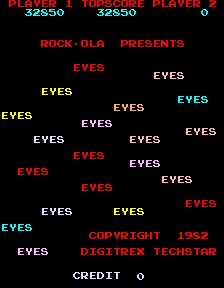
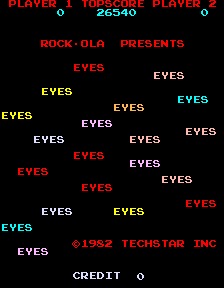
That single sentence neatly captures the division of roles. Sanchez and Digitrex stand behind the game's authorship. Techstar appears as the rights holder and licensing party. Rock-Ola manufactured and sold its own implementation of the game. The distinction becomes even clearer on the machine itself. Surviving U.S. program versions begin with "ROCK-OLA PRESENTS," but the copyright wording underneath varies. One preserved version credits "COPYRIGHT 1982 DIGITREX TECHSTAR," while another simply displays "©1982 TECHSTAR INC." These variations are evidence of different surviving program sets and commercial presentations. They are not evidence that Rock-Ola suddenly became the original developer.
Eight mazes and a distinctive pursuit game
Eyes belongs to the crowded family of early-1980s maze games that followed Pac-Man, but its presentation is difficult to mistake for anyone else's. Rock-Ola advertised eight different scenes, each with its own maze layout and escalating difficulty. The flyer even gave the stages playful names such as Jazz Man, Right On, Hard Rock, Hot Stuff, Cross Over, Hey Man, Sweet Gal, and Cool Down. The maze display, giant eyeball imagery, vivid colors, and ability to attack enemies gave the game a personality considerably stranger than its simple premise suggests. It was exactly the sort of visually peculiar title that could stand out in an arcade already overflowing with maze games.
Rock-Ola leaned heavily into that visual identity. Its orange sales flyer surrounds the gameplay screen with the enormous word EYES, while the cabinet artwork turned staring eyes into the game's dominant graphic motif.
Eyes Goes To Europe
Italian manufacturer Zaccaria produced a licensed European version of Eyes and gave it one of the most elaborate cabinet treatments associated with the game. Its advertising explicitly presented Eyes as a European exclusive. The cabinet used enormous painted eyes across the front artwork, a heavily decorated control panel, and a marquee that transformed the title into a large geometric logo. Zaccaria's flyer also shows that the company was selling the game as a distinctly Zaccaria product rather than simply importing a Rock-Ola cabinet. The program reflects the same regional adaptation. Where the American sets say "ROCK-OLA PRESENTS," the preserved European program says "ZACCARIA PRESENTS." The underlying copyright remains with Techstar.
These regional presentations reflect different responsibilities within the same licensing network. Rock-Ola manufactured and presented Eyes in the United States, and Zaccaria did so in Europe. Techstar held the rights, while Sanchez and Digitrex remained the documented source of the work.
A Small Hardware Mystery
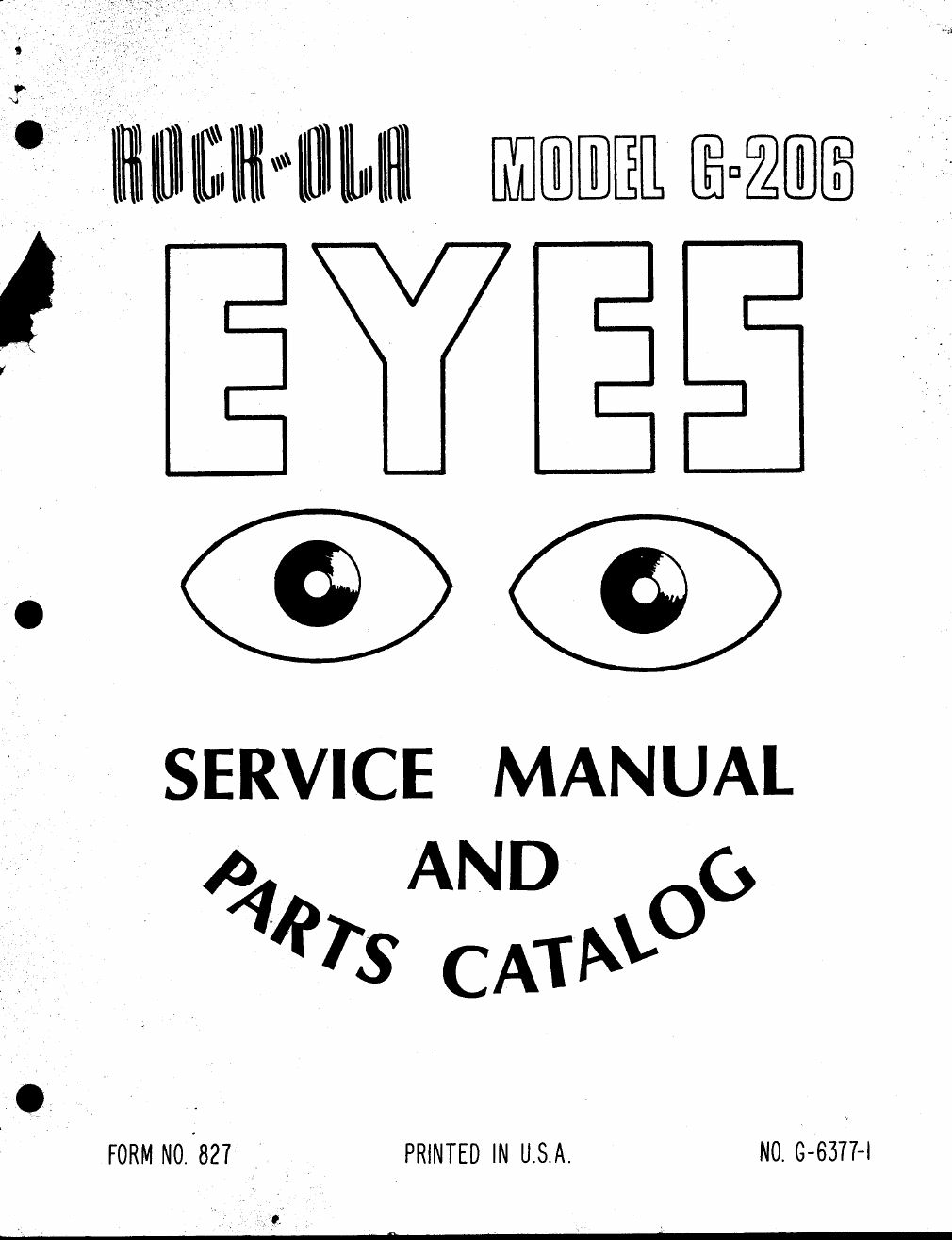
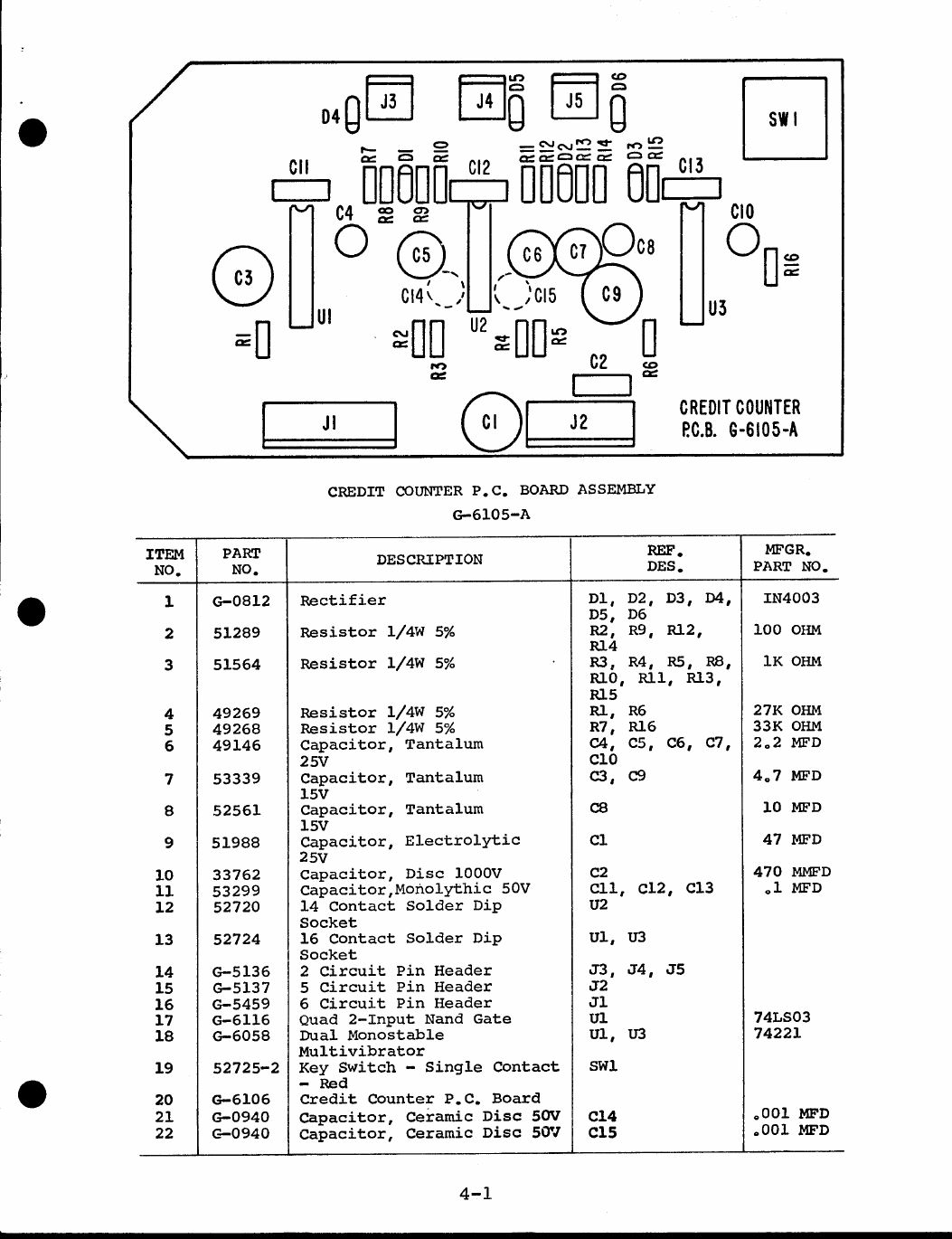
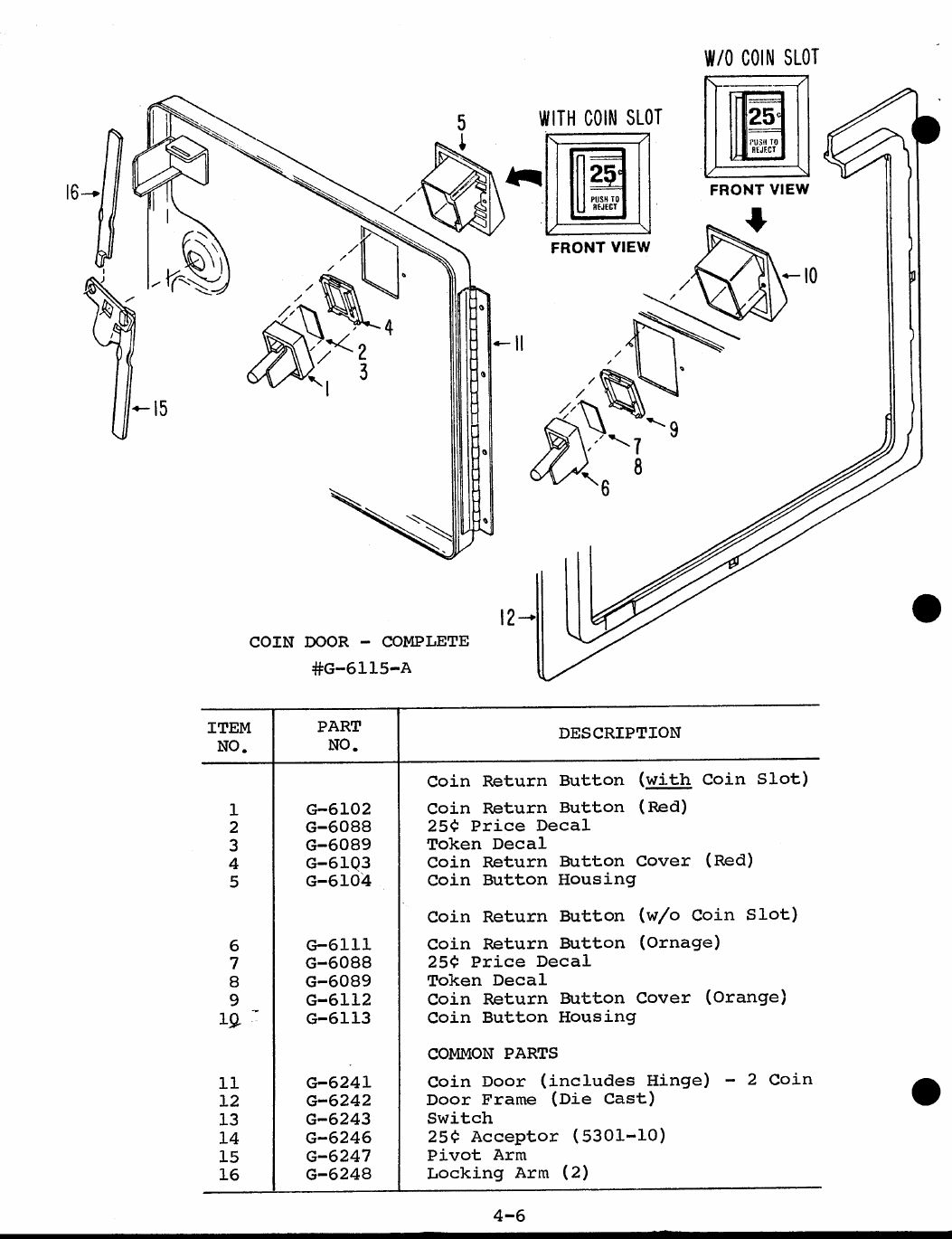
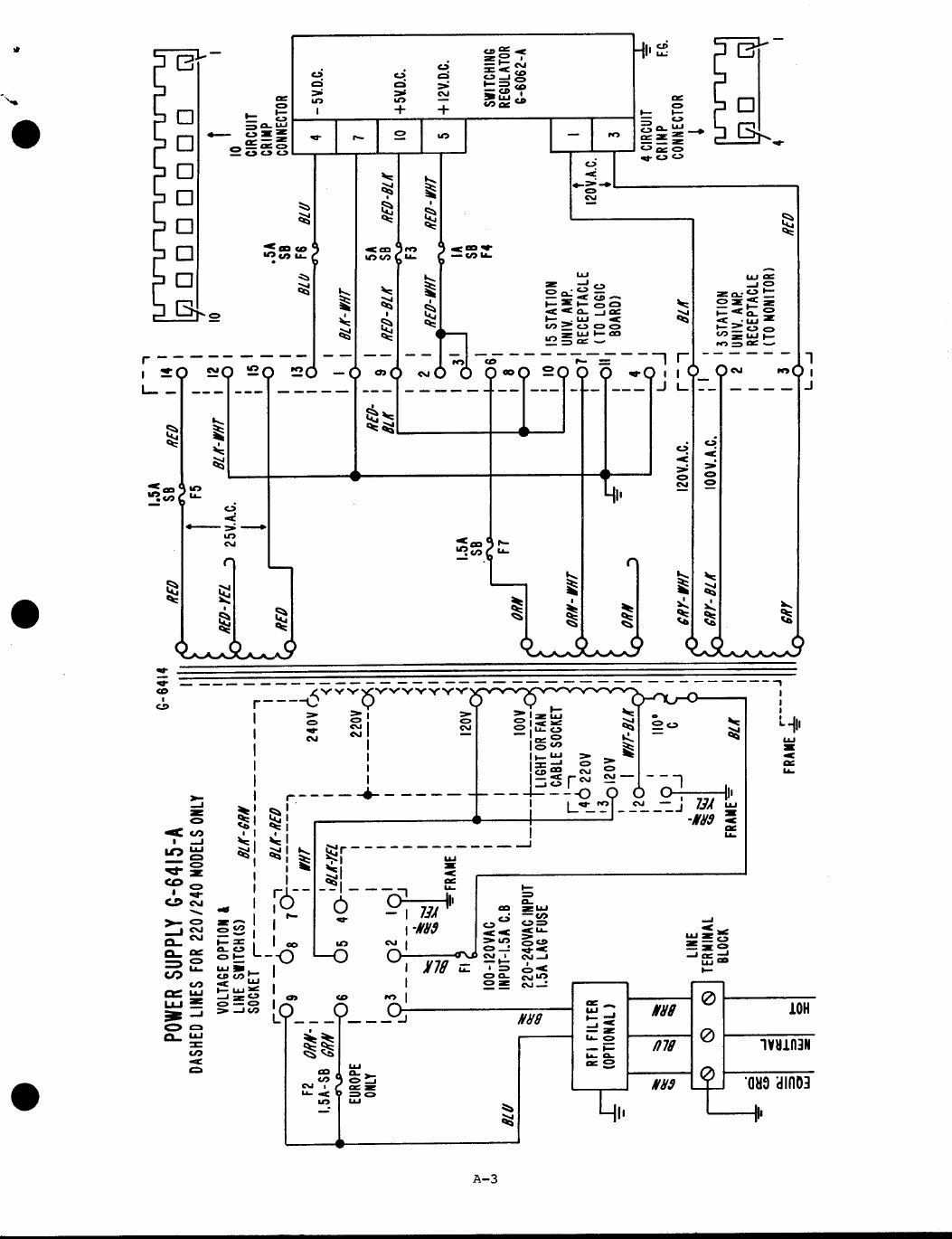
Rock-Ola’s service documentation uses G-6390-A for the game-board assembly and G-6395-A for the complete game PCB in cabinet and replacement-parts contexts. These are different levels of parts identification within the documentation; the manual does not establish separate board generations. A surviving collector-documented Eyes board introduces a separate curiosity. It carries markings including TECHSTAR-III, Miami 1982, and Made in Japan, along with a Rock-Ola identification sticker and a handwritten C6390-A notation. That board is important, but its meaning is not yet known. Techstar later used other numbered hardware markings, including TECH-II, but there is currently no evidence proving a neat TECH-I, TECH-II, TECHSTAR-III sequence. That hardware puzzle belongs later in the Techstar story.
Survivor Evidence, With Limits
Collector restoration evidence also suggests that at least one Rock-Ola Eyes cabinet may have involved cabinet reuse or conversion, but a single survivor cannot be turned into a factory-wide policy. The broader conclusion is deliberately narrow: individual cabinets can preserve histories of repair, conversion and reuse that do not necessarily describe how every unit left the manufacturer.
The Game That Explains The Company
There are still things we do not know about Eyes. No reliable production total has been found. The company that physically fabricated the Techstar-marked Japanese boards remains unidentified. The exact contract between Sanchez, Digitrex, and Techstar has not survived in the accessible record.
Eyes provides an unusually complete record for a Techstar title: a named creator, Techstar’s documented rights position, a contemporary licensing agreement, two manufacturing partners, multiple cabinet formats, service documentation, advertisements, surviving program variants and physical boards. Together they show how Techstar could be central to a game without writing every line of code or building every cabinet. It could acquire or control rights, arrange manufacturing, license a title into different territories, supply hardware, and connect independent creators with companies able to put machines onto arcade floors.
That arrangement carried a Florida-created game into Rock-Ola cabinets in America and Zaccaria cabinets in Europe. Macho Mouse involved a different combination of companies, with Amenip Corporation supplying the documented work.
Sources for this chapter
U.S. Copyright Office records; Cash Box; Rock-Ola service manual and flyers; Zaccaria flyer; preserved program screens; and collector hardware documentation.
3. Macho Mouse: Amenip, Techstar and Game Plan
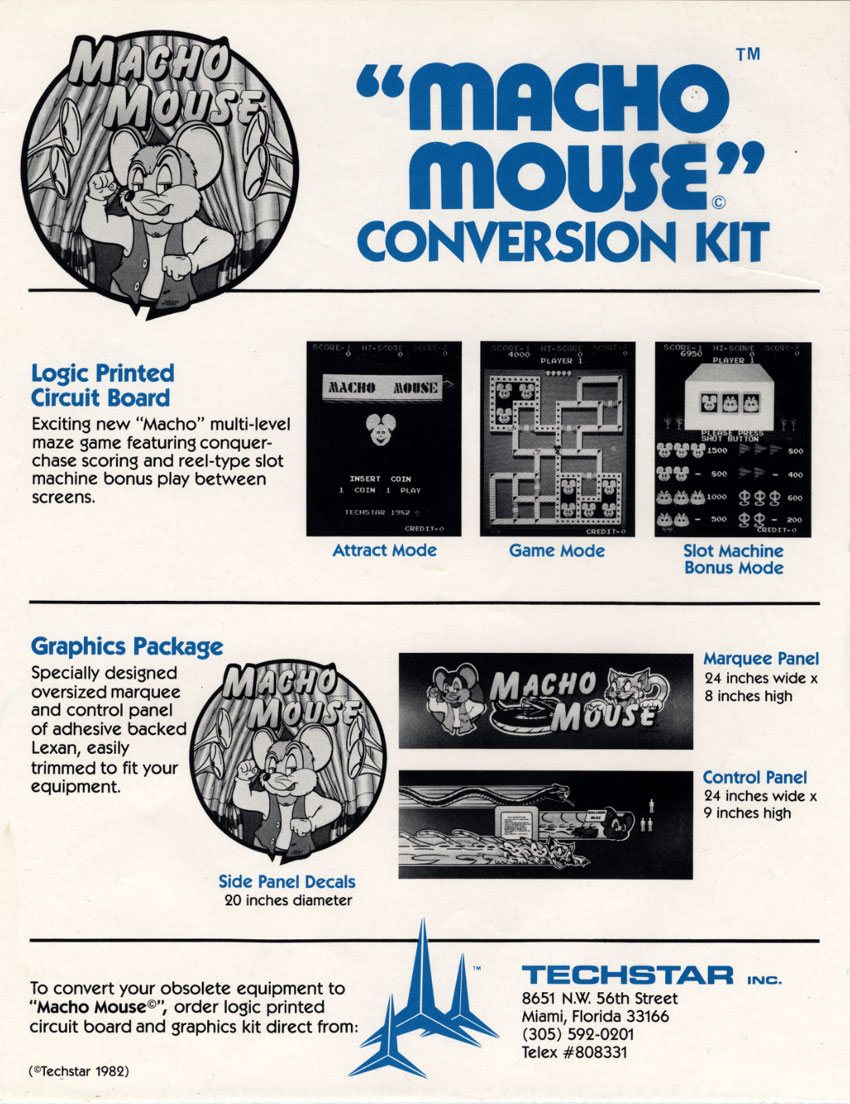
With Eyes, Techstar had worked with an independent creator and then licensed the game to established manufacturers. Macho Mouse followed a different route. This time the surviving evidence points to Amenip Corporation as the source of the game, Techstar as the company packaging and marketing it for the arcade trade, and Game Plan as a documented cabinet and service partner. Three companies again appear around one game, but their roles were not interchangeable.
Amenip Behind The Mouse
The strongest evidence for the game's origin comes from the U.S. copyright record. For Macho Mouse, Amenip Corporation is identified as both the work-for-hire author and the copyright claimant. That makes Amenip's role substantially clearer than the developer identity behind many obscure arcade games from the period. Techstar should therefore not be described as the original developer simply because its name became strongly associated with the arcade version. Instead, the surviving record points to Amenip as the documented source of the work and Techstar as the company that brought it into its own commercial arcade program. This is another example of the distinction that runs throughout Techstar's history. A Techstar-branded or Techstar-marketed machine did not necessarily contain a game written inside Techstar.
Techstar Packages Macho Mouse
Techstar promoted Macho Mouse as an arcade product and prepared it for the conversion market. The surviving Techstar flyer presents the game as a colorful maze attraction built around a cartoon mouse character. The player guides the mouse through patterned pathways while dealing with hostile creatures and other obstacles, giving the game the familiar structure of an early-1980s maze title but with an identity considerably more playful than the staring monsters of Eyes. Macho Mouse also demonstrates Techstar’s interest in conversion products. Kits allowed operators to refresh existing machines by replacing or modifying the game board, artwork, controls, wiring and related components. For a small supplier, this reduced the need to manufacture an entirely new cabinet for every sale, an approach that recurs in Techstar’s later products.
The Exact Registration And What The Trade Ad Says About Play
Macho Mouse was registered as an unpublished work on October 5, 1982 under registration PAu000456896. The deposit is recorded as one videocassette and a four-page description submitted in lieu of the videogame. Amenip Corporation is named both as the work-for-hire author and the claimant. That primary record is the reason Amenip's authorship is treated as firmer than the development credit for many obscure early-1980s games.
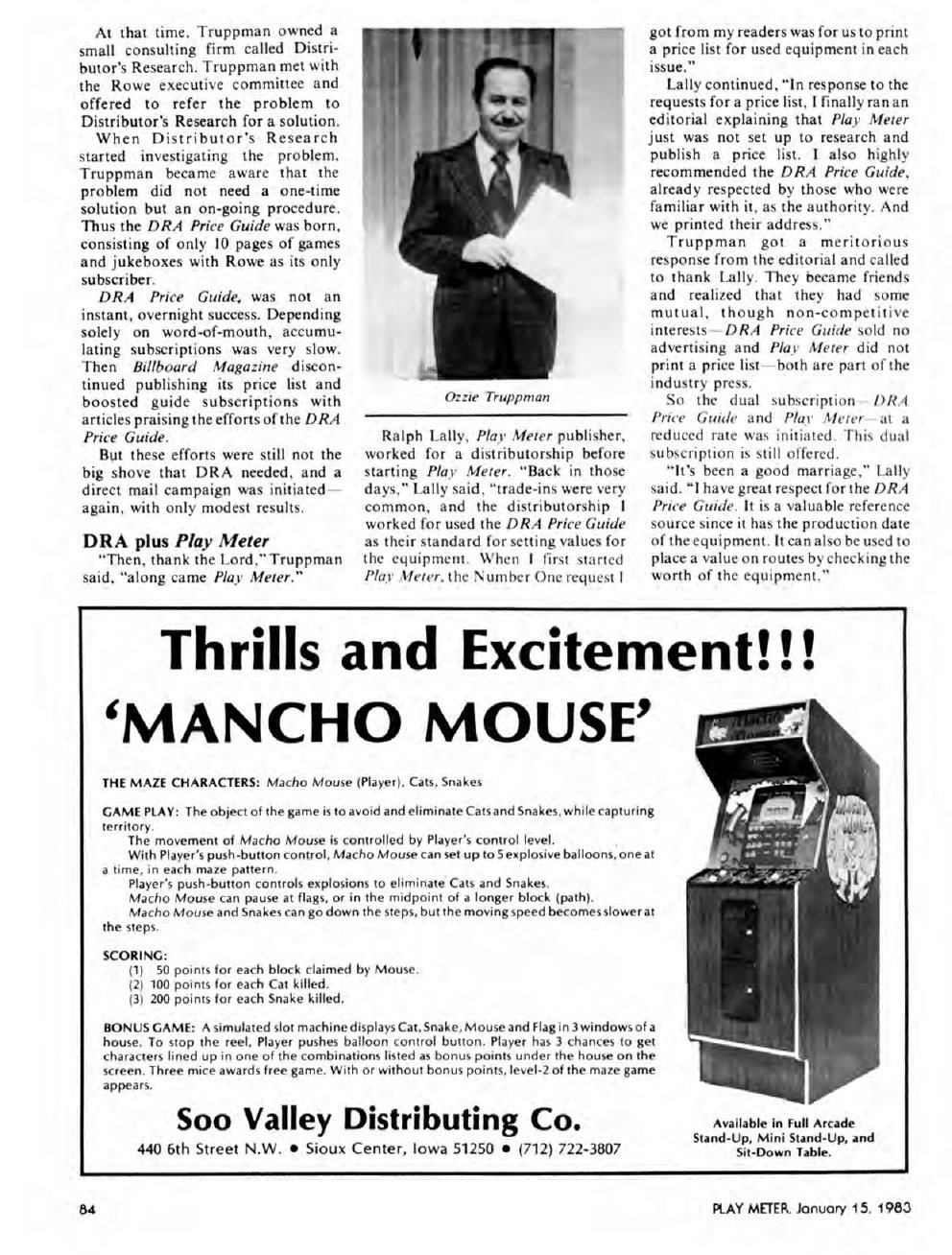
The January 15, 1983 Soo Valley advertisement also preserves gameplay details that are easy to lose when the history is reduced to company credits. Its description names Macho Mouse as the player character and cats and snakes as the principal enemies. The object is to capture territory while avoiding or eliminating them. The player can place up to five explosive balloons, one at a time in each maze pattern, and then trigger the explosions with the button. Macho Mouse can pause at flags or at the midpoint of longer path blocks; both the mouse and snakes can use steps, where movement becomes slower.
The same advertisement gives a simple scoring schedule: 50 points for each block claimed, 100 points for each cat killed and 200 points for each snake killed. It also describes a bonus game built around a simulated slot machine showing cat, snake, mouse and flag symbols. The player stops the reels with the balloon button and has three chances to line up a listed combination; three mice award a free game. Whether or not a bonus is won, the second maze level follows. These details make the surviving advertisement more than a sales notice: it is a concise period description of how the game was meant to be understood by operators and buyers.
Game Plan Enters The Picture
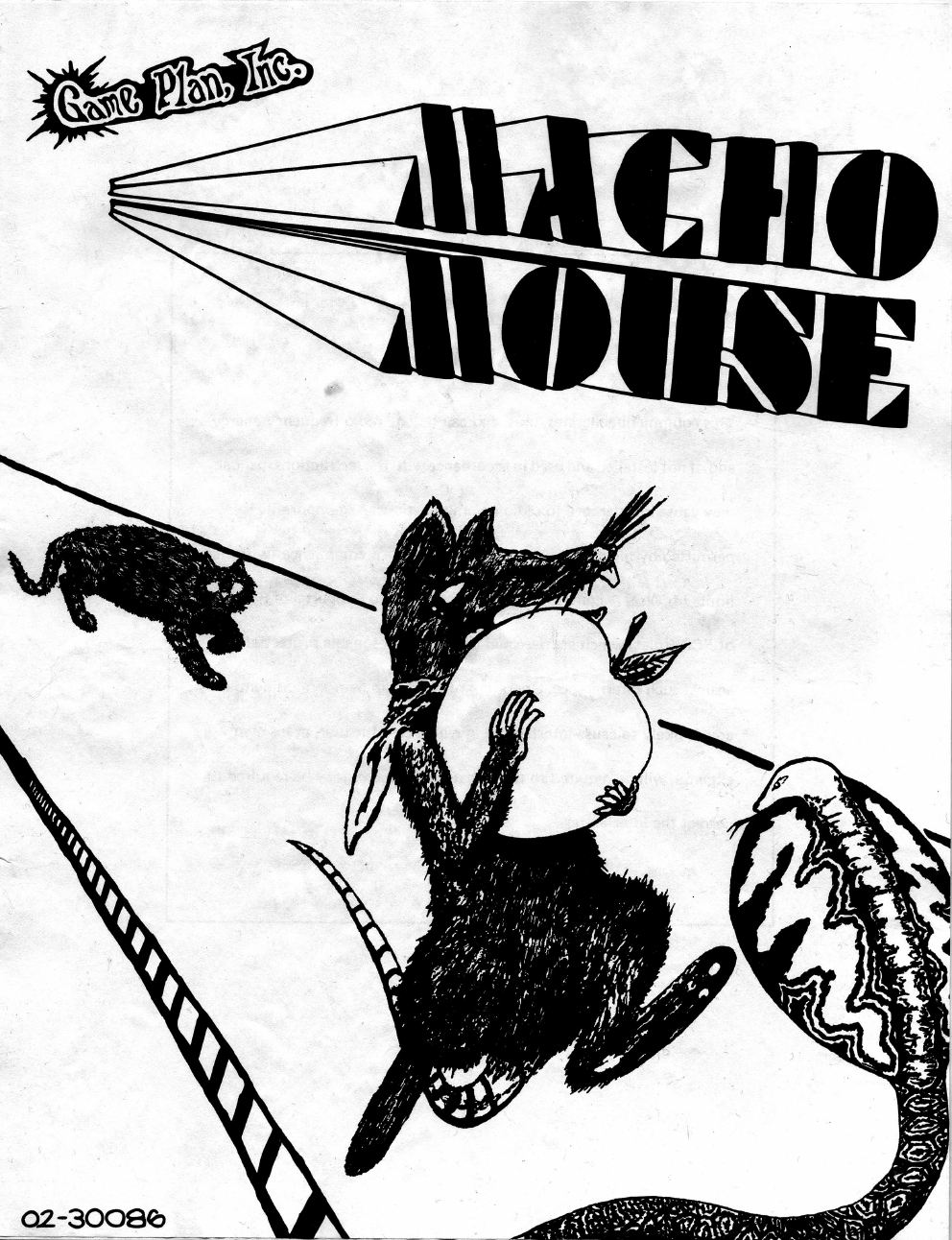
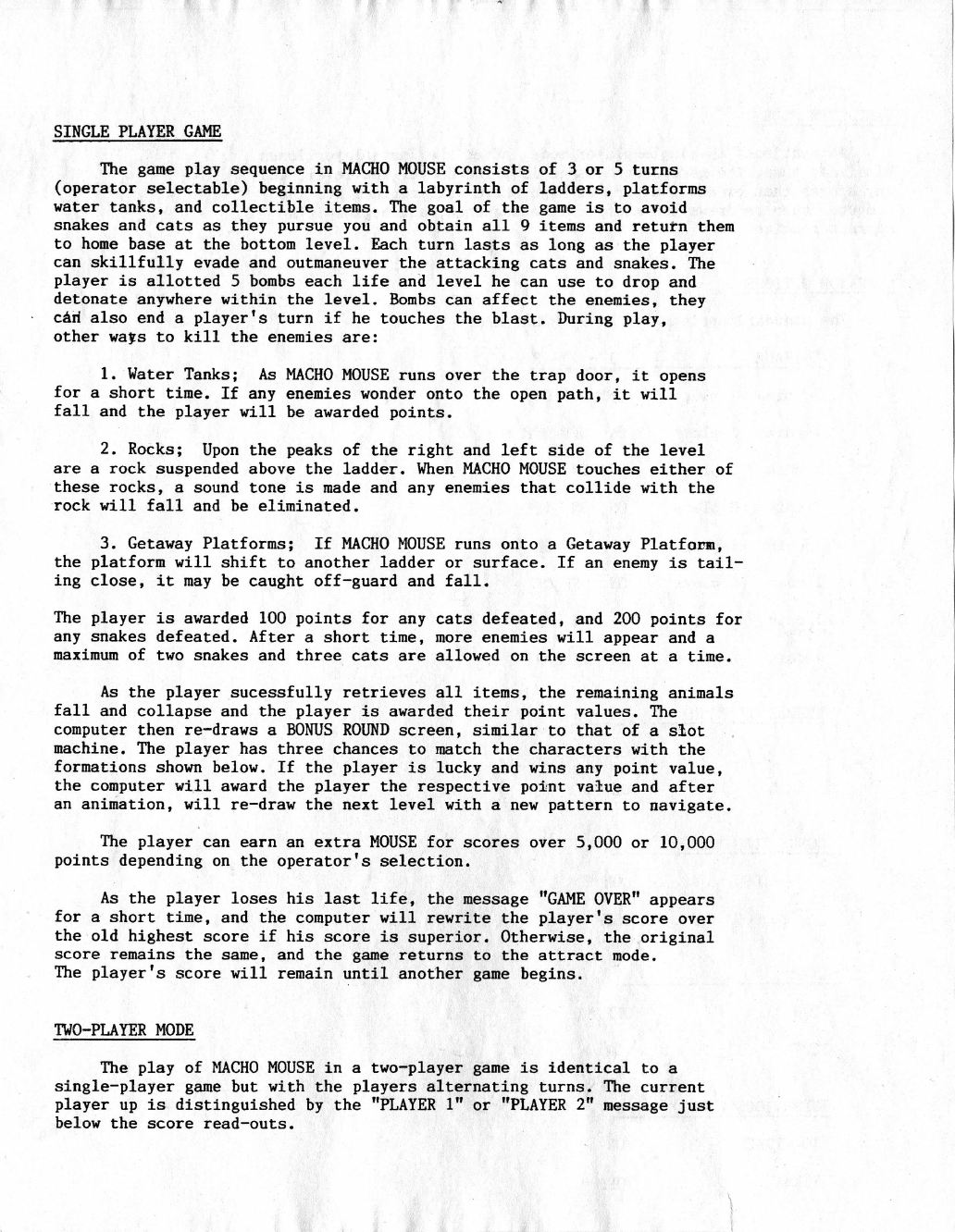
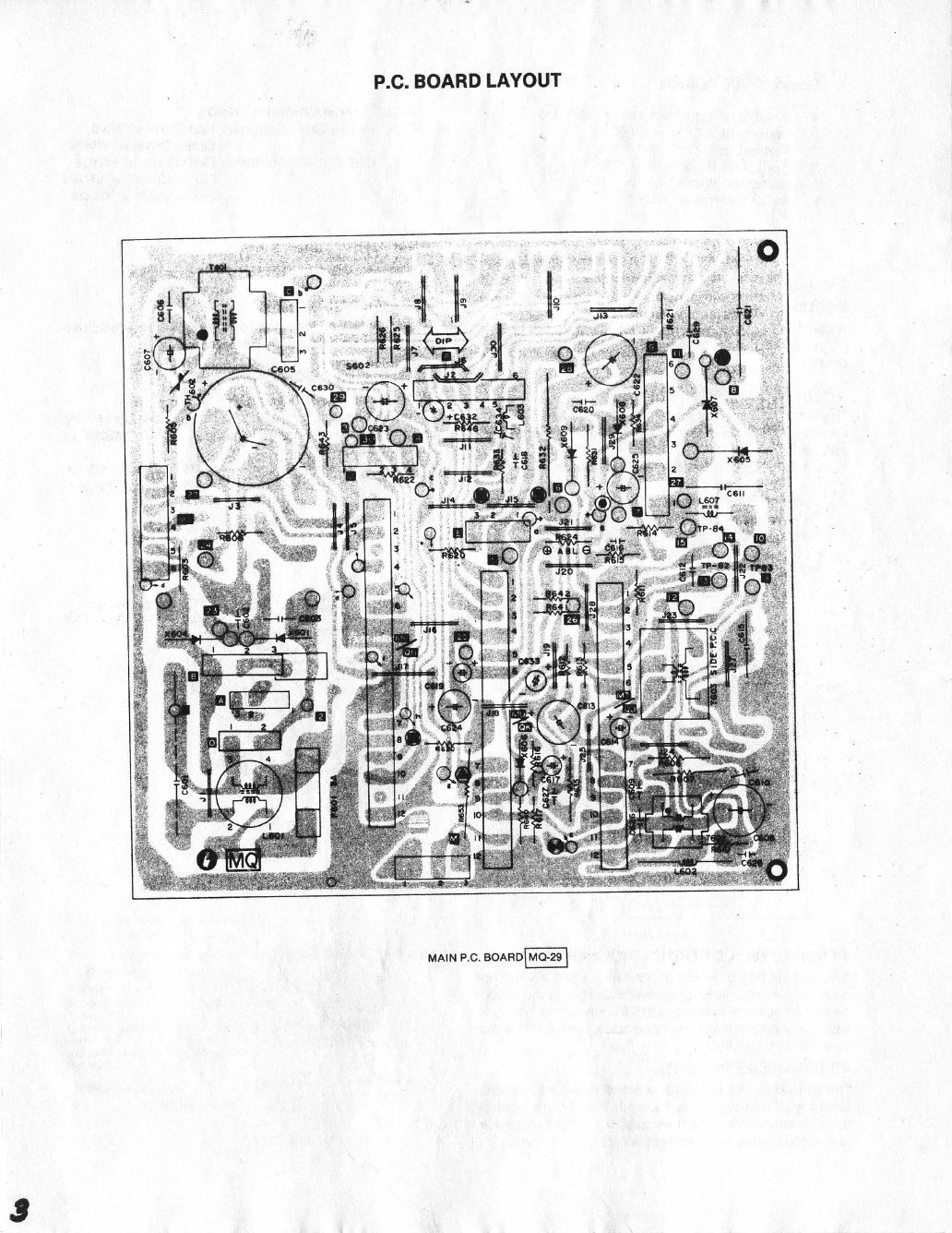
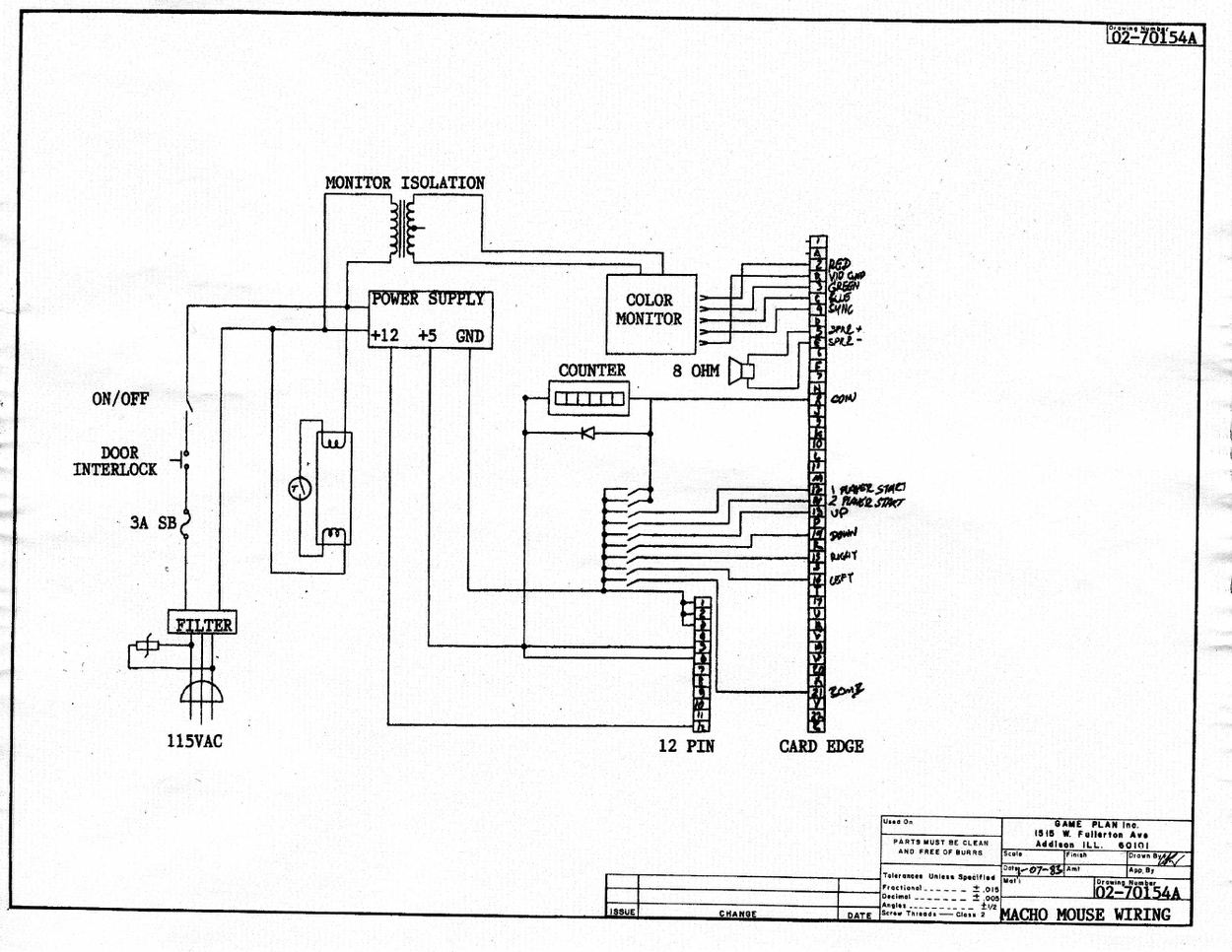
A complete 15-page Game Plan manual provides unusually substantial evidence of that company’s involvement with Macho Mouse. It covers cabinet installation, game operation, servicing, operator adjustments, monitor information and wiring. Its drawing 02-70154A is dated May 7, 1983. Game Plan’s cabinet and service role is therefore supported by formal documentation for installing and operating the machine. The manual does not establish the exact legal arrangement among Amenip, Techstar and Game Plan. No surviving agreement shows whether Game Plan licensed or acquired the game, manufactured every cabinet, provided contract support, or performed some combination of those roles. Its documented involvement should not be expanded into ownership of the entire project.
More Than One Kind Of Cabinet
Contemporary advertising provides another glimpse of how broadly Macho Mouse was being offered. A January 1983 advertisement from Soo Valley listed Macho Mouse in three cabinet forms:
- a full-size upright,
- a mini-upright,
- and a sit-down table.
That is significant because it shows the game being marketed as more than a bare circuit board or hypothetical conversion project. Someone was actively attempting to place Macho Mouse into several forms suitable for different locations. The advertisement does not establish production totals, actual sales, or whether all three cabinet styles came from the same manufacturer. The configurations were offered, but their commercial reach remains unknown.
Production and distribution remain uncertain
This is where Macho Mouse becomes considerably less tidy than Eyes. With Eyes, surviving Rock-Ola and Zaccaria machines, manuals, advertising, licensing coverage, and program variants make a commercial release easy to establish. Macho Mouse leaves a thinner trail. The game itself survives. Techstar promotional material survives. A contemporary distributor advertisement survives. Game Plan's extensive service documentation survives. Together those records demonstrate a real arcade product that progressed well beyond the stage of a name on a planning sheet. What they do not yet reveal is the scale of its success.
No reliable production total has surfaced. No dependable serial-number range has been established. The precise Amenip-Techstar-Game Plan contractual chain is missing. Nor can the surviving evidence tell us with confidence how widely the different advertised cabinet forms actually reached arcade floors. Macho Mouse is therefore a verified Techstar conversion product based on a work created by Amenip Corporation, with Game Plan performing a documented physical-cabinet and service role. Its exact commercial scale remains unknown.
Another Techstar Pattern Emerges
Macho Mouse reinforces the lesson introduced by Eyes, but with a different arrangement of pieces. Amenip created the work. Techstar packaged and marketed the arcade product. Game Plan supplied documented cabinet and service support. Other distributors could then advertise complete machines in several physical forms. Techstar again sat near the middle of the network without necessarily doing everything itself. That operating style helps explain why the company's catalog became so difficult to reconstruct decades later. When the original paperwork disappears, the remaining artifacts can make several companies appear to be the "manufacturer" or "developer" of the same game depending on which piece happens to survive.
Different surviving documents naturally emphasize different participants: the copyright record identifies Amenip, the flyer presents Techstar, and the service manual names Game Plan. An operator encountering the cabinet in 1983 might have remembered any one of them. All three belong in the history. The related Mr. TNT and Gorkans programs present a harder attribution problem, including unresolved release order.
Sources for this chapter
U.S. Copyright Office records; Techstar flyer; Soo Valley advertisement; and Game Plan manual and technical aids.
4. Mr. TNT and Gorkans: one program family, two mysteries
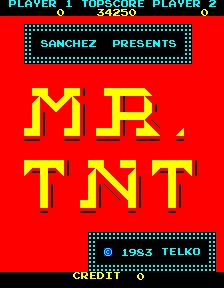
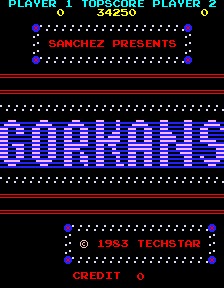
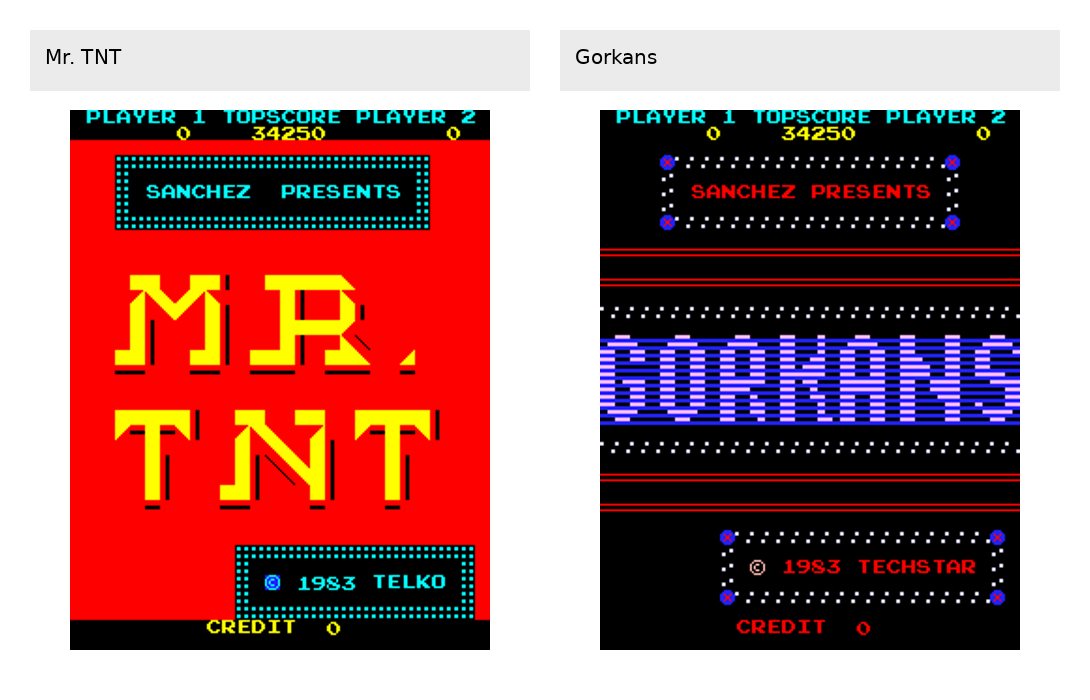
If Eyes demonstrates how several companies could legitimately appear around one Techstar game, Mr. TNT and Gorkans demonstrate something more troublesome. Here we have two closely related 1983 arcade programs, two different company credits, the same unusual "Sanchez Presents" introduction, surviving Techstar-marked hardware, and enough shared design to make their common ancestry obvious. What we do not have is reliable evidence establishing which version came first. That missing piece matters because later sources have often converted a plausible sequence into a fact. Some describe Gorkans as the Techstar original and Mr. TNT as a Telko re-release. It may ultimately prove correct, but the surviving evidence assembled for this history does not yet justify treating it as settled chronology.
A Maze That Destroys Itself
The basic idea behind both games is wonderfully peculiar. The player moves across a grid of connected lines. Traveling along a line destroys or erases it behind the player, which means the maze steadily removes its own escape routes. The player cannot simply reverse direction and retreat along the path just traveled. Objects scattered through the grid must be collected while enemies travel through the same network, consuming pathways of their own. A collision costs a life, but so does maneuvering yourself into a position where no usable path remains. It creates a game that is part maze chase and part self-inflicted trap. Every movement changes the board. The challenge is therefore not merely avoiding enemies. The player has to think about what pieces of the maze will still exist a few moves later. A route that appears perfectly safe can become a cul-de-sac once either the player or an enemy has burned away the wrong connecting line. The two preserved versions dress that idea differently. Gorkans uses its own character and enemy graphics, while Mr. TNT reworks the presentation around explosive imagery. Yet underneath the cosmetic differences lies enough common structure that treating the games as unrelated creations would make little sense. Their shared structure establishes a close relationship, but leaves the direction and circumstances of adaptation unresolved.
"Sanchez Presents"
Both programs introduce the game with “SANCHEZ PRESENTS.” Gorkans accompanies that wording with a Techstar copyright; Mr. TNT uses Telko. Luis Sanchez is strongly supported as the person named: he was the documented author of Eyes under the Digitrex identity and already associated with Techstar. The wording does not establish that he was the sole programmer or designer of either game. It could reflect programming, design, production, rights involvement, or a combination of roles. His involvement is strongly supported; his exact responsibilities remain unknown.
Two Names On Opposite Sides Of The Same Family
Gorkans identifies Techstar directly. Mr. TNT points instead toward Telko, another small Florida operation that became tangled with Techstar's history. The later Telko story remains one of the stubbornly incomplete portions of this research. Contemporary evidence establishes Telko Properties as an active business and places it within the same broader Miami amusement network. Edward D. Miller, meanwhile, is independently documented as a Techstar consultant and later appears in the closely associated Telko Products corporation. No surviving contract explains how Techstar, Sanchez and Telko divided their responsibilities or rights in Mr. TNT. The evidence does not establish a purchase by Telko, a shared legal identity, a parent-subsidiary relationship or a merger. Geographic proximity and overlapping personnel alone cannot resolve those questions.
The strongest interpretation remains that Techstar and Telko were separate but closely connected operations, with Mr. TNT representing one tangible point where their activities intersected.
The TECH-II Board
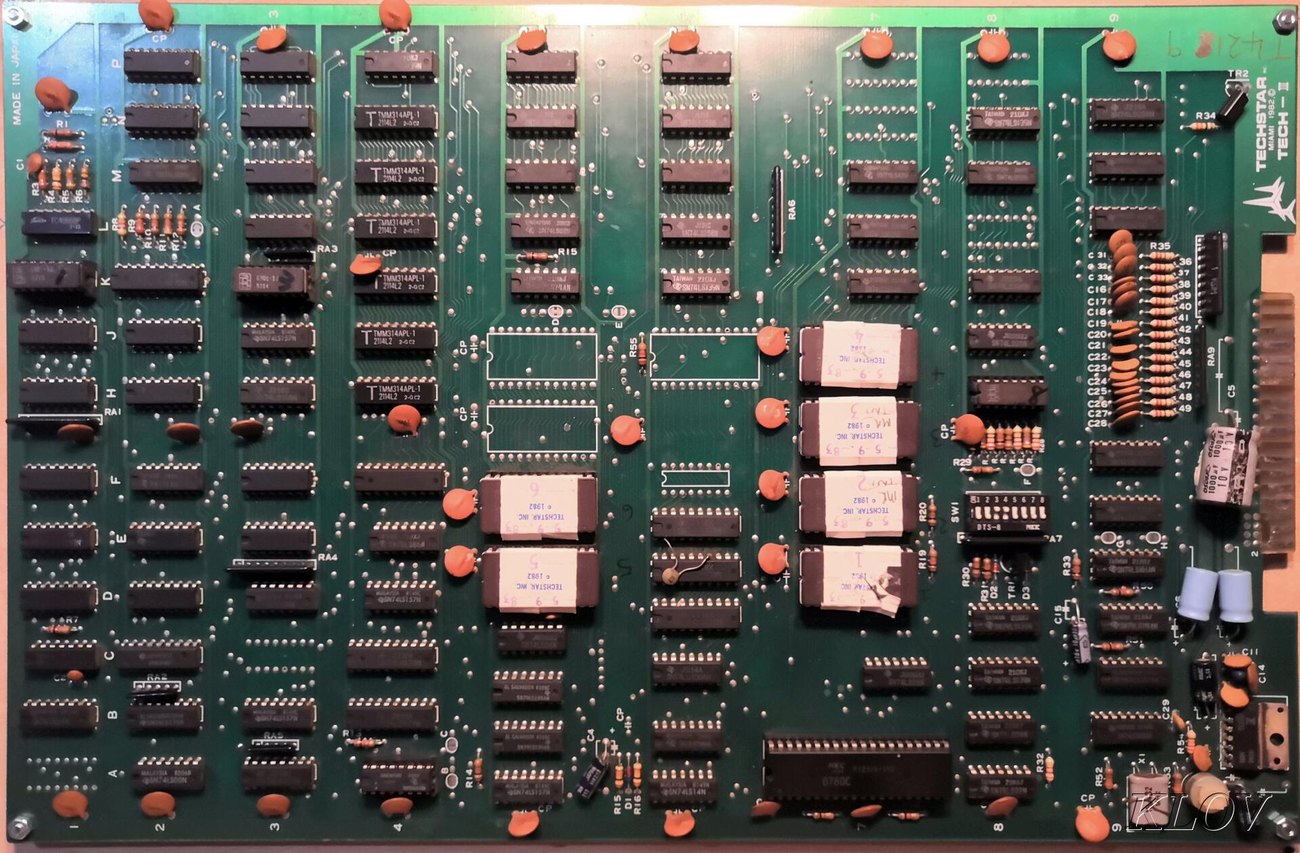
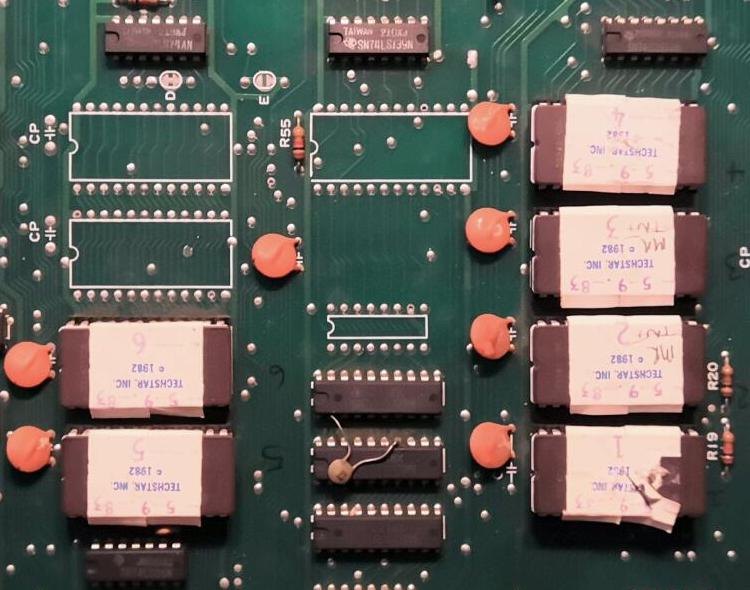
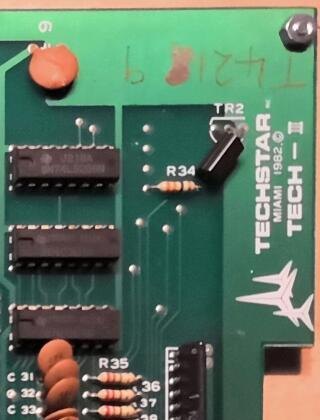
The most intriguing physical artifact associated with Mr. TNT is a surviving circuit-board photograph. The board carries several markings: TECHSTAR MIAMI 1982 TECH-II MADE IN JAPAN ROM labels on the photographed board also carry Techstar identification. That is unusually important because Mr. TNT's software credit points toward Telko while the hardware itself points straight back toward Techstar. The photograph’s ownership history is incomplete, so its identification as a factory artifact remains provisional. The markings visible in it nevertheless provide strong evidence that Techstar hardware existed behind at least some form of the Mr. TNT/Gorkans program family.
Firsthand engineering testimony provides a separate reference to the TECH-II name. A former Techstar engineer, whose identity is withheld at his request, has independently described designing a videogame board called TECH-II for Techstar during 1981-1982. His firsthand account establishes TECH-II as a real Techstar hardware project rather than merely a mysterious marking noticed decades later. What it does not yet establish is whether the photographed Mr. TNT board is exactly the design he described, what revisions existed, or how TECH-II relates to the later TECHSTAR-III marking found on surviving Eyes hardware. The similar names suggest a possible connection, but do not establish a numbered hardware sequence.
Pac-Man-derived hardware
Preservation work provides another useful clue. Current emulator documentation places Mr. TNT and Gorkans within the broad Pac-Man hardware family alongside Eyes and Lizard Wizard. Source notes also observe shared code among Eyes, Mr. TNT, and Lizard Wizard. That does not mean Techstar simply produced Pac-Man bootlegs. The early arcade industry was full of games built around compatible, modified, copied, or derivative hardware architectures. Techstar's surviving boards and conversion products show that it was comfortable working inside that ecosystem. What is useful here is the continuity.
Eyes, Mr. TNT/Gorkans, and eventually Lizard Wizard do not look like three random products accidentally collected under one company name. There are technological threads running between them, even though the exact people responsible for every stage remain only partly visible. The hardware story will become important enough to deserve its own chapter later. For now, TECH-II provides a physical bridge between the software mystery and Techstar itself.
The Telko Paper Trail Around The Program Family
The Telko side of the story is supported by real period records, but those records stop short of giving us the legal bridge everyone would like to see. A February 18, 1984 Cash Box trade-directory listing for Telko Properties gives 8655 N.W. 56th Street in Miami, telephone 305-594-0003, booth 127 and a second booth beginning with 12. The final digit of that second booth number is unreadable in the accessible copy and is not guessed here.
A separate Florida corporation, Telko Products, Inc., was filed later, on September 10, 1985. Its official record names Edward D. Miller, Laura Kreter Miller and Anne L. Gregory among the officers/directors, with the three listed at 8657 N.W. 56th Street - immediately neighboring the earlier Telko Properties address. Telko Products was involuntarily dissolved on November 14, 1986. At the same time, Telko Properties continued activity in its own name into the 1985-1986 period through consumer-electronics trademark and product activity. That overlap weakens any simple theory that Telko Products was merely a renamed Telko Properties.
The strongest defensible interpretation is therefore operational rather than legal: the two Telko entities were probably closely connected, and Ed Miller clearly moved through the same broader business network, but common ownership, merger, succession, parent-subsidiary control or asset transfer has not been proved.
Which One Came First?
Several modern references call Gorkans the original Techstar version and Mr. TNT a Telko re-release with altered characters. MAME currently treats Gorkans as a clone of Mr. TNT for emulation purposes, which points in the opposite naming direction if interpreted casually. Neither convention proves historical release order. An emulator's parent-and-clone structure is primarily a preservation and ROM-management relationship. It is not automatically a publication chronology. Likewise, a later database describing one game as a re-release is useful evidence to investigate, but it cannot substitute for a dated contract, advertisement, invoice, review, copyright registration, or other contemporary record.
No such decisive record has yet surfaced. The surviving programs establish two related implementations, both carrying a Sanchez credit, with Techstar named on one and Telko on the other. Their differences show that the presentation was deliberately revised, but do not reveal the direction of adaptation. Gorkans may have been adapted into Mr. TNT, or the reverse; neither release order is presently established.
Preservation Status Of The Programs
The surviving software record is itself imperfect. Preservation discussions have noted a Gorkans ROM self-test issue, which is another reason not to overstate what one surviving dump can tell us about chronology or production history. The programs are clearly related and physically real; the preservation state does not supply the missing business paperwork.
A Real Release, And A Murkier Companion
There is also an important difference in commercial certainty. Mr. TNT is well enough documented as an arcade release. Surviving software, hardware evidence, collector records, and later preservation all support its existence as a commercial arcade product. Gorkans unquestionably existed as a completed playable program, and its Techstar copyright presentation survives. Its actual commercial reach is harder to establish. No reliable production count has been found for either game. Collector scarcity cannot establish a manufacturing total or support describing Mr. TNT as a small production run.
What the surviving programs and boards establish
Mr. TNT and Gorkans strengthen the evidence for Luis Sanchez’s continued involvement around Techstar after Eyes. They also connect Techstar-associated software with the Pac-Man hardware family, preserve the TECH-II name on photographed hardware, and document a commercial intersection with Telko through the different copyright presentations. The contractual evidence is thinner than for Eyes or Macho Mouse. Programs and surviving hardware carry much of the history where the business paperwork is missing. By 1983, Techstar was also offering a different type of product: the adaptable CCT-1 Convertible Countertop Cabinet and its accompanying multi-game package, The Spirit of ’83.
Sources for this chapter
Preserved title screens; Mr. TNT board documentation; Telko trade and corporate records; and software-preservation documentation.
5. The Spirit of '83 and the CCT-1
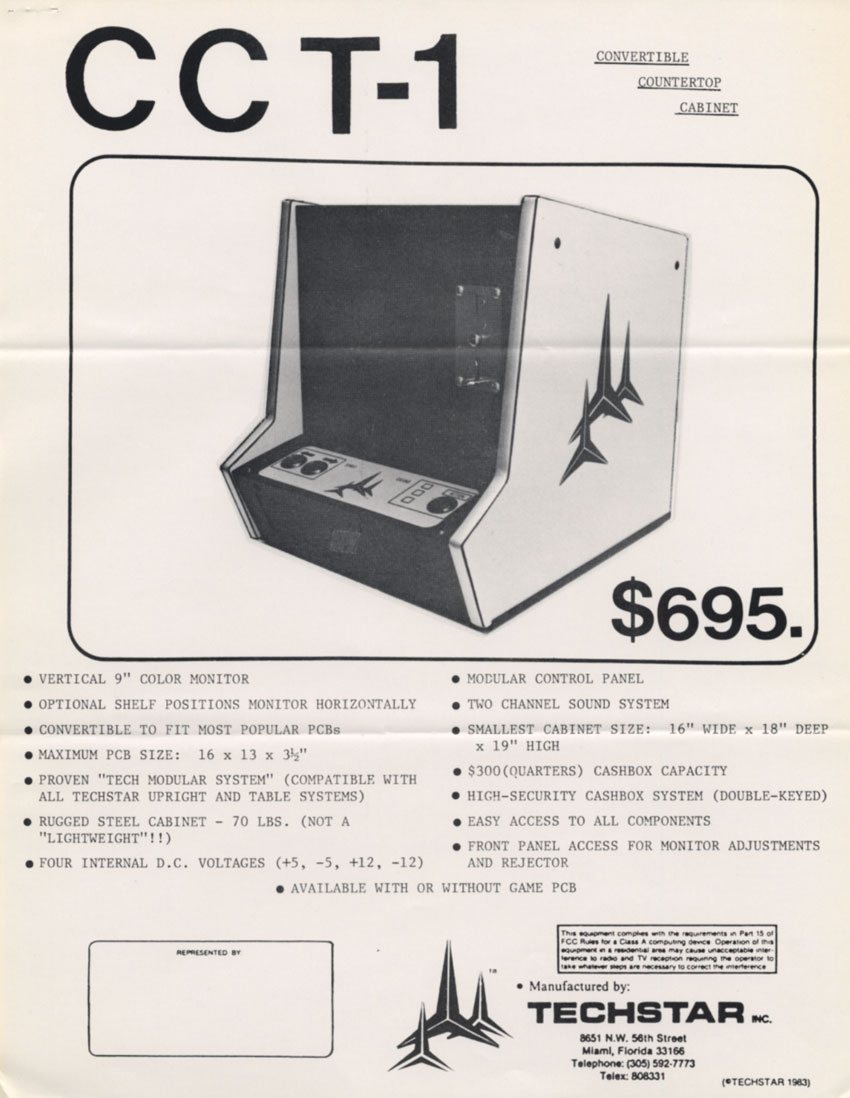
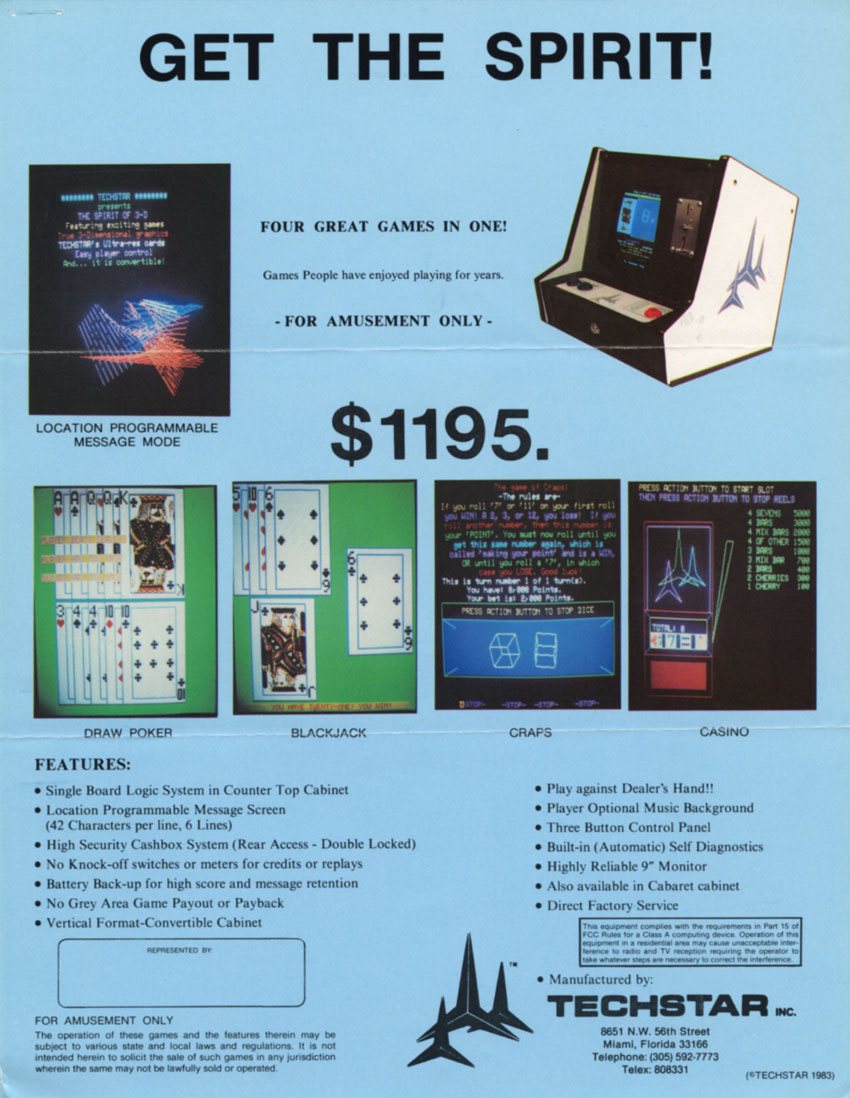
In 1983 Techstar offered a compact, reusable cabinet and a four-game package for bars, restaurants, lounges and other locations where a full upright machine might be inconvenient. The hardware was the CCT-1 Convertible Countertop Cabinet; the software was The Spirit of ’83. They document the company’s interest in selling an adaptable amusement platform as well as individual games.
The CCT-1
A surviving Techstar sales flyer leaves unusually little doubt about the cabinet itself. The CCT-1, short for Convertible Countertop Cabinet, was manufactured by Techstar in Miami and advertised in 1983 for $695. Most importantly, Techstar offered it with or without a game PCB. That makes the CCT-1 more than a cabinet built specifically for The Spirit of '83. It was a product in its own right. The cabinet was a compact steel unit measuring roughly 16 inches wide, 18 inches deep, and 19 inches high, with a nine-inch color monitor. Techstar emphasized its substantial construction, advertising the cabinet at approximately 70 pounds and joking that it was not a "lightweight."
Its design was intentionally modular. The control panel could be changed. The monitor could be repositioned horizontally using an optional shelf arrangement. Techstar claimed the cabinet could accept most popular arcade PCBs, within a specified maximum board size, and provided the common internal DC voltages needed by contemporary arcade hardware. The flyer also promoted a two-channel sound system, a large-capacity coin box, double-key security, front access for monitor adjustments, and easy internal servicing. Techstar was selling the CCT-1 as a general-purpose commercial videogame enclosure that could remain useful after its first game was replaced.
A Cabinet Designed To Change
The Hardware Specification As Sold
The advertised specification combined a $695 steel cabinet, a nine-inch color monitor and a footprint of roughly 16 by 18 inches, with a height of 19 inches and weight of about 70 pounds. The optional horizontal-monitor shelf, replaceable control panel and compatibility with boards within the stated size limit made reconfiguration a central part of the product. The flyer’s sound, coin-box, security and servicing specifications also show that it was intended for routine commercial operation.
The word convertible was central to the sales pitch. Operators in the early 1980s were already familiar with replacing games inside existing upright cabinets, but Techstar built interchangeability into the CCT-1's identity from the beginning. The company specifically promoted what it called its modular system and emphasized compatibility with Techstar upright and table systems. That approach fits remarkably well with the broader Techstar record. The same company appears elsewhere selling conversion products, licensing software into other manufacturers' cabinets, working with standard arcade architectures, and marketing games that did not necessarily originate inside Techstar itself.
With the CCT-1, that flexibility became hardware. If one game stopped earning, the operator was not necessarily left with a useless dedicated countertop cabinet. The machine was intended to accept something else. For a small manufacturer competing in the volatile arcade market of 1983, that was a sensible idea.
Get The Spirit
Techstar promoted The Spirit of ’83 with the slogan “GET THE SPIRIT!” A separate full-color flyer advertised the countertop configuration at $1,195. The package contained four selectable gambling and card-style games:
- Draw Poker
- Blackjack
- Craps
- Casino
The flyer presents the four games as selectable modes within one single-board product. The Spirit of ’83 consequently counts as one Techstar commercial product, while all four modes remain part of its description.
The TECH-II Casino And Quiz Lineage
Firsthand correspondence from the engineer who designed TECH-II supplies the development history missing from the sales flyer. He identifies Cards-n-Quiz, Little Las Vegas, Gamblin’ Duck, Quizzard and the later casino-only presentation as iterations of the same basic TECH-II system rather than unrelated projects. After in-bar testing, the project was renamed and the quiz programming was disabled. He remembers the casino-only identity as Spirit Casino. Surviving Techstar advertising, meanwhile, documents The Spirit of ’83 as a four-game casino package with the same poker, blackjack, craps and casino-style core. The exact naming chronology between Spirit Casino and The Spirit of ’83 remains imperfectly documented, but the firsthand development account establishes that the casino product grew directly out of the Cards-n-Quiz / Little Las Vegas line.
The same source also confirms Trivia Quest as a separate commercial game built from the quiz side of that project. It ran on TECH-II hardware and used software written for the platform; Bill Olliges supplied the trivia questions, which were then coded into the game. In the engineer’s recollection, Olliges directed that the quiz engine be split away from Cards-n-Quiz into its own game entity. That makes Trivia Quest a distinct Techstar commercial product while preserving its shared development ancestry with the casino package.
Gambling Without The Payout
Techstar’s advertising explicitly distinguished the casino-themed software from equipment sold for gambling. The flyer repeatedly describes the system as "for amusement only" and specifically advertises no game payout or payback. It also says the machine lacked operator knock-off switches or meters for credits and replays, features often associated with machines capable of functioning as gambling devices. A legal disclaimer at the bottom warns that operation remained subject to state and local laws. That wording tells us something about the market Techstar was entering. Poker, blackjack, craps, and casino-themed machines could attract regulatory attention even when no money was mechanically paid out. Techstar therefore built the non-payout status directly into its sales message. The casino themes and the advertised amusement-only operation need to be considered together when interpreting the machine.
More Sophisticated Than A Bare-Bones Countertop
The Spirit of '83 also contained several features Techstar considered worth advertising. Operators could program a location message onto the screen, with enough space for several lines of text. That could allow the machine to display a venue name, promotional message, or other local information. Battery-backed memory retained high scores and messages. The system included automatic self-diagnostics. Players could apparently enable or disable background music. A simple three-button control panel handled the games. Techstar also promoted play against a dealer's hand in the card games, rather than reducing the package to a single repetitive poker screen. None of these features would look exotic today, but in a 1983 countertop amusement product they helped position The Spirit of '83 as something more polished than an anonymous gambling-style board dropped into a box.
Countertop Or Cabaret
Techstar did not limit the package to the CCT-1. The Spirit of '83 flyer states that it was also available in a cabaret cabinet. That gives the product two clearly advertised physical formats: the small countertop configuration and a more conventional compact floor-standing cabinet. Again, however, advertising availability is not the same thing as establishing production totals. We know Techstar offered both. We do not yet know how many countertop machines were sold, how many cabarets were built, or how widely either configuration was distributed.
No reliable serial-number study or production ledger has surfaced. The machines' apparent rarity today cannot safely be converted into a tiny production estimate. Equipment used in bars and similar locations was particularly vulnerable to being scrapped, converted, damaged, or simply discarded after its earning life ended. Production and sales totals remain unknown.
Techstar As A Hardware Company
The CCT-1 deserves attention because it complicates any attempt to describe Techstar merely as a game publisher. Here is a cabinet carrying Techstar's own name, Miami address, specifications, price, and explicit "Manufactured by Techstar Inc." identification. That is direct evidence of Techstar marketing hardware as its own manufactured product. Whether every sheet-metal component was physically fabricated inside a Techstar-owned facility is another question. Small arcade companies routinely subcontracted portions of production, and the surviving records do not justify reconstructing a factory floor we cannot document. But commercially, the CCT-1 was unquestionably a Techstar hardware product. Alongside its work in rights, licensing, conversions and outside manufacturing arrangements, Techstar was also an arcade cabinet manufacturer and hardware vendor.
A Glimpse Of A Broader Strategy
Seen alongside the rest of Techstar's catalog, the CCT-1 begins to look less like an odd side project and more like part of a coherent business strategy. Techstar was trying to make arcade equipment adaptable. The same interest in adaptability appears across the catalog. Eyes reached different manufacturers and cabinet styles; Macho Mouse was offered as a conversion product and in several cabinet forms; Techstar-marked boards drew on familiar arcade hardware families; the CCT-1 accepted different PCBs; and The Spirit of ’83 combined several games in one commercial system.
This was flexibility rather than technological standardization in the modern sense. Operators could extend an investment beyond the earning life of one game, while Techstar could participate without reproducing the vertically integrated operations of Atari or Bally Midway. The CCT-1’s historical value therefore extends beyond its recognizability or the number of examples that survive: it documents how Techstar intended operators to deploy and reuse arcade equipment.
And while the CCT-1 was aimed squarely at commercial locations, another part of Techstar's activity leads us back toward a more familiar arcade practice: taking existing cabinets and giving them a new life. That brings us to Lizard Wizard, Techstar's best-documented late conversion-kit project.
Sources for this chapter
Techstar CCT-1 and Spirit of ’83 sales flyers, supplemented by firsthand development testimony from a former Techstar engineer whose identity is withheld at his request.
6. Lizard Wizard: Techstar's late conversion-kit phase
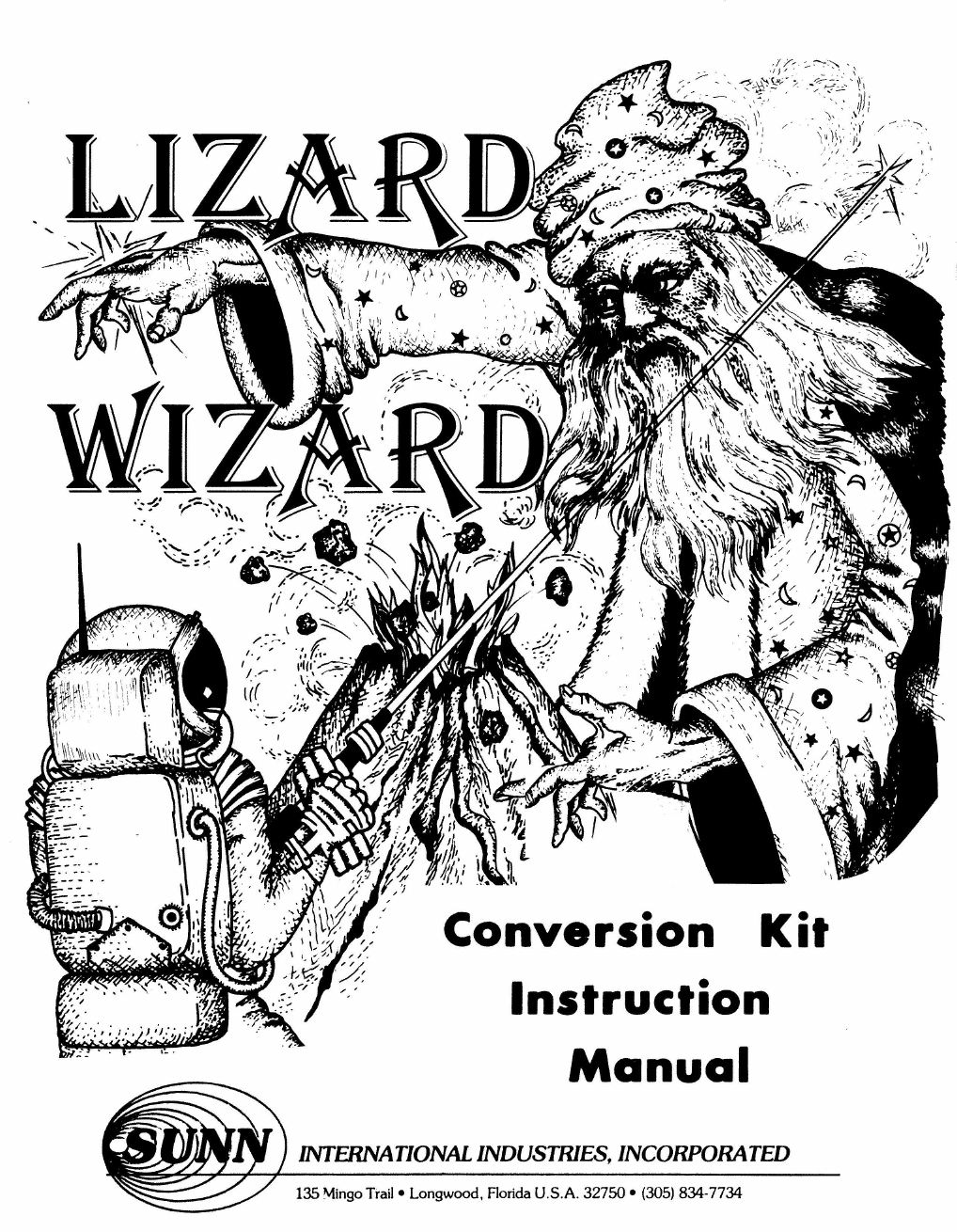
By 1985, the early-1980s arcade boom had cooled, leaving operators with many aging cabinets and making entirely new machines harder to sell. Techstar’s experience with adaptable hardware and conversions suited that market. Lizard Wizard is the clearest surviving example of its later effort to give existing cabinets a new commercial use.
"Sunn Presents"
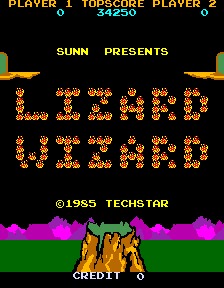
The opening screen reads “SUNN PRESENTS” above “©1985 TECHSTAR.” The surviving 16-page manual supports that division: Techstar supplied the game’s copyright identity, while Sunn International Industries, Inc. supplied and supported the conversion package. The warranty and installation instructions are Sunn’s. Those responsibilities do not identify the programmer. No sufficiently strong evidence names the individual who wrote Lizard Wizard. Luis Sanchez’s involvement with earlier Techstar games does not establish that he worked on this one.
Pac-Man Gets A Wizard
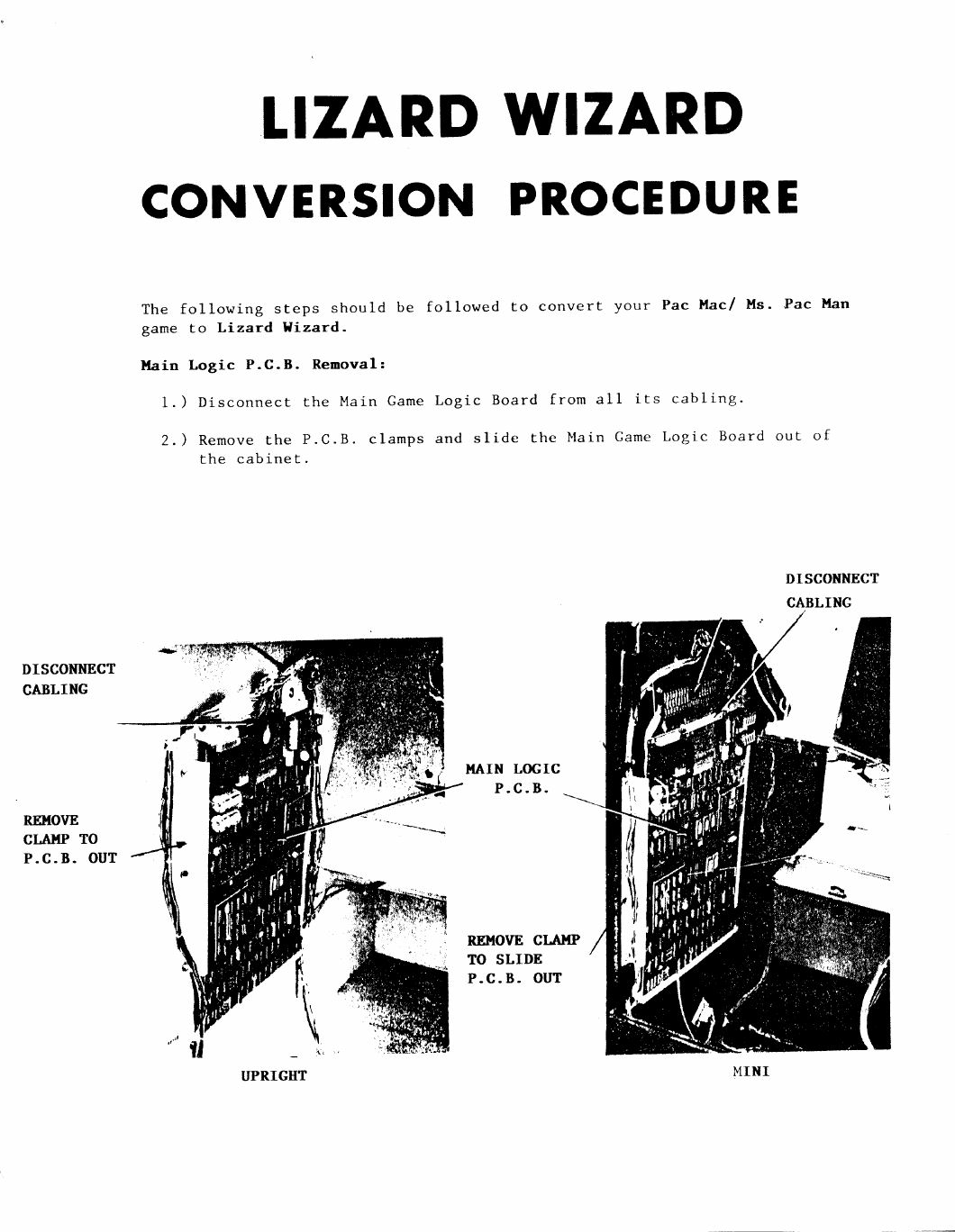
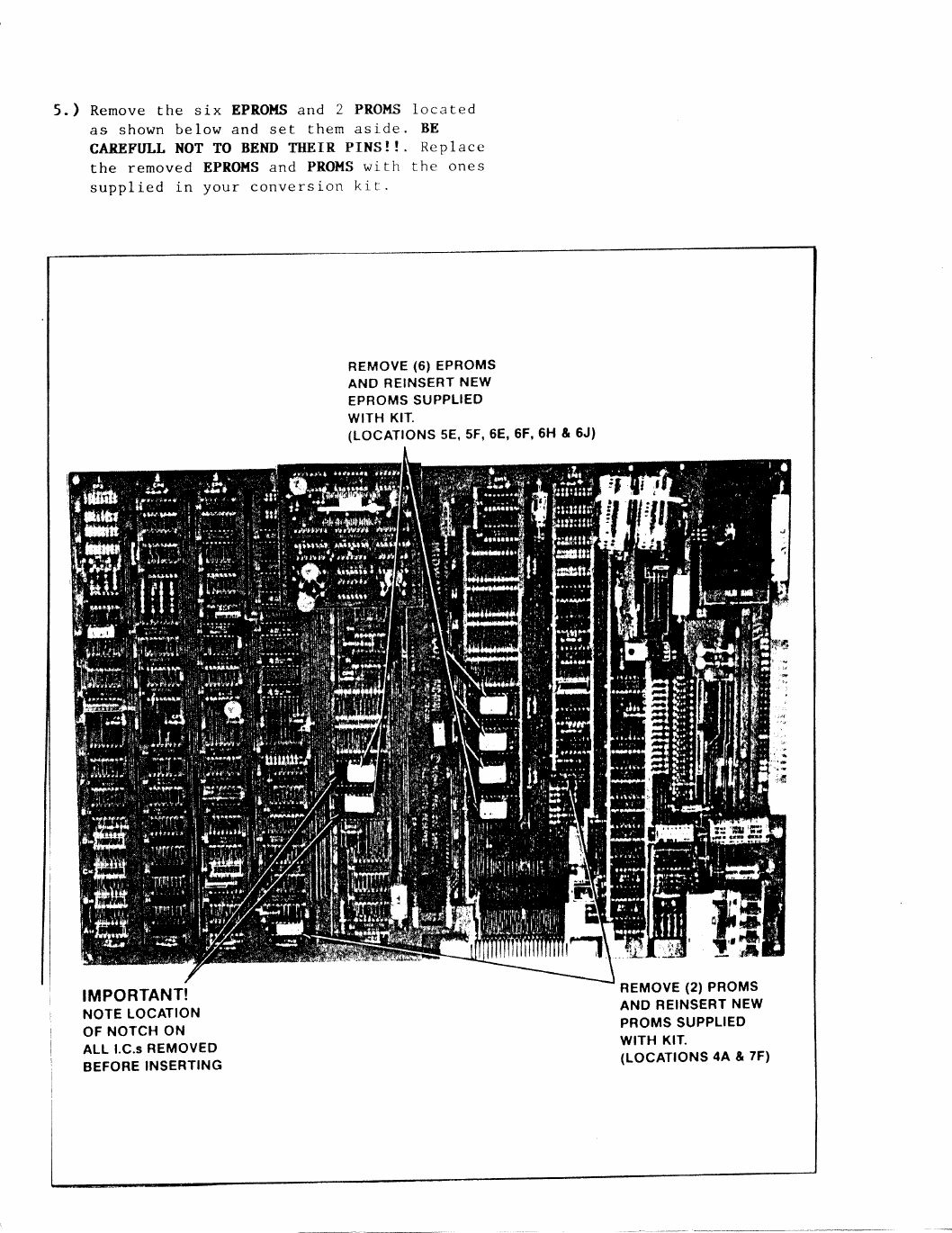
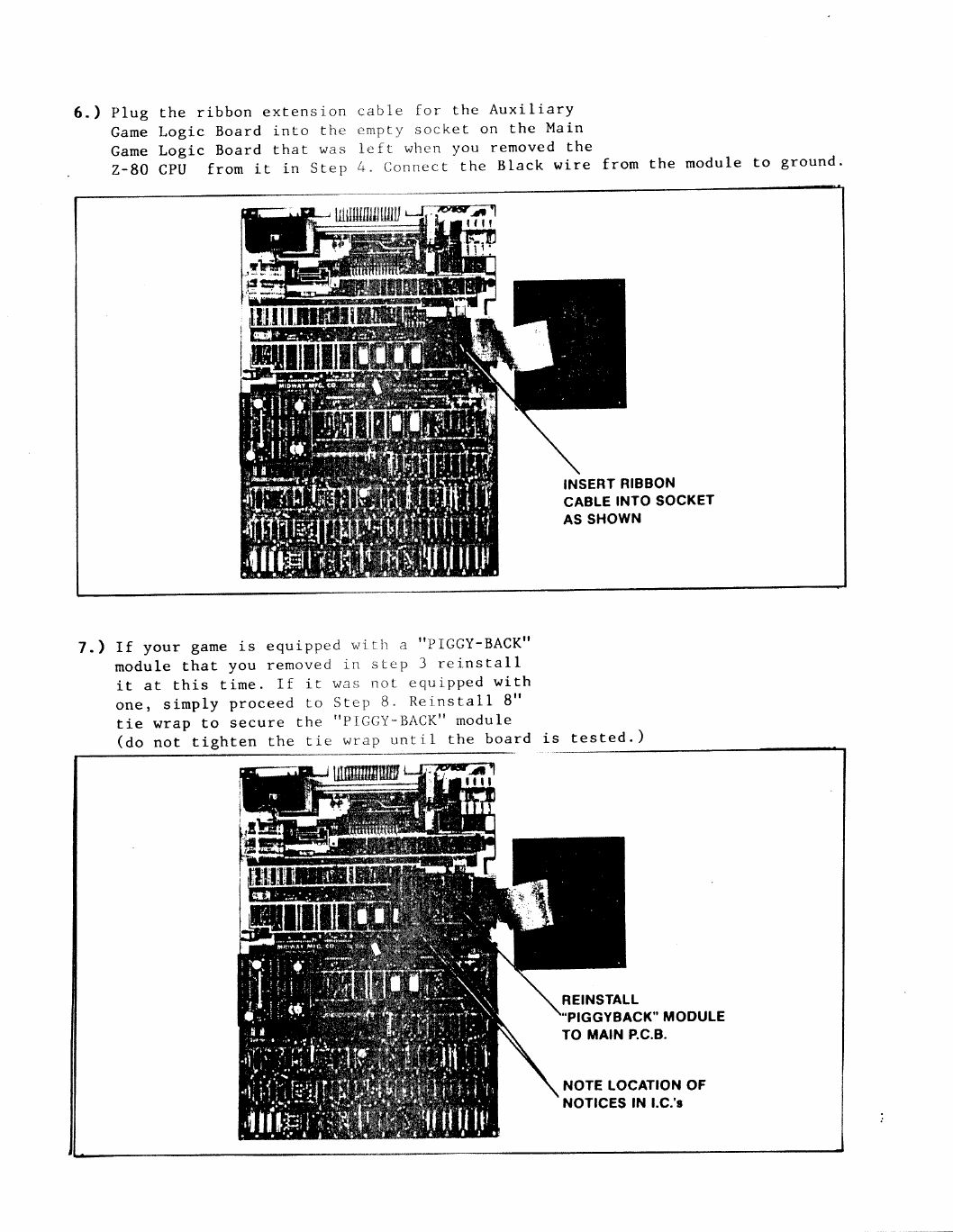
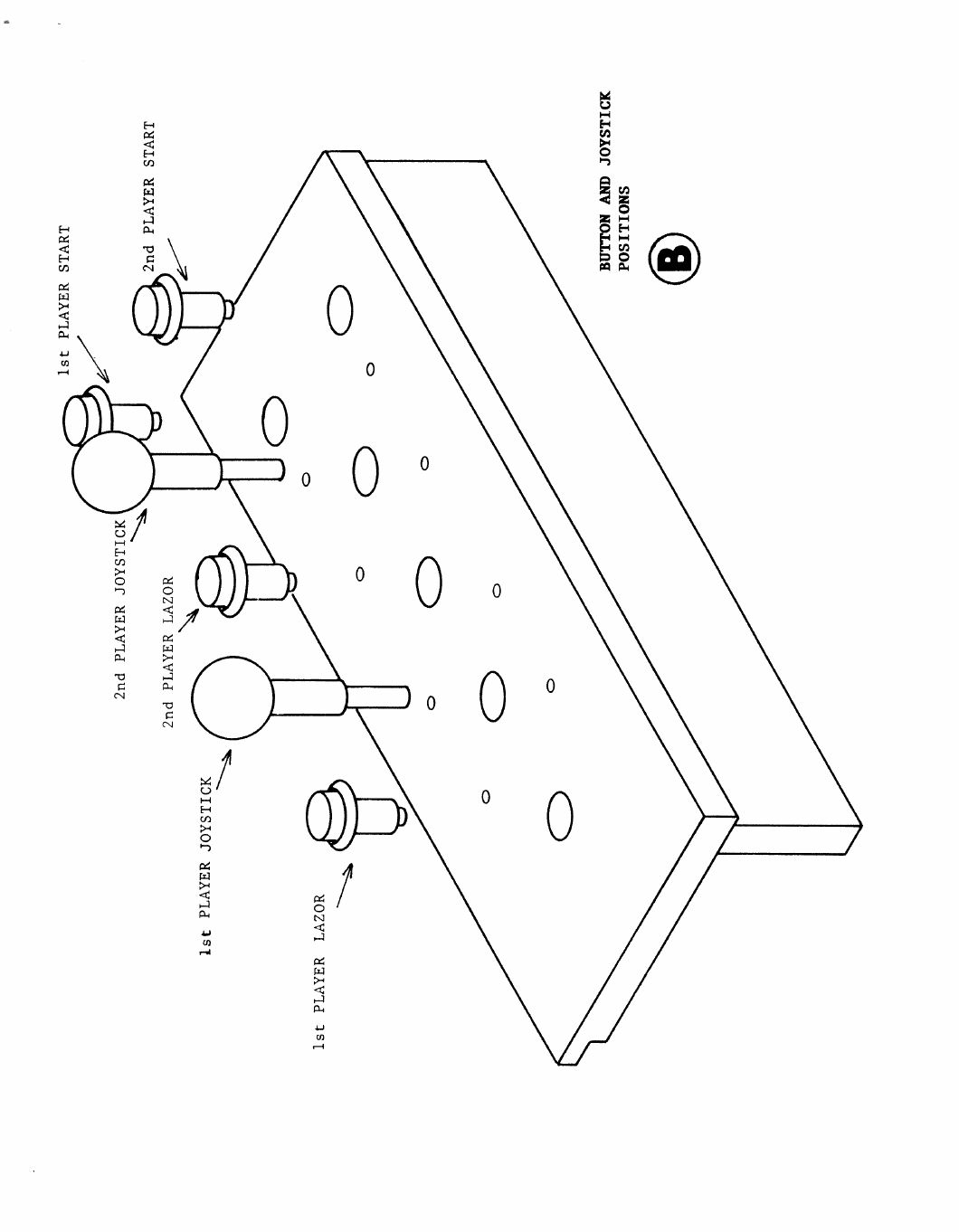
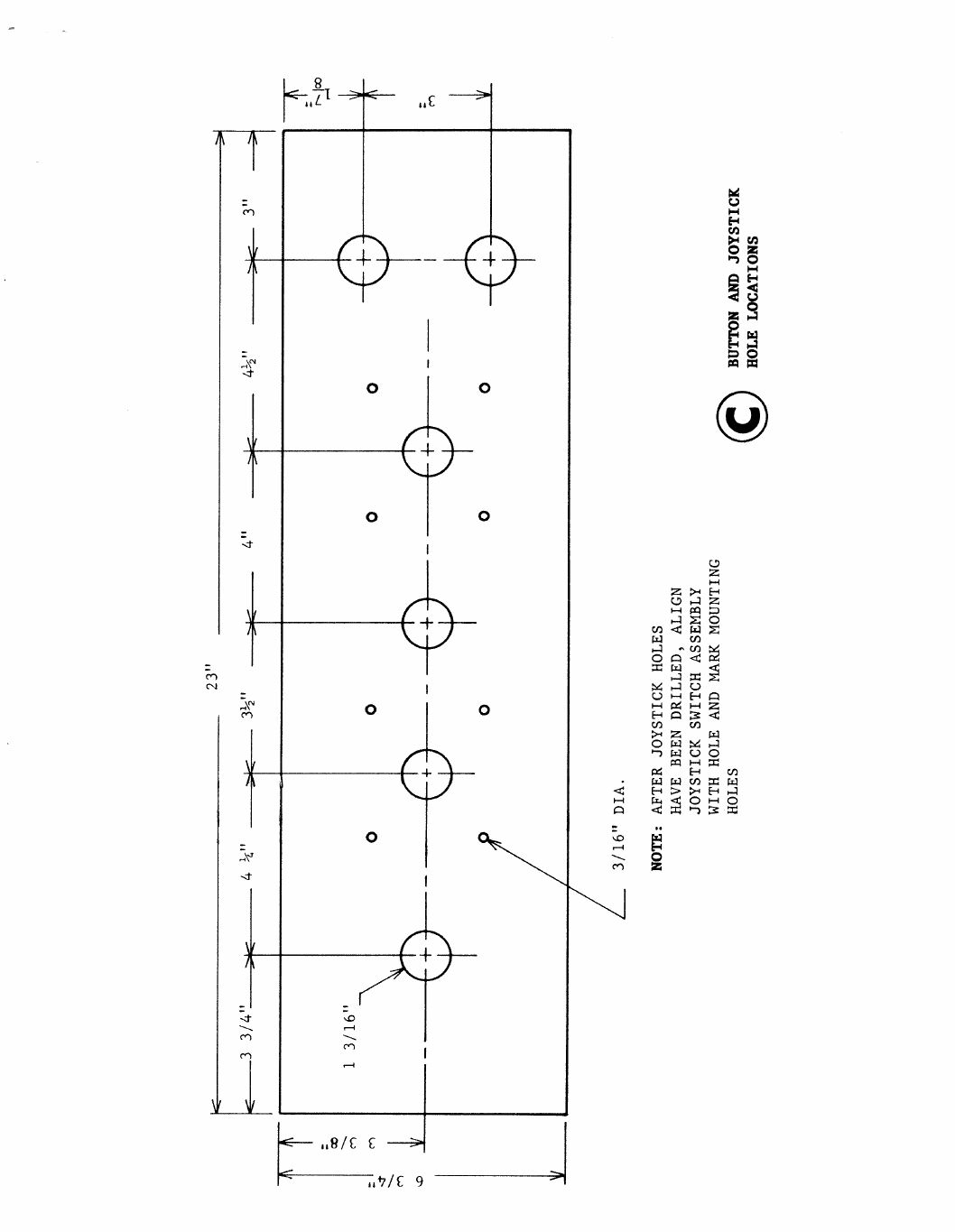
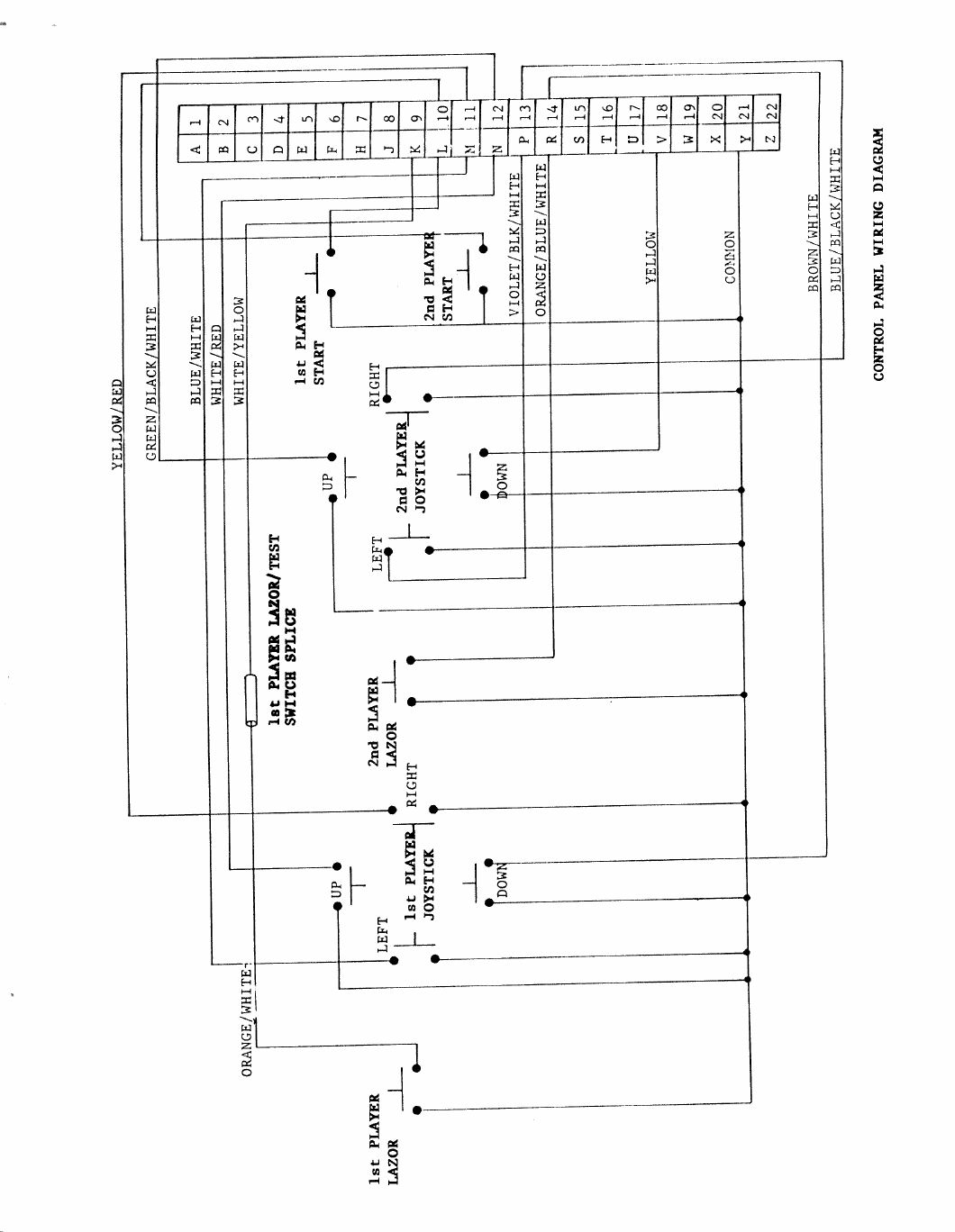
The Lizard Wizard kit was specifically designed to transform existing Pac-Man and Ms. Pac-Man hardware. The manual does not leave that as an inference. Its conversion procedure begins by instructing the operator how to convert a Pac-Man or Ms. Pac-Man game into Lizard Wizard. Photographs show both upright and mini cabinet arrangements. This is important because Lizard Wizard was not simply a new PCB dropped into an empty cabinet. The conversion reused substantial portions of the original Midway/Namco hardware. The operator removed the existing Z80 processor and installed an auxiliary logic board through the CPU socket. Six existing EPROMs and two color PROMs were replaced with the components supplied in the kit. The auxiliary board then interfaced with the original main board through a ribbon cable. The kit substantially changed the game while retaining the original cabinet and much of its electronics.
What Came In The Box
The manual's parts list gives us an unusually concrete picture of what Sunn was selling. The conversion package included an auxiliary logic-board module, four program ROMs, two character ROMs, two color PROMs, marquee artwork, control-panel artwork, side graphics, two eight-way joysticks, two button assemblies, hookup wiring, mounting hardware, and the instruction manual. An unassembled wooden control panel was available as an option. That is a substantial conversion package. The operator was not merely changing software. Lizard Wizard altered the cabinet's visual identity and controls as well.
The original Pac-Man control arrangement was replaced by a two-player panel using joysticks and buttons, with the manual supplying drilling dimensions and complete control-panel wiring information. The intended result was a cabinet with a new visual identity and a different control arrangement, as well as replacement software.
A Wizard Who Mostly Shoots Things
Despite the fantasy title, Lizard Wizard is not a dungeon-crawling adventure. The player controls a flying character over a hostile landscape, firing at dragons, fireballs, rocks, and other threats. Later stages introduce prisoners who must be rescued before they can be turned against the player. The surviving game record describes an eight-way joystick and a single fire button for each alternating player. The result is far removed from Pac-Man, despite running through heavily modified Pac-Man-family hardware. That contrast was precisely what made conversion kits attractive.
Operators already possessed a cabinet, monitor, power supply, wiring, coin mechanism, and much of the electronics. A sufficiently ambitious kit could turn that sunk investment into something that looked new to players. Lizard Wizard applies the reuse and conversion approach seen elsewhere in Techstar’s catalog to a widely installed arcade platform.
Techstar And Sunn
Sunn International's role is unusually tangible because its name runs through the physical support material. The manual carries Sunn's warranty, Sunn's installation procedure, Sunn's parts package, and Sunn's service responsibility. The title screen itself says Sunn presents the game. Techstar, meanwhile, remains visible in the copyright. That supports a broad interpretation: Techstar supplied or controlled the game property, while Sunn commercialized it as a conversion product. The underlying contract remains unknown. Sunn may have paid a license fee, purchased kits or rights through another arrangement, commissioned the conversion, or participated earlier in development. The manual documents the commercial and support roles without resolving those alternatives.
Sunn As A Company, Not Just A Name On The Manual
Sunn International Industries Incorporated was itself a Florida corporation, document number H08556, filed June 19, 1984. The official record identifies Stephen Perry as registered agent and lists Stephen C. Perry and John A. Stancil as officers/directors. Later corporate records places the company at 624 Douglas Avenue, Suite 1412, Altamonte Springs, Florida. It ultimately entered administrative dissolution on October 11, 1991.
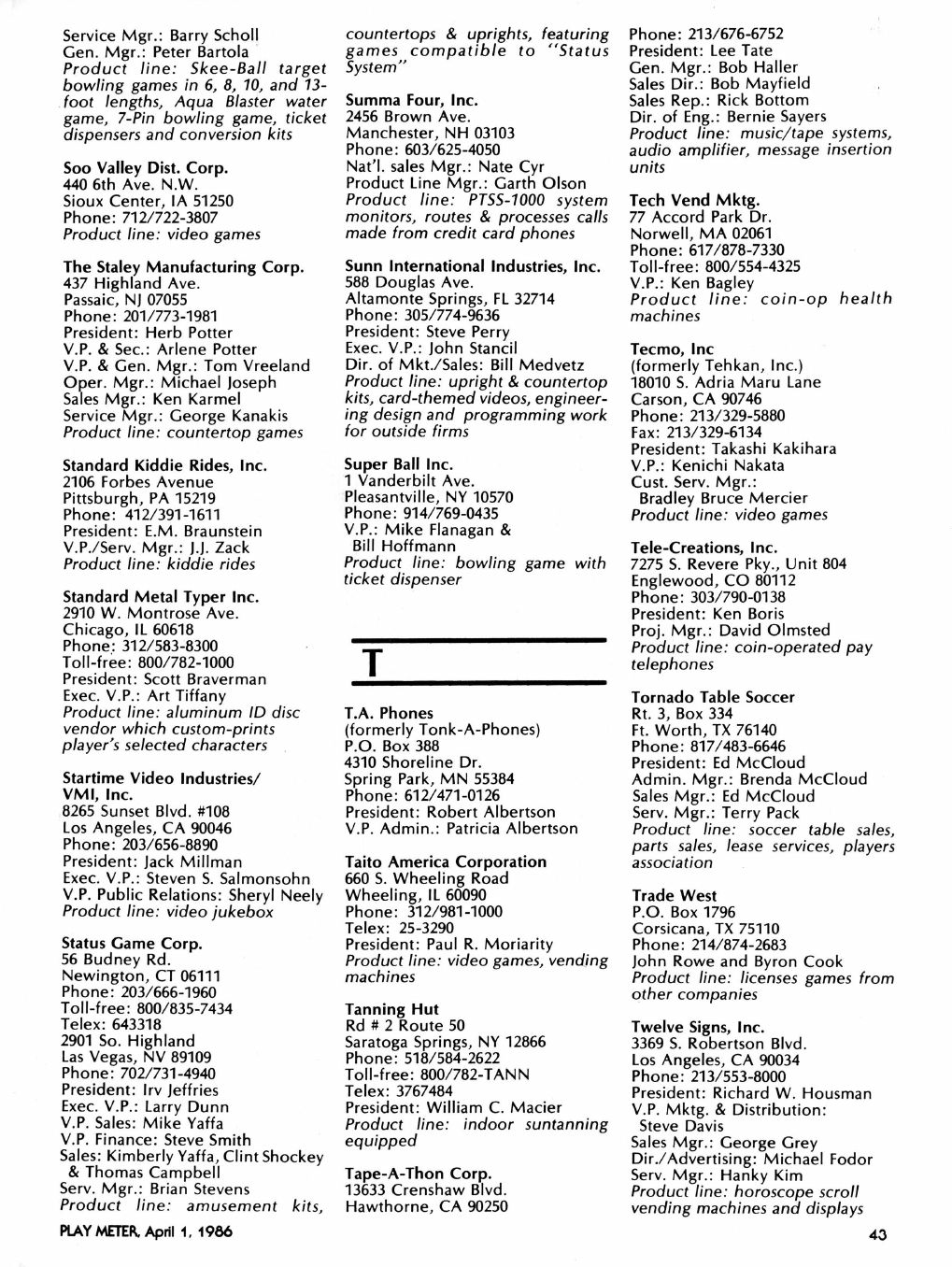
A 1986 Play Meter directory gives a contemporary operating snapshot closer to the Lizard Wizard period. It lists Sunn at 588 Douglas Avenue in Altamonte Springs, telephone 305-774-9636, with Steve Perry as president, John Stancil as executive vice president and Bill Medvetz as director of marketing/sales. The directory describes Sunn's product line as upright and countertop kits, card-themed videos, and engineering design and programming work for outside firms. That description strengthens the conclusion that Sunn had real technical and kit-building capacity. It still does not identify the programmer of Lizard Wizard.
An Old Hardware Family Reappears
There is something fitting about Techstar's late return to Pac-Man-derived hardware. Eyes had already existed within that broad technological world. Mr. TNT and Gorkans followed it. Now, several years later, Lizard Wizard was explicitly designed to inhabit actual Pac-Man and Ms. Pac-Man boards. This does not establish that every Techstar project shared one continuous hardware platform or engineering team. But it does show a recurring familiarity with this architecture. For a small company, that familiarity had practical value. Operators already owned thousands of compatible cabinets and boards. Designing around known hardware lowered the barrier to selling another product into the installed arcade base. The business logic is easy to see even if the surviving sales figures are not.
How Many Wizards Were There?
Here the trail thins again. No reliable production or kit-sales total has been found. The existence of a complete commercial manual, conversion artwork, warranty documentation, surviving ROMs, and preserved game boards establishes Lizard Wizard as a genuine commercial conversion product rather than an unfinished laboratory project. But surviving examples appear scarce. Scarcity today does not tell us exactly how many kits were sold in 1985. Conversion games are especially treacherous for production estimates. A cabinet could later be converted again, restored to Pac-Man, parted out, or scrapped. The physical identity of the Lizard Wizard machine could disappear while the underlying cabinet survived for decades. The number of kits sold remains unknown.
The End Of The Visible Arcade Trail
Lizard Wizard is the latest verified arcade product in Techstar’s surviving catalog. The documented activity runs from the 1982 Eyes licensing agreement, through the adaptable countertop cabinet and varied projects of 1983, to the 1985 conversion kit. The sequence repeatedly combines game rights, reused or adaptable hardware and outside commercial partners. No surviving announcement establishes the exact end of Techstar’s amusement activity. Other projects are known through advertisements, copyright records, software, hardware and firsthand accounts, but lack the conventional commercial arcade record of Eyes. Those differing levels of completion and distribution are the subject of the next chapter.
Sources for this chapter
Preserved title screen; Sunn conversion manual; Florida corporate record; and Play Meter directory.
7. Projects, prototypes and limited releases
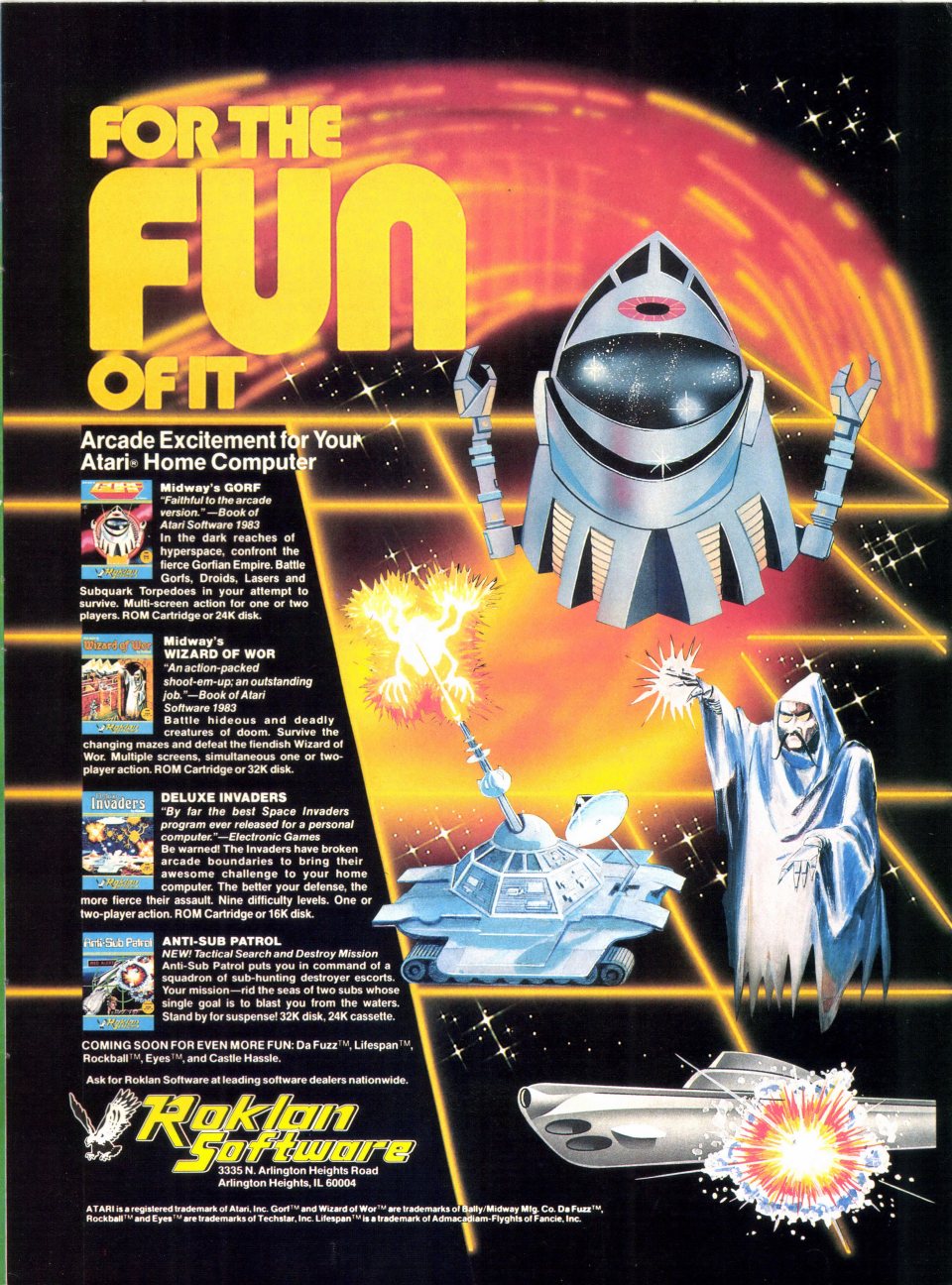
Several Techstar projects are documented beyond the idea stage yet lack the commercial arcade trail left by Eyes. Some reached working-program form, some were registered for copyright or trademark protection, and some were licensed for home-computer conversion. In one case, arcade hardware was sent to an outside programmer to support the adaptation. These projects broaden the known development record without establishing ordinary arcade distribution for each one.
Suzie & The Shogun And Sasuki & The Commander
The Copyright Deposit Is More Specific Than The Title List
The exact U.S. Copyright Office entry for Suzie & the Shogun / Sasuki & the Commander is registration PAu000404741, dated April 2, 1982. The unpublished deposit is described as one film reel, one computer program and a one-page description submitted in lieu of the videogame. The official dataset spells the author entry "shin nihon kikakau, ltd, employer for hire." That spelling is preserved rather than silently corrected; it appears to represent Shin Nihon Kikaku, but the record itself is not rewritten to make the connection look cleaner than the evidence.
The registration combines Suzie & the Shogun and Sasuki & the Commander in a single unpublished deposit. The inclusion of a computer program establishes more than prospective titles, although the arcade form of the deposited material remains uncertain. The copyright record identifies a Japanese company, rendered in the surviving government data as "Shin Nihon Kikakau, Ltd.," as the employer-for-hire author. Techstar is the copyright claimant. The wording is tantalizing because Shin Nihon Kikaku was the company better known as SNK, and SNK had already released the arcade shooter Sasuke vs. Commander in 1980.
The similarity between Sasuke vs. Commander and the registered title Sasuki & the Commander is impossible to ignore. It is also not enough to finish the story. The surviving Techstar evidence does not establish whether Sasuki & the Commander was a renamed American version, a modification, a sequel-like derivative, a proposed licensed adaptation, or something else. The inclusion of Suzie & the Shogun leaves several possibilities: related games, variations of one program, or alternative versions for different players or markets. The entry does not explain their design relationship. The supported classification is unpublished Techstar rights material with a deposited computer program and an apparent Japanese work-for-hire origin; a commercial arcade release is unestablished.
Rockball: a completed arcade project
Rockball has direct testimony from someone who worked on the original arcade game. The Tech-II board designer states plainly that Rockball was an arcade game he created, including both its game board and software. He further states that Roklan licensed the game from Techstar for conversion to Atari home computers. That transforms Rockball from a mysterious trademark into a verified completed Techstar arcade project. Its concept was a variation on the Asteroids idea. Instead of conventional asteroids, the player attacked large concentric "rock balls," breaking them into smaller pieces. Destroying them replenished the player's energy supply, while a gravity effect could appear and unexpectedly relocate the ship. Roklan programmer Anthony Weber remembered receiving the physical internals of the arcade machine while creating the Atari adaptation. He described having the screen, platform, joystick, and other hardware available to study. That is extraordinary evidence for an arcade game that otherwise almost vanished. Somewhere, at least one functioning Rockball machine or development rig existed strongly enough for its hardware to be shipped to another programmer. Firsthand correspondence now closes one important part of that gap. The engineer recalls that Rockball was shipped to operators in the Miami / Fort Lauderdale area before he left Techstar. He does not know what happened after his departure, and no production ledger, distributor list or reliable sales total has surfaced. The supported conclusion is therefore narrower than a nationwide commercial release but stronger than a prototype classification: Rockball reached real operator placement in South Florida, while the scale and reach of distribution beyond that region remain unknown.
From Arcade Machine To Home Computer
The Roklan connection is particularly valuable because it preserves a route out of Techstar that otherwise might have disappeared entirely. Weber produced an Atari 8-bit adaptation of Rockball. He later recalled that the home version was completed but never formally released. A sample cartridge reportedly existed before the project was cancelled. The surviving adaptation preserves a chain from a Techstar arcade game through a Roklan license to a completed but cancelled home conversion and a rediscovered prototype. It provides substantial traces of the arcade design, supported by firsthand accounts from people involved on both sides of the conversion.
De' Fuzz, Da' Fuzz, And The Police Cars
Another Techstar project took essentially the same road. Government trademark material records Techstar's title as De' Fuzz. The surviving Roklan version is generally known as Da' Fuzz. And again, a home-computer conversion provides evidence for an arcade game whose original machine has effectively disappeared. The game took the basic maze-chase formula and replaced the familiar fantasy creatures with cars. The player drives through a maze collecting objects while avoiding police cars, with additional features such as paint-shop interactions and unusual maze exits. Preservation research identifies the surviving Roklan version as a port of an unreleased Techstar arcade game.
Unlike Rockball, however, we currently lack equally strong firsthand testimony from the original Techstar arcade programmer explaining its creation. De’ Fuzz has less direct creator testimony than Rockball, but contemporary advertising strengthens its Techstar attribution. A May 1983 Roklan advertisement announces Da Fuzz, Rockball and Eyes among forthcoming home-computer products and explicitly names all three as Techstar trademarks. Roklan was therefore acknowledging the relationship at the time it intended to market the home version. The original arcade game's commercial fate remains unknown.
Cards-n-Quiz Was Little Las Vegas
The TECH-II designer identifies Rockball, It and Cards-n-Quiz among the games he wrote for the hardware, and states that Cards-n-Quiz was also known as Little Las Vegas. A separate account describes Techstar marketing his game under the Little Las Vegas name. These are two names for one documented project. Little Las Vegas/Cards-n-Quiz included several gambling-style activities, including poker, blackjack, craps, and a slot-machine mode. This immediately invites comparison with The Spirit of '83, which also bundled casino-oriented games into a Techstar amusement product. Whether there was any direct program lineage between the two remains unproved. But the similarity tells us that casino-style amusement software was not a one-off experiment for Techstar. The company revisited the concept in more than one project. Firsthand testimony establishes that the program existed and that Techstar marketed it. Ordinary commercial production and the scale of any release remain uncertain.
It: a nearly lost TECH-II game
It is explicitly identified by the TECH-II designer as one of the games he wrote for Techstar’s hardware, and the original 6809 source code still survives in his personal archive. He also retains a Windows-based 6809 emulator that reproduces the TECH-II graphics system and can still run the game. That survival makes it possible to document gameplay that had otherwise nearly vanished from the historical record.
The controls are flip, up, down and shoot. The player’s spaceship moves continuously in whichever direction it is facing; flip reverses its direction, up and down change altitude, and shots travel in the direction the ship is pointed. The terrain scrolls sideways beneath the action. The player must descend into valleys and shoot a large spider to clear the rack while avoiding terrain, enemy fire, hostile spaceships and smaller creatures called “it’lls.” The spider can also attack the lower half of the playfield with a web. A collision, shot, web strike or terrain impact costs a life.
Death also changes the next rack: the spider produces several “it’lls,” which join the enemy spaceships on the following attempt. Successive racks add more and faster enemies. The default setting provides three lives, adjustable through the board’s DIP switches or the surviving emulator.
Most importantly for classification, the engineer recalls that It, like Rockball, was shipped to operators in the Miami / Fort Lauderdale area. He left Techstar around that period and cannot document what happened afterward. The game therefore cannot be described simply as an unreleased prototype. Limited South Florida operator placement is firsthand-confirmed; broader distribution, production quantity and sales history remain unknown.
The May 1983 Roklan Advertisement
A full-page Roklan advertisement from the May 1983 issue of Electronic Fun with Computers & Games names Da Fuzz, Rockball, Eyes, Lifespan and Castle Hassle as software coming soon. Its trademark line specifically identifies Da Fuzz, Rockball and Eyes as Techstar trademarks. The ad matters because it is contemporaneous with the projects. It directly links Roklan's intended home-computer pipeline to Techstar properties rather than relying only on later collector reconstruction.
Different Kinds Of "Unreleased"
A game can fail to reach ordinary distribution at several stages: paperwork, working software, playable hardware, trade-show demonstration, location testing, a distributor offering that never enters quantity production, or even a completed program licensed to another company. These stages carry different historical meanings. The evidence places Techstar’s projects at several distinct points: Suzie & the Shogun / Sasuki & the Commander have primary copyright evidence and a deposited program, but their arcade form and intended relationship remain poorly understood. Rockball is a verified completed Techstar arcade game with firsthand creator testimony, surviving hardware recollection, an outside home-computer licensing deal and confirmed shipment to operators in South Florida; its broader distribution remains unknown.
Da' Fuzz / De' Fuzz has Techstar trademark evidence, contemporary Roklan advertising, and a surviving home conversion derived from the arcade project, but a thinner surviving record for the original arcade hardware. Cards-n-Quiz / Little Las Vegas belongs to the documented TECH-II casino-and-quiz lineage. It is now documented in substantial gameplay detail and, like Rockball, has firsthand-confirmed operator shipment in the Miami / Fort Lauderdale area. These distinctions preserve what is known about each project without forcing a simple released/unreleased label onto evidence that supports several different levels of commercial reach.
The surviving evidence for limited and unfinished projects
The uncertain projects survive through different kinds of evidence. Rockball is supported by programmer recollections and surviving software; Da’ Fuzz by the attempted Roklan adaptation; Suzie & the Shogun and Sasuki & the Commander by an official copyright deposit; and Cards-n-Quiz and It by their engineer’s account. Unlike a surviving commercial cabinet, each depends heavily on records that were vulnerable to loss after development ended.
Together they show development activity broader than Techstar’s surviving cabinet population. There were experiments, licensed projects, games running on purpose-built hardware, and outside companies evaluating and adapting software. Some reached substantial development without leaving evidence of broad arcade distribution; Rockball and It are now known to have reached operators in South Florida even though their wider commercial reach remains undocumented. Their hardware—Japanese manufacturing marks, TECH-II and TECHSTAR-III designations, Pac-Man-derived architectures and conversion equipment—provides a further record of those activities.
Sources for this chapter
Trademark and copyright records; Roklan advertisement; software-preservation research; and firsthand testimony from a TECH-II creator.
- De’ Fuzz trademark
- Da’ Fuzz prototype history
- Rockball and Techstar trademark mention
- Anthony Weber interview
- Rockball prototype history
- Suzie and Sasuki registration
- Tech-II hardware recollection
- Rockball firsthand creator page
- Cards-n-Quiz / Little Las Vegas firsthand page
- Roklan full-page advertisement
- Firsthand correspondence and privacy note
8. Boards, cabinets and the Techstar hardware puzzle
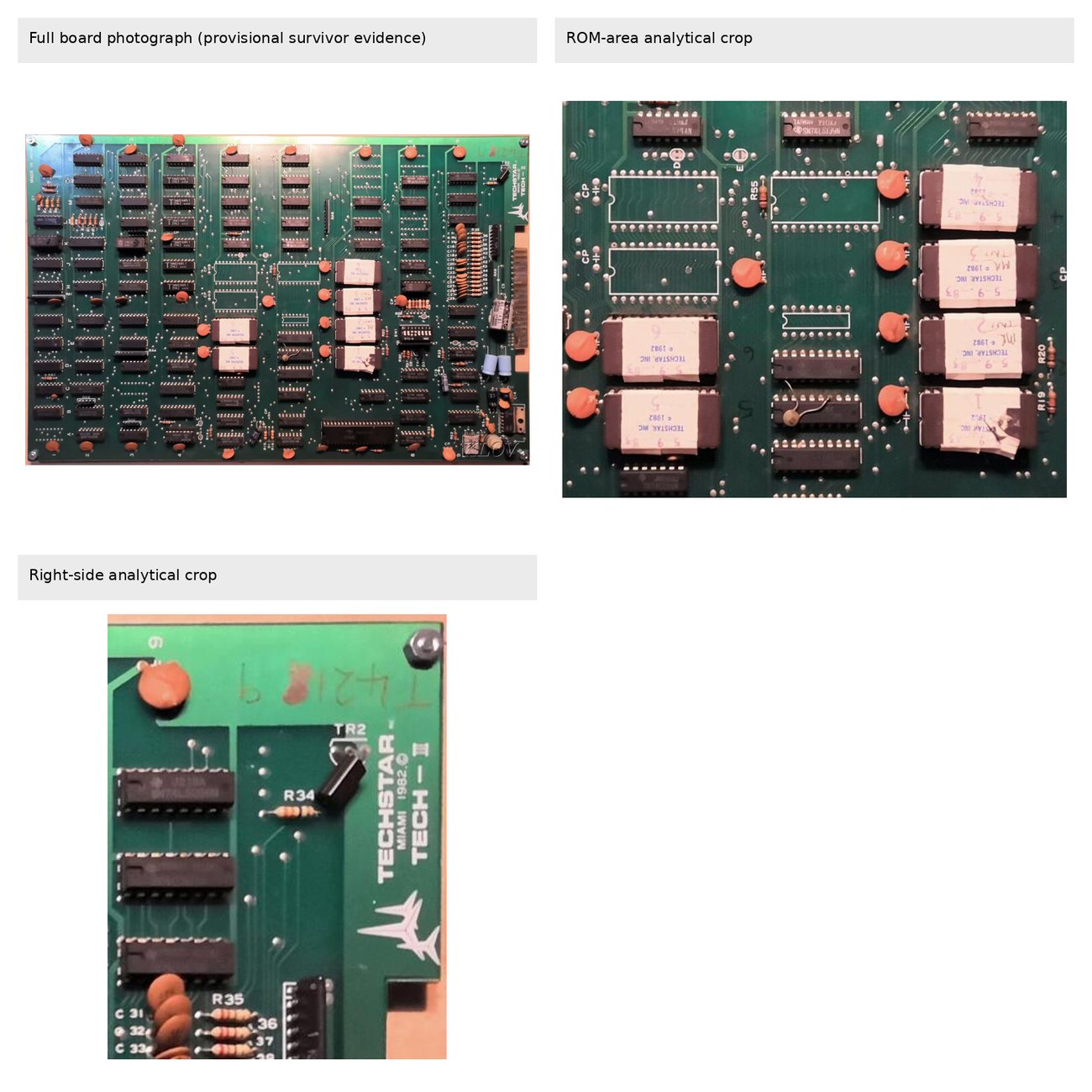
Techstar’s hardware survives through several distinct types of evidence. Boards carry TECH-II and TECHSTAR-III names, Miami 1982 and Made in Japan markings; Rock-Ola documentation uses its own assembly numbers; and collector evidence suggests Zaccaria used a compatible but locally implemented Eyes design. Techstar also sold a configurable countertop cabinet and conversion products, while other companies supplied complete cabinets. These fragments have sometimes suggested a proprietary platform sequence from TECH-I through TECH-II to TECHSTAR-III. Only the latter two names are documented, and their relationship remains unresolved. The evidence establishes substantial hardware involvement without establishing a complete numbered genealogy.
TECH-II hardware and firsthand accounts
The strongest breakthrough came from someone who had actually worked on it. A former Techstar engineer, whose identity is withheld at his request, preserved photographs and recollections of a videogame system he called TECH-II. He states that he designed the board for Techstar during approximately 1981-1982 and wrote several games for it, including Rockball, It, and Cards-n-Quiz, also known as Little Las Vegas. That firsthand testimony turns TECH-II from a mysterious label into a genuine Techstar engineering project. The hardware was built around a Motorola 6809-family processor architecture and included separate video circuitry, sound hardware using two AY-3-8910 programmable sound generators, battery-backed memory, coin and control interfaces, and specialized graphics assistance.
The designer’s account establishes hardware created specifically for Techstar, rather than a renamed stock Pac-Man board. He further identifies TECH-II as the only videogame hardware designed specifically for Techstar and put into production during his time with the company. It supported It, Rockball, and the various Vegas/Quiz iterations, including the development line that produced Trivia Quest. Techstar’s work with outside developers therefore existed alongside original engineering and game software undertaken for the company. Neither exclusively internal nor exclusively external development describes the entire catalog.
The TECH-II Description In Fuller Technical Form
The firsthand designer's account is considerably more detailed than the shorthand phrase "6809-based board" suggests. He describes TECH-II as a Motorola 6809 system producing 256-by-256 RGB video. Graphics support included hardware assistance for line drawing. Audio used two AY-3-8910 programmable sound generators feeding stereo amplifiers. The board could be populated flexibly with RAM and EPROM, and the design included 14K of battery-backed RAM. The recollection also describes separate video RAM and system-control functions, watchdog behavior, multiple control interfaces and dedicated coin-slot logic.
Those details matter because they establish a purpose-built game platform with real engineering ambition. They also help distinguish the firsthand TECH-II project from the Pac-Man-derived hardware relationships visible elsewhere in the Techstar catalog. The evidence does not support flattening all Techstar-marked boards into one architecture.
The Mr. TNT TECH-II Board
Another surviving artifact carries the same designation. A collector-preserved Mr. TNT circuit board is visibly marked: TECHSTAR MIAMI 1982 TECH-II MADE IN JAPAN The board also carries Techstar-marked ROM labels. This is valuable physical evidence, but it comes with an important qualification. The board's complete ownership history back to original arcade distribution has not been established. The image therefore remains classified as provisional hardware evidence, rather than an unquestionable factory-survivor record. Even with that caution, its markings are difficult to dismiss. They independently place the name TECH-II on hardware associated with a Techstar-linked arcade program.
The shared designation raises the question of whether the photographed board is the hardware described in that firsthand account. The relationship remains unresolved: sufficient factory documents, schematics, revision records or manufacturing paperwork have not been recovered to identify the photographed board with that system or prove that every TECH-II marking referred to one standardized platform.
"Made In Japan"
The TECH-II board introduces another recurring Techstar mystery. It says Made in Japan. So does another important piece of Techstar hardware. That immediately raises questions about who actually manufactured these boards. No surviving evidence presently identifies the Japanese fabrication company. There is nothing unusual about an American arcade company having circuit boards manufactured overseas. Japanese electronics production was deeply intertwined with the arcade industry by this period. The interesting part is that Techstar was a small Miami operation, yet surviving boards indicate access to Japanese manufacturing.
Techstar may have supplied designs to an outside board house, worked through another arcade manufacturer, sourced and adapted complete designs, or used different arrangements for different products. No surviving evidence identifies which route applied or names the Japanese fabrication company.
The TECHSTAR-III board marking
A documented surviving Eyes board creates the next puzzle. Collector evidence describes a board carrying the identification TP-048, along with: TECHSTAR-III MIAMI 1982 MADE IN JAPAN The same board reportedly carries a Rock-Ola identification sticker and a handwritten notation corresponding closely to Rock-Ola's C6390-A/G-6390-A board identification. The combination links Techstar-marked Japanese hardware with a Rock-Ola product, but “III” does not establish a chronological generation. No TECH-I board is verified, no engineering document identifies TECH-II as a second generation, and no document names TECHSTAR-III as its successor. The numerals might denote projects, board families, revisions, customers or another internal distinction. Even the naming differs between TECH-II and TECHSTAR-III.
Engineering drawings, parts lists, advertisements, internal records or further documented survivors could clarify the relationship. For now, the markings are verified or strongly supported while their meaning and sequence remain unknown.
The TECHSTAR-III Survivor Report
The collector-documented Eyes board is reported as carrying the board identifier TP-048 together with the markings TECHSTAR-III, Miami 1982 and Made in Japan. It also carries a Rock-Ola sticker and a handwritten notation corresponding closely to C6390-A/G-6390-A. That combination is strong physical evidence that Techstar-marked hardware intersected Rock-Ola's Eyes implementation. It does not establish what the "III" meant, who fabricated the board in Japan, or whether TECHSTAR-III followed TECH-II in a formal numbered product sequence.
The Rock-Ola Numbering Puzzle
Rock-Ola’s Eyes documentation uses G-6390-A for the game-board assembly and G-6395-A for the complete game-PCB item in cabinet or replacement-parts contexts. The manual supports different levels of parts identification, rather than two successive Techstar platforms or board revisions. A board assembly, populated PCB, subassembly, replacement part and cabinet-installed unit can have different identifiers within one manufacturer’s paperwork. Their documented function is more informative than a numerical resemblance.
Rock-Ola, Zaccaria, And Local Implementations
Eyes also demonstrates how the same game could exist in more than one physical hardware environment. Rock-Ola manufactured its American machines. Zaccaria produced licensed European versions. Surviving collector comparisons suggest that Rock-Ola and Zaccaria implementations were not necessarily physically identical even when running substantially the same game. That is not surprising. A licensee could manufacture its own cabinet, power arrangement, wiring harness, control panel, and compatible board implementation while preserving the underlying software. The result is another warning against looking for one mythical "Techstar Eyes board" that represents every legitimate machine. There may have been several valid hardware paths to the same title. Techstar's role was often to make those paths commercially possible.
Techstar Built Cabinets Too
The board evidence might make Techstar sound dependent on other manufacturers, but the CCT-1 Convertible Countertop Cabinet proves that the company marketed cabinet hardware under its own identity. The CCT-1 was not merely a game-specific enclosure. Techstar advertised it separately, with or without a game PCB, and emphasized its ability to accept different arcade boards and control configurations. That tells us something fundamental about the company's hardware philosophy. Techstar did not necessarily want the cabinet and the game to be permanently married. The cabinet was supposed to remain useful when the software changed.
That is almost the opposite of the elaborate dedicated-cabinet philosophy used by larger manufacturers for games designed around a unique visual attraction. For Techstar, flexibility was an asset. A small company could sell a cabinet today and another PCB tomorrow. An operator could potentially refresh the earning power of the same physical machine without buying an entirely new cabinet. The CCT-1 turned the conversion mentality into a product.
Macho Mouse And Outside Cabinets
Macho Mouse illustrates the other side of the equation. Here Techstar had a commercial arcade product, but Game Plan supplied documented cabinet and service support. The recovered Game Plan manual includes installation, operation, operator settings, monitor information, wiring, and servicing instructions. Meanwhile, contemporary distributor advertising offered Macho Mouse as a full upright, mini-upright, and sit-down table. We cannot yet establish who physically produced every advertised cabinet. The manual and advertisement establish the use of outside cabinet and service infrastructure. They do not identify the maker of every advertised physical configuration.
Conversion Hardware As A Business
By the time of Lizard Wizard, Techstar's involvement with adaptable hardware becomes even more explicit. The Sunn conversion package was designed to reuse Pac-Man and Ms. Pac-Man electronics. Instead of replacing the entire game system, the kit modified the existing board with replacement ROMs, color PROMs, and an auxiliary logic module fitted through the CPU socket. The kit refreshed the controls, artwork, electronics and software while retaining usable arcade equipment. It applied Techstar’s recurring interest in conversions to machines that operators already owned.
The Pac-Man Family Connection
Several Techstar-related games also share a technical relationship with the broad Pac-Man hardware family. Eyes belongs there. Mr. TNT and Gorkans belong there. Lizard Wizard was explicitly constructed around existing Pac-Man and Ms. Pac-Man hardware. That recurring relationship is noteworthy, but it must not be exaggerated. It does not prove that all Techstar boards were simple Pac-Man clones. TECH-II, as described by its designer, was a much more distinctive hardware project. Nor does technical compatibility automatically tell us who wrote the game, who owned it, or who manufactured the board. Hardware lineage is one layer of the story. Business relationships are another. Techstar repeatedly mixed the two.
Why The Hardware Looks So Confusing Today
Much of the confusion surrounding Techstar hardware comes from expecting a small arcade company to leave behind the same documentary trail as a major manufacturer. A large company might leave engineering drawings, service bulletins, board-revision lists, production ledgers, serial-number databases, and thousands of surviving machines. Techstar’s surviving record is more fragmentary: manuals, collector boards, handwritten Rock-Ola numbers, Japanese manufacturing marks, an engineer’s photographs, conversion kits, cabinet flyers and copyright screens. These materials were created for operating and selling games, not for preserving a complete engineering history. They provide useful evidence, but do not replace the missing revision lists and production records.
Documented hardware roles
The evidence establishes that Techstar marketed cabinet hardware, had specialized videogame hardware designed for it, used Japanese-manufactured boards, worked with outside cabinet and support companies, and sold conversions for existing equipment. Its games appeared in several hardware arrangements. These activities are broader than a single proprietary platform. A complete genealogy remains unavailable. TECH-II is documented, TECHSTAR-III is strongly supported by survivor evidence, but a TECH-I → TECH-II → TECHSTAR-III progression is unproved. The Japanese manufacturer remains unidentified, the relationship between the designer’s TECH-II system and photographed TECH-II-marked boards is incomplete, and several cabinet production chains are undocumented.
Those qualifications leave a varied but recognizable hardware business: Techstar could commission engineering, sell its own products, supply conversions and license software for manufacture by partners such as Rock-Ola and Zaccaria. The people and companies involved help explain how those different arrangements worked.
Sources for this chapter
Factory manuals; collector-documented circuit boards; firsthand TECH-II testimony; and surviving cabinet evidence.
9. The network around Techstar
Techstar’s products are best understood through the changing relationships between their creators, rights holders and commercial partners. Programmers, small development companies, cabinet manufacturers, regional partners, conversion-kit suppliers, hardware engineers, and larger established arcade companies repeatedly appear around Techstar products. The combinations change from game to game, but Techstar is frequently somewhere near the center, controlling rights, arranging a license, marketing a product, supplying hardware, or coordinating the companies that could actually put the game into operators' hands. A Rock-Ola cabinet, a Techstar rights record, a Digitrex authorship credit and a Zaccaria European presentation can all belong to one game. Each records a different participant’s responsibility.
William And Betty Olliges
The corporate anchor was William E. Olliges. Florida records establish him as Techstar's president and registered agent. Contemporary trade coverage surrounding the Eyes agreement likewise identifies Bill Olliges as Techstar president. That is enough to place him firmly at the head of the company. It is not enough to turn him into the designer of Techstar's games. Nothing in the surviving evidence requires Olliges to have been a programmer or hardware engineer. His visible role is better understood as corporate and commercial: the person leading the small company that assembled these different relationships into products Techstar could sell or license.
Betty Lou Olliges was also a verified Techstar officer and director. Her exact day-to-day responsibilities have not survived clearly enough to reconstruct. She belongs in the company history because the corporate record puts her there, but inventing a job description would add certainty we do not possess.
Luis Sanchez And Digitrex
The most important creative name in Techstar's early history is Luis Sanchez. Sanchez was connected with Digitrex, a separate Florida company, and the copyright record for Eyes identifies Luis Sanchez doing business as Digitrex as the game's author. Techstar was the claimant. That arrangement alone tells us that Techstar was already functioning as something other than a purely internal development studio. A creator or development operation produced the work. Techstar controlled the commercial rights. Then Techstar could take that property to larger manufacturing partners. Sanchez remained visible elsewhere. Both Gorkans and Mr. TNT include the wording "Sanchez Presents."
Given his documented involvement with Eyes and Digitrex, identifying that Sanchez with Luis Sanchez is strongly supported. What remains unknown is exactly what he did on those later games. The wording does not distinguish programming, design, production, rights involvement or a combination of them. Sanchez’s documented role in Eyes and strongly supported connection to the later credits do not resolve every Techstar authorship question.
Rock-Ola
For Eyes, Techstar reached considerably beyond its own size. Rock-Ola Manufacturing Corporation was an established American coin-op company with a history stretching back decades before videogames. The 1982 Eyes agreement gave Techstar something it could not easily create alone: an established manufacturing and distribution path into the American arcade market. Rock-Ola manufactured its own upright and cocktail versions of the game, produced formal service documentation, assigned its own model numbers, and marketed the machine through its existing commercial network. That did not make Rock-Ola the original developer of Eyes. It made Rock-Ola a documented licensed manufacturer and commercial partner. For Techstar, this was an extremely logical arrangement. A small company could control an interesting game without needing to build a national manufacturing and distribution organization from scratch. Rock-Ola already had one.
Zaccaria
The same game demonstrates Techstar's ability to extend a property internationally. Italian manufacturer Zaccaria produced a licensed European version of Eyes. Its machines carried their own presentation, cabinet artwork, and regional identity. The preserved European program even changes the opening from "Rock-Ola Presents" to "Zaccaria Presents." Yet the underlying Techstar copyright remains. Once again, several companies can occupy legitimate positions around the same title. Digitrex and Sanchez supplied the documented creative source. Techstar controlled the rights. Rock-Ola manufactured for the American market. Zaccaria was the documented licensed European manufacturer and regional presenter. That is not messy history once the roles are separated. It is simply a licensing network.
Amenip Corporation
Macho Mouse introduces another independent developer into the picture. The official copyright record identifies Amenip Corporation as the work-for-hire author and claimant. That makes Amenip's role unusually clear. Techstar subsequently marketed the arcade product and its conversion package. The two companies should therefore remain distinct. Amenip created the documented work. Techstar commercialized a Techstar-associated arcade version. Exactly how the rights moved between those stages remains unresolved. That missing contract is interesting, but it does not prevent us from understanding the broad relationship. Amenip is another example of Techstar obtaining or commercializing material that originated outside Techstar itself.
Game Plan
Then Macho Mouse brings in Game Plan. This relationship is documented not by a vague credit but by a surviving 15-page service manual. Game Plan produced formal cabinet installation, operation, monitor, service, operator-setting, and wiring documentation for the game. That proves a real physical-cabinet and support role. It does not prove that Game Plan authored Macho Mouse. It does not override Amenip's copyright record. And it does not tell us the exact legal contract between Game Plan and Techstar. What it does show is Techstar again leaning on another arcade company for part of the route between software and an operating machine. Game Plan’s documentation preserves one part of a release involving several companies.
Telko
The relationship with Telko is harder. Mr. TNT carries a Telko copyright presentation while closely related Gorkans carries Techstar's name. Techstar-marked TECH-II hardware further complicates the picture. Corporate research establishes that Telko-related companies existed independently and should not simply be collapsed into Techstar. At the same time, the surviving evidence makes some kind of close operational relationship difficult to dismiss. That is where Edward D. Miller becomes relevant.
Ed Miller
Contemporary coverage of the Eyes licensing agreement identifies Ed Miller as a Techstar consultant. Later corporate material independently places Edward D. Miller within Telko Products. Telko Properties, meanwhile, appears in the same broader business network and operated from a neighboring Miami address. The exact legal bridge remains missing. We do not have the primary corporate document proving Miller's ownership or officer role in Telko Properties. We do not have a surviving agreement explaining how Telko acquired or handled Mr. TNT. The available records support a probable close operational connection between the separate Techstar and Telko organizations. Miller’s exact position in Telko Properties and the contractual arrangements for Mr. TNT remain unresolved.
Sunn International Industries
By 1985, Sunn International Industries enters the story through Lizard Wizard. The game retains Techstar's copyright identity. Sunn presents the game and supplies the conversion package, manual, warranty, installation instructions, and service support. Sunn therefore appears as the documented presenter, conversion-package manufacturer/seller, and support company for a Techstar-controlled property. The exact contractual relationship is not established by the surviving manual. Sunn’s involvement follows the pattern of Techstar connecting a game property with a partner able to supply an operator-ready product, while leaving the specific legal and development arrangements uncertain.
SNK and the Suzie/Sasuki copyright deposit
The Suzie & the Shogun / Sasuki & the Commander copyright registration stretches the Techstar network all the way to Japan. The official record identifies an author name that appears to represent Shin Nihon Kikaku, the company later widely known as SNK, while Techstar appears as claimant. That relationship remains tantalizingly incomplete. We do not know exactly what Techstar intended to do with the deposited program. We do not know how the two registered titles related to one another. We do not know whether the material was a modified version, localization, derivative project, licensing experiment, or something else. But the filing is enough to establish that Techstar's network extended beyond local Florida developers and American cabinet companies. Some form of rights relationship reached a Japanese arcade developer as well.
A Former Techstar Engineer And The Other Side Of Techstar
A former Techstar engineer, whose identity is withheld at his request, recalls designing TECH-II hardware for Techstar during 1981–1982 and writing Rockball, It and Cards-n-Quiz, later known as Little Las Vegas. His account documents hardware and software created specifically for the company, alongside the independently developed games it obtained through outside partnerships.
Techstar was not merely a broker attaching its name to games other people made. At least some original engineering and game development occurred directly for the company. The trouble is that the surviving evidence does not tell us exactly how formal that internal development operation was. The evidence does not establish the balance between employees, contractors, individual project arrangements and outside collaborators. Original work for Techstar is documented, but its organizational structure cannot yet be reconstructed.
Separate corporations and overlapping business relationships
The official Florida records provide useful guardrails around the network. Techstar, Digitrex, Telko Products and Sunn were separate legal corporations. Techstar's official record does not list Ed Miller as an officer. Digitrex's record does not merge it into Techstar. Telko Products appears later than Telko Properties and uses a neighboring rather than identical address. Sunn has its own filing, officers and later corporate life. These distinctions do not make the companies unrelated; they simply prevent a network of business relationships from being rewritten as one corporation.
The same restraint applies to people. William E. Olliges is firmly established as Techstar president and registered agent, and Betty Lou Olliges as an officer/director, but the surviving material does not justify inventing a detailed day-to-day job description for either. Olliges's broader arcade-industry background was not established strongly enough in the Techstar research to extend his biography beyond the verified company role. Luis Sanchez is firmly tied to Digitrex and the Eyes authorship record; his connection to the "Sanchez Presents" wording on Gorkans and Mr. TNT is strongly supported, but his exact programming, design, production or ownership role in those games remains unresolved. Ed Miller is verified as a Techstar consultant in 1982 and later appears in Telko Products, but his exact legal position in Telko Properties has not been proved.
The surviving evidence does not securely identify individual Amenip personnel responsible for Macho Mouse; Amenip's corporate authorship is the verified point. Sunn's Steve Perry and John Stancil are documented officers, and Bill Medvetz appears in the 1986 trade directory, but the surviving Techstar evidence does not assign any of those individuals a specific creative role in Lizard Wizard.
A company with several commercial roles
The catalog shows three overlapping areas of Techstar’s business.
- Acquiring or controlling game rights
Eyes originated with Sanchez and Digitrex. Macho Mouse originated with Amenip. The unpublished Suzie/Sasuki material points toward SNK. Techstar could obtain or control rights to work produced elsewhere.
- Licensing and coordinating commercial partners
Rock-Ola and Zaccaria were documented licensed manufacturers for Eyes. Game Plan performed a verified physical-cabinet and service-documentation role for Macho Mouse, though the exact contract remains unknown. Telko appears around Mr. TNT, but the exact relationship remains unresolved. Sunn presented, sold, manufactured, and supported the Lizard Wizard conversion package, while the exact contractual mechanism remains unknown. Techstar could use other companies' manufacturing, distribution, service, or regional capabilities rather than reproducing all of those functions itself.
- Creating and selling its own hardware and software
TECH-II was designed for Techstar. Rockball, It, and Cards-n-Quiz were written for it. The CCT-1 was marketed as Techstar's own cabinet. The Spirit of '83 was sold as a Techstar multi-game product. Conversion kits and adaptable hardware also appear repeatedly. This work establishes a role beyond licensing. Techstar was participating in arcade engineering and product creation as well.
Why credits differ across releases
When those responsibilities overlap, the contradictory historical credits become easier to understand. Imagine encountering one Techstar product from only a single surviving artifact. A Rock-Ola service manual could make Eyes appear to be a Rock-Ola creation. A Zaccaria cabinet could make it appear Italian. The copyright record points toward Sanchez and Digitrex. The rights record points toward Techstar. None of those artifacts contains the entire story. The same problem repeats with Macho Mouse. Amenip appears in copyright. Techstar appears in commercial material. Game Plan appears in cabinet documentation.
A later researcher who discovers only one piece may understandably assign the entire game to the company named on it. That is probably one reason Techstar's catalog became so muddled. The original business was fragmented. The surviving evidence is even more fragmented.
The Network Was The Business Model
Techstar appears to have built its business around relationships with creators, rights holders, hardware engineers, manufacturers, distributors, cabinet makers and conversion specialists. Its responsibilities changed by project: controlling rights, supplying hardware, licensing a property, building a product or coordinating another company’s involvement. This allowed a small operation to participate in work beyond its own manufacturing scale. The catalog reflects that approach. Eyes joined a Florida developer with Rock-Ola and Zaccaria; Macho Mouse connected Amenip, Techstar and Game Plan; Mr. TNT and Gorkans carried Techstar and Telko identities; the countertop cabinet emphasized reuse; Sunn marketed the later conversion; TECH-II projects led into home-computer adaptations; and the unpublished Suzie/Sasuki deposit apparently involved SNK. These are varied arrangements within one company’s commercial history.
Sources for this chapter
Corporate records and the game, licensing, hardware and personnel sources discussed in the preceding chapters.
10. What Techstar actually was
Techstar’s short arcade business combined several responsibilities. It acquired or controlled game rights, commissioned or supported original development, licensed games to larger manufacturers, sold conversion products and its own cabinet hardware, and worked with outside service and manufacturing partners. The different names on surviving games and documents reflect those changing arrangements, as well as the loss of much of the original business paperwork.
Not One Kind Of Developer
Techstar did not consistently follow the integrated model in which one company conceived a game, employed its designers, engineered the hardware, built the cabinet and sold the finished machine under its own marquee. Its documented projects divided those responsibilities among different participants. Eyes originated with Luis Sanchez and Digitrex, while Techstar held the rights and Rock-Ola and Zaccaria manufactured commercial versions. Macho Mouse originated with Amenip Corporation, while Techstar marketed the arcade product and Game Plan supplied documented cabinet and service support. Mr. TNT and Gorkans cross between Techstar and Telko while retaining Sanchez involvement and Techstar-linked hardware.
Lizard Wizard carries Techstar's copyright while Sunn International supplied the commercial conversion package. At the same time, TECH-II proves that original hardware and software were also being created directly for Techstar. There is no single label broad enough to describe every one of those arrangements.
A Company Built Around Opportunity
The surviving record suggests that Techstar was willing to pursue a project whenever it saw a workable route into the arcade market. Projects could begin with an outside game, a hardware design, a cabinet conversion, a license to a larger manufacturer, or a product developed for Techstar itself. The company appears to have placed less emphasis on a fixed development process than in assembling whatever combination of rights, hardware, people, and partners a particular product required. For a small arcade business in the early 1980s, that could be an advantage.
Techstar did not need Rock-Ola's manufacturing scale if Rock-Ola itself could manufacture Eyes. It did not need to build every Macho Mouse cabinet if Game Plan could support the physical machine. It did not need to manufacture thousands of new cabinets if a conversion kit could turn an existing Pac-Man into Lizard Wizard. And it did not have to depend entirely on outside developers when TECH-II gave it a platform for original in-house or directly commissioned projects. Techstar could move between those approaches.
The Games Reveal The Strategy
The catalog ranges from surreal maze games and cartoon animals to disappearing-grid chases, casino software, a flying wizard and experimental projects such as Rockball and Da’ Fuzz. Their subjects differ considerably, but the commercial arrangements repeatedly emphasize adaptability. Techstar repeatedly looked for ways to make arcade products portable between companies, cabinets, markets, or hardware arrangements. Eyes traveled from Digitrex and Techstar into Rock-Ola and Zaccaria machines. The CCT-1 was designed to accept different boards. Macho Mouse appeared in more than one cabinet format. The Spirit of '83 put several games into one compact product. Lizard Wizard reused existing Pac-Man hardware. Rockball traveled far enough outside the arcade business to become a licensed Atari-computer project.
Small Company, Wide Reach
Techstar's size should also be kept in perspective. Nothing in the surviving evidence suggests an organization remotely comparable to Atari, Bally Midway, Williams, Sega, or Nintendo. Its documented arcade period was brief. Its surviving commercial output was limited. Its production totals are mostly unknown. Its partners nevertheless reached across a broad part of the industry: Rock-Ola, Zaccaria, Game Plan, Sunn, Telko, Amenip, Digitrex, Roklan and apparently SNK through the unpublished Suzie/Sasuki material. Those relationships extended Techstar’s commercial reach without requiring it to own each stage of production and distribution.
Why Techstar Became So Difficult To Remember
The same operating model that gave Techstar flexibility also made it unusually vulnerable to historical disappearance. When a large manufacturer produces a game, thousands of artifacts may carry the same corporate identity. Techstar’s identity was often scattered across partner documents. Cabinets might name Rock-Ola or Zaccaria, manuals Game Plan or Sunn, and a title screen Telko, while rights records point back to Techstar. Encountered separately, those artifacts can suggest different histories. Their fragmentation helps explain later misattribution: Techstar often worked between the creator and the finished machine, where its role became harder to see once business paperwork was lost.
Attributions not established by the evidence
The research also allows several misleading descriptions to be discarded. Techstar was not simply Rock-Ola's videogame development division. It was not the same corporation as Digitrex. It was not the same corporation as Telko. It did not create every game carrying its copyright or commercial identity. It was not merely a passive licensing shell, because Techstar-specific hardware and software development is documented. And it should not be described as a company whose catalog consisted only of the few surviving dedicated machines collectors can still locate today. Its development activity was broader than its surviving cabinet population suggests.
Unverified titles and hardware claims
Several attractive theories were tested and rejected or left unproved. The evidence does not support calling Sanchez the confirmed sole programmer or designer of Gorkans or Mr. TNT. It does not establish which of those two program versions came first. It does not establish a neat TECH-I -> TECH-II -> TECHSTAR-III hardware progression, and no TECH-I board has been verified. It does not support a production total or serial-number range for Techstar's games. It does not support turning one probable Eyes cabinet conversion into a broad Rock-Ola or Techstar factory policy. And the surviving Mr. TNT TECH-II photograph, while valuable, cannot be treated as fully authenticated back to original factory shipment because its ownership chain is incomplete.
The catalog boundary also has negative findings of its own. Cards-n-Quiz and Little Las Vegas are the same project, not two titles. The Spirit of '83 is one multi-game product with four selectable modes, not four separate releases. Lil' Hustler / Video Hustler is rejected from the present Techstar catalog unless period Techstar evidence emerges. Eggor is likewise excluded: a Telko relationship or hardware similarity is not direct Techstar attribution.
What Remains Unknown
Even after extensive research, parts of the Techstar story remain stubbornly unresolved. The exact contractual relationship between Techstar and Digitrex is unknown. The precise relationship between Techstar and Telko remains incomplete. The second booth number in the 1984 Telko trade directory survives only as an unidentified 12x number. The legal or ownership connection between Edward D. Miller and Telko Properties has not been proved by an accessible primary filing. The exact chronological relationship between Mr. TNT and Gorkans remains unresolved. The meaning of the TECH-II and TECHSTAR-III numbering remains unknown.
No TECH-I hardware has been verified. The Japanese manufacturer behind Techstar-marked boards has not been identified. The programmer of Lizard Wizard remains unknown. The exact form and intended commercial fate of Suzie & the Shogun / Sasuki & the Commander remain uncertain. Commercial production totals for most Techstar products remain unavailable. And several completed or documented projects still lack proof of ordinary arcade release.
Missing agreements and technical records
Two narrow Telko questions need better original records. The surviving ASI listing leaves the final digit of a second booth number unreadable, and the corporate and trademark material does not conclusively define Edward D. Miller’s relationship with Telko Properties.
What Better Evidence Would Actually Change
A legible independent ASI directory or sharper original of the February 18, 1984 Cash Box page could resolve the second 12x booth number. Original USPTO TELKO application papers or a Telko Properties officer or ownership filing could clarify Miller’s legal position. The available copies do not supply either answer.
A Company Worth Preserving
Techstar’s history survives through a Rock-Ola agreement, a Game Plan manual, its own flyers, a Sunn conversion manual, copyright registrations, circuit-board photographs, home-computer prototypes, engineer recollections and program screens. Individually these records document limited parts of the business. Together they reveal a small Miami company experimenting with several ways of supplying arcade products during a volatile period. It acquired and commissioned games, engineered hardware, sold cabinets, licensed software, marketed conversions and worked with substantially larger companies. Some of its projects nearly disappeared from the record. Its varied responsibilities reflect an industry that also depended on programmers, licensors, board makers, cabinet builders, distributors, regional manufacturers and conversion suppliers working across company boundaries.
The surviving commercial record covers only a few years, and many contracts, manufacturing details and release outcomes remain unknown. Preserving those limits alongside the documented work gives Techstar a place in arcade history without forcing it into the model of a larger, better-known manufacturer.
Sources for this chapter
The game, corporate, licensing and hardware evidence discussed throughout this history. The catalog and open questions below distinguish documented products from uncertain attributions.
11. Catalog: games, hardware and associated projects
| Title / product | Classification | Date | Role / evidence summary | Current status |
|---|---|---|---|---|
| Eyes | Verified commercial videogame product | 1982 | Luis Sanchez d.b.a. Digitrex documented author; Techstar claimant/rights party; Rock-Ola and Zaccaria licensed manufacturers | Commercial release verified; production total unknown |
| Macho Mouse | Verified commercial/conversion product | 1982-1983 | Amenip work-for-hire author and claimant; Techstar marketed product; Game Plan verified cabinet/service role | Commercial product verified; exact contract and production scale unknown |
| Mr. TNT | Verified commercial videogame product | 1983 | Telko copyright presentation; Sanchez involvement strongly supported; Techstar-linked TECH-II hardware evidence | Commercial release verified; chronology vs. Gorkans unresolved |
| Gorkans | Completed program; commercial reach uncertain | 1983 | Techstar copyright presentation; Sanchez involvement strongly supported; closely related to Mr. TNT | Program verified; ordinary commercial reach less certain |
| The Spirit of '83 / Spirit Casino lineage | Verified commercial casino-game family | 1983 | Techstar four-game product; firsthand TECH-II testimony ties the casino-only presentation to Cards-n-Quiz / Little Las Vegas after in-bar testing and quiz removal | Commercial product verified; exact naming chronology between Spirit Casino and The Spirit of '83 remains incomplete |
| Trivia Quest | Verified commercial TECH-II trivia product | 1984 | Firsthand testimony confirms TECH-II hardware and software; quiz engine split from Cards-n-Quiz at Bill Olliges' direction | Distinct game entity with shared development ancestry; production scale unknown |
| CCT-1 Convertible Countertop Cabinet | Verified hardware product | 1983 | Techstar-manufactured/marketed configurable cabinet | Offered with or without game PCB; production total unknown |
| Lizard Wizard | Verified commercial conversion product | 1985 | Techstar copyright identity; Sunn presenter, kit manufacturer/seller and support company | Commercial kit verified; programmer and exact contract unknown |
| Suzie & the Shogun / Sasuki & the Commander | Verified unpublished rights material | 1982 | Japanese work-for-hire author recorded as “shin nihon kikakau, ltd”; Techstar claimant | Deposited program verified; exact nature and commercial fate unknown |
| Rockball | Verified operator-shipped Techstar arcade game | 1981-1983 era | Firsthand TECH-II creator testimony; shipped to operators in Miami / Fort Lauderdale; licensed by Techstar to Roklan for home conversion | Regional operator placement verified; broader distribution and production scale unknown |
| De' Fuzz / Da' Fuzz | Strongly supported arcade-origin/prototype project | 1982-1983 era | Techstar trademark evidence; contemporary Roklan advertisement; surviving home-computer conversion history | Original arcade commercial fate unknown |
| Cards-n-Quiz / Little Las Vegas / related names | Firsthand-documented TECH-II development lineage | 1981-1983 era | Same basic system across Cards-n-Quiz, Little Las Vegas, Gamblin’ Duck and Quizzard; later casino-only version followed in-bar testing | Development lineage verified; exact naming and release chronology partly unresolved |
| It | Verified operator-shipped TECH-II arcade game | 1981-1983 era | Original source survives; gameplay reconstructed from working emulator; shipped to operators in Miami / Fort Lauderdale | Regional operator placement verified; broader distribution and production scale unknown |
| Possible TECH-I | Unconfirmed hardware hypothesis | Unknown | No verified board or product | Unverified |
| Lil' Hustler / Video Hustler | Rejected from current Techstar catalog | Unknown | No period Techstar evidence located | Excluded; no direct period evidence located |
| Eggor | Rejected from current Techstar catalog | Unknown | Telko or technical similarity does not establish Techstar attribution | Excluded; no direct attribution established |
12. Corporate and personnel details
Techstar, Inc. Florida document 694060; filed July 8, 1981; FEI/EIN 59-2103441; William Olliges registered agent; William E. Olliges listed as president, secretary and director and Betty Lou Olliges as vice president, treasurer and director; later address in the corporate record 16740 NW 81st Avenue, Miami Lakes, Florida 33016, with P.O. Box 524309, Miami, Florida 33152-4309; annual reports indexed for 1985, 1986 and 1987; involuntarily dissolved November 4, 1988. Digitrex, Inc. Florida document F71321; filed March 17, 1982; 2760 N. Bay Road, Miami Beach, Florida 33140; Mineya C. Sanchez registered agent; Luis Sanchez listed as president, treasurer and director and Mineya C. Sanchez as secretary and vice president; 1983 annual report indexed; involuntarily dissolved November 21, 1984.
Telko Products, Inc. Florida document M20435; filed September 10, 1985; c/o Robert A. Mark, One Biscayne Tower, Suite 2800, Miami, Florida 33131; registered agent Robert A. Mark; Edward D. Miller, Laura Kreter Miller and Anne L. Gregory listed at 8657 NW 56th Street; involuntarily dissolved November 14, 1986. No direct evidence establishes that this later corporation was the same legal entity as Telko Properties.
Sunn International Industries Incorporated. Florida document H08556; filed June 19, 1984; FEI/EIN 59-2415505; Stephen Perry registered agent; Stephen C. Perry as president and director, and John A. Stancil as treasurer and director; later address in the corporate record 624 Douglas Avenue, Suite 1412, Altamonte Springs, Florida; administrative dissolution October 11, 1991. The April 1986 Play Meter directory places the operating company at 588 Douglas Avenue, names Steve Perry, John Stancil and Bill Medvetz, and describes upright/countertop kits, card-themed videos, engineering design and outside programming work.
13. Open questions and missing evidence
Techstar / Digitrex contract: Exact legal or contractual relationship remains unknown. Separate corporate identities are verified.
Japanese board fabrication: The manufacturer of the Japanese-made Techstar-marked boards remains unidentified.
TECH-II / TECHSTAR-III meaning: Both markings are documented, but no formal numbered sequence is proved and no TECH-I is verified.
Mr. TNT / Gorkans chronology: The two programs are closely related; which came first remains unresolved.
Edward D. Miller / Telko Properties: Miller is a verified Techstar consultant and later Telko Products officer/director; exact legal/ownership role in Telko Properties is unproved. A primary Telko Properties ownership or officer record, original USPTO TELKO application papers, or another direct source could resolve this question.
Telko second ASI booth number: Booth 127 and a second 12x booth are verified; final digit unreadable. A legible independent directory or scan is needed.
Eyes programmer: The copyright record identifies Luis Sanchez d.b.a. Digitrex on the authorship side, while a former Techstar engineer remembers a different, unnamed young European programmer. Exact hands-on code authorship remains unresolved.
Lizard Wizard programmer: No surviving evidence securely identifies the programmer; no specific evidence attributes the programming to Sanchez.
Suzie/Sasuki relationship to SNK: Deposited program and Japanese work-for-hire attribution are verified; exact adaptation/licensing form and commercial fate are unknown.
Rockball distribution: Shipment to operators in the Miami / Fort Lauderdale area is firsthand-confirmed; production quantity, sales terms and distribution beyond South Florida remain unknown.
De' Fuzz / Da' Fuzz original arcade form: Arcade origin/prototype relationship is strongly supported; original cabinet/release evidence remains incomplete.
It distribution: Gameplay, controls and South Florida operator shipment are now firsthand-documented; production quantity, cabinet presentation and distribution beyond the Miami / Fort Lauderdale area remain unknown.
Production and sales: Reliable production totals, serial ranges and sales scale remain unavailable for most Techstar products.
Final active amusement date: Lizard Wizard is the latest verified arcade product; the exact date Techstar ceased amusement activity is unknown despite the corporation remaining active until 1988.
14. About the illustrations
The illustrations include Rock-Ola and Zaccaria Eyes flyers; the Techstar Macho Mouse flyer; CCT-1 and Spirit of ’83 flyers; title screens for Eyes, Mr. TNT, Gorkans and Lizard Wizard; the Mr. TNT TECH-II board photograph and enlarged details; and manual and advertisement figures for Macho Mouse, Lizard Wizard and Roklan. The TECH-II photograph’s ownership chain is incomplete, and the enlarged details show the same board and are not independent confirmation. Better firsthand photographs of TECH-II, Rockball, Cards-n-Quiz/Little Las Vegas and TECHSTAR-III would improve the visual record.
Sources and Further Reading
- Techstar, Inc. entity record — Florida Division of Corporations
Government corporate record. Entity particulars are transcribed in this article; the underlying filing images were not available for inspection.
- Digitrex, Inc. entity record — Florida Division of Corporations
Government corporate record. Entity particulars are transcribed in this article; the underlying filing images were not available for inspection.
- Eyes registration — U.S. Copyright Office public data
Government copyright record.
- Rock-Ola and Techstar Eyes licensing report — Cash Box, 1982-05-22
Contemporary trade publication.
- Rock-Ola Eyes flyer — Arcade Flyer Archive
Contemporary sales flyer.
- Eyes service manual — Rock-Ola
Primary technical manual.
- Zaccaria Eyes flyer — Arcade Flyer Archive
Contemporary sales flyer.
- Pac-Man hardware driver — MAME source
Technical secondary source.
- Eyes, Gorkans, Mr. TNT, and Lizard Wizard title screens — MDK
Derived software images.
- Rock-Ola Eyes restoration thread — KLOV forum
Collector restoration evidence.
- Techstar-III board page — Lawnmowerman / Rotheblog
Collector hardware evidence. Collector documentation; the hardware markings do not establish a numbered platform sequence.
- Zaccaria versus Rock-Ola Eyes boards — Dragon’s Lair Fans forum
Collector hardware comparison.
- Macho Mouse registration — U.S. Copyright Office public data
Government copyright record.
- Techstar Macho Mouse flyer — Arcade Flyer Archive
Contemporary sales flyer.
- Macho Mouse trademark — USPTO / trademark mirror
Trademark record.
- Soo Valley Macho Mouse advertisement — Play Meter, 1983-01-15
Contemporary distributor advertisement.
- Game Plan cabinet documentation and Macho Mouse manual — Arcades Anonymous
Collector documentation plus primary manual scan.
- Round-Up hardware driver — MAME source
Technical secondary source.
- Gorkans ROM self-test issue — MAME Testers
Technical preservation discussion.
- Mr. TNT board image and registry page — Museum of the Game
Collector visual evidence. The board photograph’s ownership chain is incomplete.
- Telko Properties directory listing — Cash Box, 1984-02-18
Contemporary trade directory. The final digit of the second 12x booth number remains unreadable.
- Telko Products, Inc. record — Florida Division of Corporations
Government corporate record.
- Centuri and Ed Miller history — All in Color for a Quarter
Researched secondary history.
- Lizard Wizard conversion manual — Sunn International Industries
Primary technical manual.
- Sunn International Industries record — Florida Division of Corporations
Government corporate record. Entity particulars are transcribed in this article; the underlying filing images were not available for inspection.
- Sunn company listing — Play Meter directory, 1986
Contemporary trade directory.
- De’ Fuzz trademark — U.S. trademark records
Government trademark record.
- Da’ Fuzz prototype history — Atari Prototypes
Secondary preservation research.
- Roklan advertisement reproduced above (original magazine link unavailable)
Contemporary magazine.
- Anthony Weber interview — DigitPress interview
Firsthand retrospective testimony.
- Rockball prototype history — Atari Prototypes
Secondary preservation research.
- Suzie and Sasuki registration — U.S. Copyright Office public data
Government copyright record.
- CCT-1 Convertible Countertop Cabinet flyer — Arcade Flyer Archive
Contemporary sales flyer.
- The Spirit of 83 flyer — Arcade Flyer Archive
Contemporary sales flyer.
- TECH-II hardware recollection — former Techstar engineer
Firsthand retrospective technical account; identity withheld at the source's request.
- Rockball firsthand creator testimony — former Techstar engineer
Firsthand retrospective testimony; identity withheld at the source's request.
- Cards-n-Quiz / Little Las Vegas firsthand testimony — former Techstar engineer
Firsthand retrospective testimony; identity withheld at the source's request.
- Roklan advertisement reproduced above (original magazine link unavailable)
Contemporary magazine advertisement.
- Firsthand correspondence with a former Techstar engineer
Identity withheld at the source's request. Correspondence documents TECH-II production, the Cards-n-Quiz / casino / Trivia Quest development lineage, the controls and gameplay of It, South Florida operator shipment of It and Rockball, and the engineer's recollection concerning the unidentified Eyes programmer.
- Pac-Man repair page, Rock-Ola (Eyes) bootleg / Techstar-III subsection — Lawnmowerman / Rotheblog
Collector hardware documentation. Collector documentation; the hardware markings do not establish a numbered platform sequence.


