Company snapshot
Company: Japan Leisure Co., Ltd. → Jaleco Co., Ltd.
Founded: October 3, 1974
Jaleco name effective: April 1, 1983
Original coin-op operation effectively ended: Spring 2001, under PCCW Japan restructuring
Confirmed conventional arcade-video product families commercially associated with Jaleco: 89
That 89 is a company-facing commercial count, not a claim that Jaleco internally developed 89 arcade games. It includes unique conventional arcade-video products that Jaleco developed, published, manufactured, licensed, or commercially presented. It excludes medal and gambling machines, ticket-redemption games, cranes and prize machines, electro-mechanical hybrids, cancelled projects, prototypes that never reached normal commercial operation, and ordinary ROM or regional revisions. Three difficult late titles — Super Striker, Rave Master, and Rock’n 4 — remain outside the confirmed 89 until their commercial-release status can be settled more firmly.
The familiar logo hides an unfamiliar company
Jaleco is easy to recognize and surprisingly hard to define.
For many players, the name means a particular collection of games: Exerion, City Connection, Argus, Psychic 5, The Astyanax, Rod-Land, Avenging Spirit, P-47, The Game Paradise, or perhaps one of the company’s baseball and JaJaMaru releases on home consoles. Seen from the outside, those games look like the output of a single Japanese developer that spent two decades moving from early 1980s arcade boards into 16- and 32-bit hardware.
That version of Jaleco is tidy. It is also wrong in a very useful way.
The deeper record shows that the Jaleco name functioned less like the signature of one continuous development studio and more like an umbrella over a changing network of companies, contractors, internal teams, acquisitions, licenses, and manufacturing relationships. Some famous Jaleco games were created by developers whose names barely appeared in contemporary publicity. Others came from Jaleco employees working in-house. Still others were acquired, licensed, manufactured, or distributed by Jaleco after being created elsewhere. At several points the company was doing all of those things at once.
This matters because the distinction changes the history. Exerion and Naughty Boy lead back to Kawa Denshi Giken. Top Roller leads to Falcon. Several early British-linked titles lead to Zilec and Ashby Computers & Graphics. Argus, Psychic 5, Saint Dragon, P-47 Aces and Desert War reveal a long-running relationship with NMK. The Astyanax / The Lord of King belongs to Aicom’s creative lineage. 64th Street and Avenging Spirit bring in CP.BRAiN. Big Run came from Bitbox before that company was absorbed into Jaleco. Even in the mid-1990s, outside teams such as NMK, Affect, Psikyo and Cave continued to appear behind products carrying the Jaleco name.
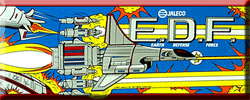
At the same time, Jaleco really did have internal arcade developers — and by the late 1980s those developers had a recognizable creative identity of their own. Former staff remembered an almost handmade environment in which programmers designed hardware, artists were thrown onto pixel tools on their first day, and a small group rebuilt an arcade department that had nearly emptied out. Their games often had a lighter, warmer tone than the difficult shooters made for Jaleco by NMK. Plus Alpha, Rod-Land, Soldam, E.D.F. and later The Game Paradise belong to that internal story.
So the most useful question is not simply “What games did Jaleco make?” It is: what did the Jaleco name mean on a particular machine, in a particular year?
That question turns a familiar publisher into a much stranger and more interesting company.
Evidence: [E01]
Japan Leisure before Jaleco
The company began on October 3, 1974 as Japan Leisure Co., Ltd., initially operating as a trading company in amusement equipment. The later Jaleco identity was not created from scratch; it grew out of a business that already understood the operator side of amusement and the practical business of putting machines on location.
The name change was formalized years later. In its April 15, 1983 issue, Game Machine reported that Japan Leisure would change its name to Jaleco Co., Ltd. effective April 1. The report noted that the company had already been using the Jaleco name overseas. In other words, the corporate renaming was less a sudden reinvention than the domestic formalization of a brand already in circulation.
That same 1983 trade coverage is revealing for another reason. The company was not being described merely as a developer shipping its own programs. Japan Leisure was licensing Pop Flamer to Stern in the United States, including North and South American sales rights. Later in the year Jaleco licensed Exerion to Taito America. Licensing, manufacturing, regional rights, board supply, and overseas partnerships were part of the company’s arcade business model almost immediately.
That commercial behavior helps explain why Jaleco’s catalog becomes difficult to untangle if every title is treated as an internal creation. The company’s role could change from game to game. Sometimes Jaleco financed or commissioned development. Sometimes it published another company’s work. Sometimes it acquired rights to an already-developed product. Sometimes it licensed a title abroad. Sometimes it built hardware and marketed the finished machine. The Jaleco logo was real, but its meaning was contextual.
The early 1980s therefore need to be read as the formation of a network rather than the birth of a single studio.
Evidence: [E02]
Kawa Denshi Giken and the problem of invisible developers
View verified period flyer in the source archive · Archival reference; image file not yet acquired for publication.
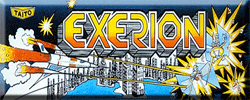
One of the most important hidden names in early Jaleco history is Kawa Denshi Giken.
For years, games such as Naughty Boy and Exerion could be encountered simply as Japan Leisure or Jaleco products. Later research built around Jaleco founder Yoshiaki Kanazawa’s recollections identifies both as Kawa Denshi Giken developments. That distinction is important because Exerion was not an obscure footnote. It became one of Jaleco’s defining early arcade successes.
In late 1983, Game Machine’s operator survey placed Exerion at the top of its new table-video rankings with an unusually strong rating, and by December the game had become important enough for Jaleco to license it to Taito America. The visual identity that many players associate with “early Jaleco” — the layered pseudo-3D star fields, distinctive enemy formations, and unusual shooting rhythm of Exerion — therefore belongs partly to a developer whose name rarely traveled with the game in the marketplace.
Kawa is also a warning against overconfident reconstruction. Later research has suggested that other early Jaleco-associated games may also have been Kawa projects, including Field Combat, Phoenix, Pleiads, Pop Flamer and Safari Rally. Similar hardware or visual traits make some of those connections plausible. Plausibility is not the same as proof. For this history, only Naughty Boy and Exerion are treated as confirmed Kawa developments unless stronger title-specific evidence emerges.
That conservative approach matters because Jaleco’s early catalog is full of exactly this kind of historical drift: one firm publishes a game, another develops it, a third manufactures it abroad, and decades later databases flatten the entire relationship into a single “manufacturer” field.
Kawa Denshi Giken is not a trivia answer. It is the first clear demonstration of the pattern that defines Jaleco’s arcade history.
Evidence: [E03]
Zilec, Ashby, Falcon — and a catalog built through relationships
Kawa was not an isolated case.
A second group of early titles exposes Jaleco’s connections to British development. Surviving preservation records and contemporary trade references link titles such as Dingo and Saturn to the Zilec / Ashby Computers & Graphics orbit. Ashby is particularly significant because it belongs to the early history of the Stamper brothers, later famous for Ultimate Play the Game and Rare. In these cases, the Jaleco name marked a commercial relationship rather than a simple in-house authorship credit.
Then there is Top Roller. A 1983 Game Machine report identifies Falcon Co., Ltd. as the developer and says Jaleco acquired the game’s rights. That is about as clean an example as the early period provides: the title became a Jaleco product commercially, but the development work originated elsewhere.
The distinction is more than accounting. It changes how games are grouped and how influence is traced. If Top Roller is filed simply under “Jaleco,” then Falcon disappears from the historical record. If Dingo is treated only as a Jaleco game, the Ashby/Stamper connection vanishes. If Exerion is treated as internal, Kawa Denshi Giken becomes invisible.
Arcade history has often inherited the labels printed on flyers, title screens, and distributor catalogs. Those labels tell us who wanted operators to recognize the product. They do not always tell us who designed and programmed it.
Jaleco is one of the clearest examples of why those are different questions.
Evidence: [E04]
NMK: the partner behind Jaleco’s harder edge
View verified period flyer in the source archive · Archival reference; image file not yet acquired for publication.
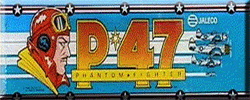
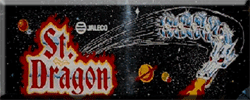
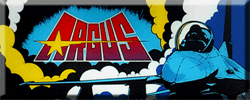
If Kawa and Falcon explain individual early titles, NMK explains an entire side of Jaleco’s arcade personality.
Former Jaleco staff have been unusually candid about this. In a later roundtable interview, programmer A-kun remembered being surprised to learn that Argus and many Jaleco-produced arcade games had actually been made by NMK. The distinction was not merely corporate. The developers themselves remembered a stylistic difference. Jaleco’s own in-house games tended toward approachable difficulty, strong characters, cute or comic touches, while NMK represented the harder, more technically aggressive side of the Jaleco catalog.
The relationship was close enough that Jaleco and NMK employees sometimes took company trips together. It was also close enough for Jaleco president Yoshiaki Kanazawa to influence development directly. Former NMK creator Akihiro Yoshida recalled Argus as his first planning job at NMK and described Kanazawa demanding substantially more enemies, bullets and difficulty before he would accept the game. Another remembered story had Kanazawa challenging NMK after seeing R-Type, effectively daring the studio to produce something comparable; the result was Saint Dragon.
Whether every remembered detail should be taken literally or as the color of an old developer story, the broader relationship is beyond doubt. NMK’s Jaleco-associated work stretches across years and genres: Argus, Psychic 5, Valtric, Butasan, Legend of Makai, P-47, Saint Dragon, Mahjong Daireikai and, much later, Mega System 32 titles such as P-47 Aces and Desert War.
That last point is easy to miss. NMK is often treated as part of Jaleco’s 1980s history, but the relationship was still visible in 1995. The subcontracting network survived into Jaleco’s 32-bit era.
NMK therefore belongs near the center of the Jaleco story, not in a footnote. It supplied some of the games that most strongly shaped the company’s reputation among serious arcade players, while Jaleco supplied financing, publishing, hardware relationships, commercial direction and a route to market.
The two companies were close, but they were not interchangeable.
Evidence: [E05]
Rebuilding an arcade team inside Jaleco
View verified period flyer in the source archive · Archival reference; image file not yet acquired for publication.
The existence of NMK and other contractors should not be used to swing too far in the opposite direction. Jaleco was not simply a shell publisher. By the late 1980s, it was rebuilding a genuine in-house arcade group — and former staff describe the process with unusual clarity.
Designer Tadaaki Moriya remembered arriving at a moment when there was almost nobody left in the arcade department. Artist Kouji Etou joined around 1987 and recalled answering a job advertisement for an illustrator, only to be handed a computer and told to make pixel art on his first day. Composer Tsukasa Tawada arrived to find no established in-house music department and had to work out much of the process himself. Moriya, Etou, Tawada and others became the nucleus of what they remembered as Jaleco’s newly formed arcade division.
The group’s early work included Takeda Shingen and Iga Ninjutsuden / Ninja Kazan. From there, the internal identity becomes easier to trace. Moriya planned Plus Alpha, Rod-Land and later Soldam. Tawada composed the arcade music for Plus Alpha, Rod-Land and E.D.F. Akihiro Yoshida worked on enemy items and movement patterns in Plus Alpha. Other staff moved between software and hardware responsibilities in an environment that seems to have been unusually informal.
The developers remembered this informality as both a weakness and a source of creativity. Testing could be loose. Easter eggs and jokes slipped into games. Employees learned jobs because there was nobody senior available to teach them. Programmers were impressed that colleagues also designed PCB hardware. Some future developers reportedly began by working in Jaleco-operated game centers before moving into development.
The result was a recognizable contrast with NMK. Jaleco’s own games were often more playful and forgiving. Plus Alpha is colorful and characterful where NMK’s shooters could be severe. Rod-Land turns a platform-action game into something closer to a toy box. Even E.D.F., the more serious of the group’s shooters, emerged from a development culture whose members later remembered deliberately lowering difficulty when a game stopped being fun for them to play.
That testimony provides one of the most useful dividing lines in the whole catalog. By the late 1980s, “Jaleco-developed” becomes a meaningful creative category again — but only if it is kept separate from the NMK, Aicom and other outside work appearing under the same brand.
Evidence: [E06]
The Astyanax / The Lord of King: where two action-game bloodlines meet
View verified period flyer in the source archive · Archival reference; image file not yet acquired for publication.
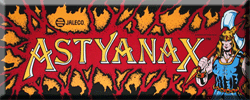
Few Jaleco-branded arcade games demonstrate the hidden-developer problem better than The Astyanax, known in Japan as The Lord of King.
At first glance it seems like a straightforward late-1980s Jaleco action game: fantasy setting, large sprites, two-player play, a charging weapon, dramatic bosses, and Jaleco’s Mega System 1 hardware beneath it all. Contemporary American material certainly sold it as a Jaleco product. Cash Box reported in October 1989 that Jaleco USA was preparing Astyanax as a conversion kit, with delivery expected around November 1. Jaleco USA’s own flyer promoted it as “a hit of a kit,” complete with board, JAMMA-compatible harness, marquee, cabinet graphics, controls and instructions.
But the development trail points to Aicom.
Aicom’s documented arcade work includes Hachoo! and The Lord of King / The Astyanax, and the personnel credits make the connection unusually persuasive. Tokuhiro Takemori served as producer, director and co-designer. Toshiyuki Nishimura, usually credited as “Nenko,” co-designed the game and worked on graphics. Satoru Kinjyo programmed it. Tomoko Sugou contributed graphics. Kiyoshi Yokoyama handled music. Together they make Astyanax much easier to understand historically.
Takemori brings a direct line from Aicom’s earlier action games. He had worked on Totsuzen! Machoman / Amagon and then Makyou Densetsu / The Legendary Axe. The latter is especially important. The Legendary Axe centers much of its combat around a weapon whose power increases while the player waits between strikes. Astyanax carries forward a closely related charge-and-release rhythm.
Nishimura brings a different lineage. Before Aicom, he worked at Taito on a remarkable run of arcade games. His credits include graphic or character work on The Fairyland Story, Time Gal, KiKi KaiKai, The Ninja Warriors and others. Most importantly for Astyanax, he is credited on Rastan Saga / Rastan in game design, character design and art design, and later directed and designed art for Taito’s Superman.
That means Astyanax does not merely resemble The Legendary Axe and Rastan because those were popular fantasy-action games of the period. Important people from both creative lineages actually met on the project. Takemori and Sugou provide direct Legendary Axe continuity; Nishimura brings direct Rastan design and art experience.
It would be too strong to claim that Aicom deliberately set out to fuse those two games unless a developer eventually says so. The personnel evidence does not prove intent. It does, however, explain why the resemblance feels deeper than surface imitation.
The regional history is also more complicated than many databases suggest. December 21, 1989 is commonly repeated as an arcade date, but that date belongs to the Famicom release. Period U.S. trade reporting already had the Astyanax conversion kit entering delivery around November 1, 1989, while Japanese Jaleco advertising presented The Lord of King as Mega System release number nine by the beginning of December. November 1989 is therefore the safer arcade release window.
The Japanese and export versions are not simply identical ROMs with a title swap. Current preservation shows that the export Astyanax carries 0x60000 bytes of populated main-program data while Japanese The Lord of King carries 0x80000 — 128 KiB more. Yet the versions share their sound CPU data, graphics, sampled audio and priority PROM. Exactly what the additional Japanese program space represents has not been established. Claims that one region is categorically harder than the other are contradictory, and without a controlled binary or gameplay comparison the responsible conclusion is simply that program-level regional differences exist.
The hardware itself is Jaleco Mega System 1-A, with dual Motorola 68000 processors and Jaleco’s protection/encryption scheme. The control panel uses three buttons — attack, jump and magic — and supports simultaneous two-player play. The export EPROM and mask-ROM sets preserved by MAME contain the same game content, so those should not be counted as different revisions.
Commercially, the game was not invisible. In Japan, The Lord of King reached Game Machine’s table-video chart, entering at number 20 in January 1990 and rising to number 14 in February. The same period’s reproduced U.S. operator survey placed Astyanax among the stronger new-video performers. That does not make it one of the industry’s giant hits, but it does show that it reached operators on both sides of the Pacific and found measurable traction.
The American cabinet story deserves special care. Period evidence points strongly to a conversion-kit strategy. Cash Box explicitly contrasted Jaleco USA’s Big Run as the company’s first dedicated game with Astyanax as the new kit. That is far more persuasive than later collector databases labeling surviving cabinets as “dedicated.” A factory-dedicated U.S. Astyanax machine should therefore not be treated as established without separate manufacturing evidence.
The game’s importance also extends forward. Nishimura and Kinjyo later reunited on Aicom’s Viewpoint. Takemori’s career leads onward into CP.BRAiN, the developer behind later Jaleco titles including 64th Street and Avenging Spirit. Kiyoshi Yokoyama appears again in that later orbit. Astyanax is therefore not an isolated curiosity in the Jaleco catalog. It sits at a crossroads between Aicom’s earlier action work and one of the outside-development relationships that would help define Jaleco in the early 1990s.
For a game whose box score usually reads only “Jaleco, 1989,” the real story is much richer.
Evidence: [E07]
From Aicom to CP.BRAiN
View verified period flyer in the source archive · Archival reference; image file not yet acquired for publication.
The Astyanax personnel trail does not end with Aicom. Tokuhiro Takemori later headed CP.BRAiN, a separate development company that continued working with Jaleco. That continuity helps explain why several early-1990s Jaleco titles carry echoes of the same people even when the corporate name behind the development changes.
64th Street: A Detective Story and Phantasm / Avenging Spirit belong to CP.BRAiN rather than to Jaleco’s internal team. 64th Street is particularly well documented: surviving material contains CP/CP BRAIN references, and its staff credits place Takemori in an executive-producer role. Kiyoshi Yokoyama, already part of the Astyanax sound lineage, appears again in the CP.BRAiN orbit.
The chronology also demonstrates why copyright dates should not be trusted blindly. 64th Street carries 1991 material, yet Game Machine still described it as incomplete in November 1991. Jaleco showed it again at AOU Expo ’92, and the commercial release belongs in March 1992. The distinction seems small until a company census is built from copyright screens; then one wrong year can distort an entire block of releases.
The same CP.BRAiN relationship becomes even more layered with Big Striker. Firsthand testimony from Beyond Interactive founder Hitoshi Akashi describes Jaleco contracting CP.BRAiN for the development, CP.BRAiN handling game design, graphics and sound, and Beyond working under CP.BRAiN as the programming subcontractor. One Jaleco-branded arcade game therefore contains at least three corporate layers: Jaleco as client/publisher, CP.BRAiN as lead developer, and Beyond as programming subcontractor.
That is Jaleco’s hidden-development network in miniature.
Evidence: [E08]
Bitbox, Big Run, and the Sega bloodline inside Jaleco
View verified period flyer in the source archive · Archival reference; image file not yet acquired for publication.
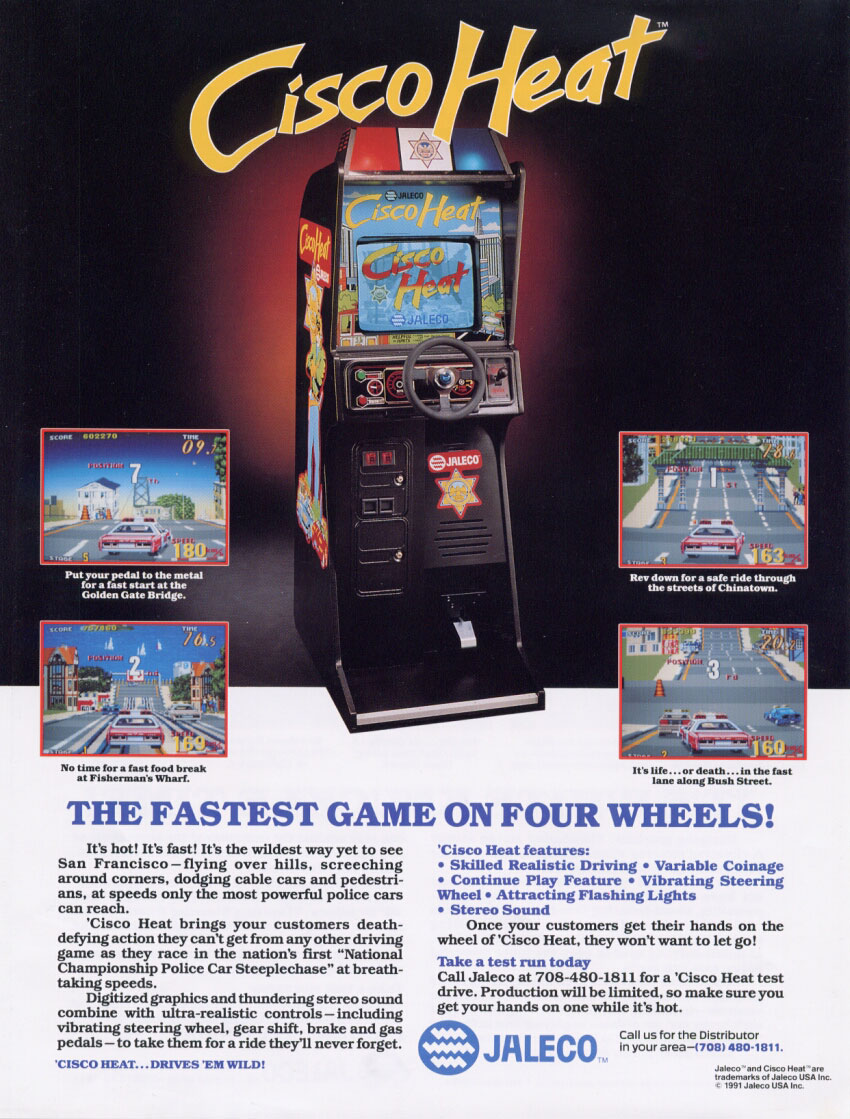
Jaleco’s development network was not limited to quiet subcontractors. Sometimes the outside team was eventually pulled inside the company.
Bitbox is the clearest example.
Research into the short-lived studio identifies it as a company formed by former Sega employees. Its arcade work for Jaleco included Big Run: The Supreme 4WD Challenge, a technically ambitious rally game whose lineage is easier to understand when viewed through those ex-Sega roots. The staff had experience with the sort of scaling-heavy driving games that made Sega’s 1980s arcade hardware famous, and Big Run fits naturally into that tradition.
What happened next is even more important than the original contract. Bitbox was absorbed into Jaleco. Its director, main programmer and main designer took key positions in Jaleco’s arcade development organization. From that point forward, the same creative lineage could legitimately produce a game that was both “by the Bitbox people” and internally developed at Jaleco.
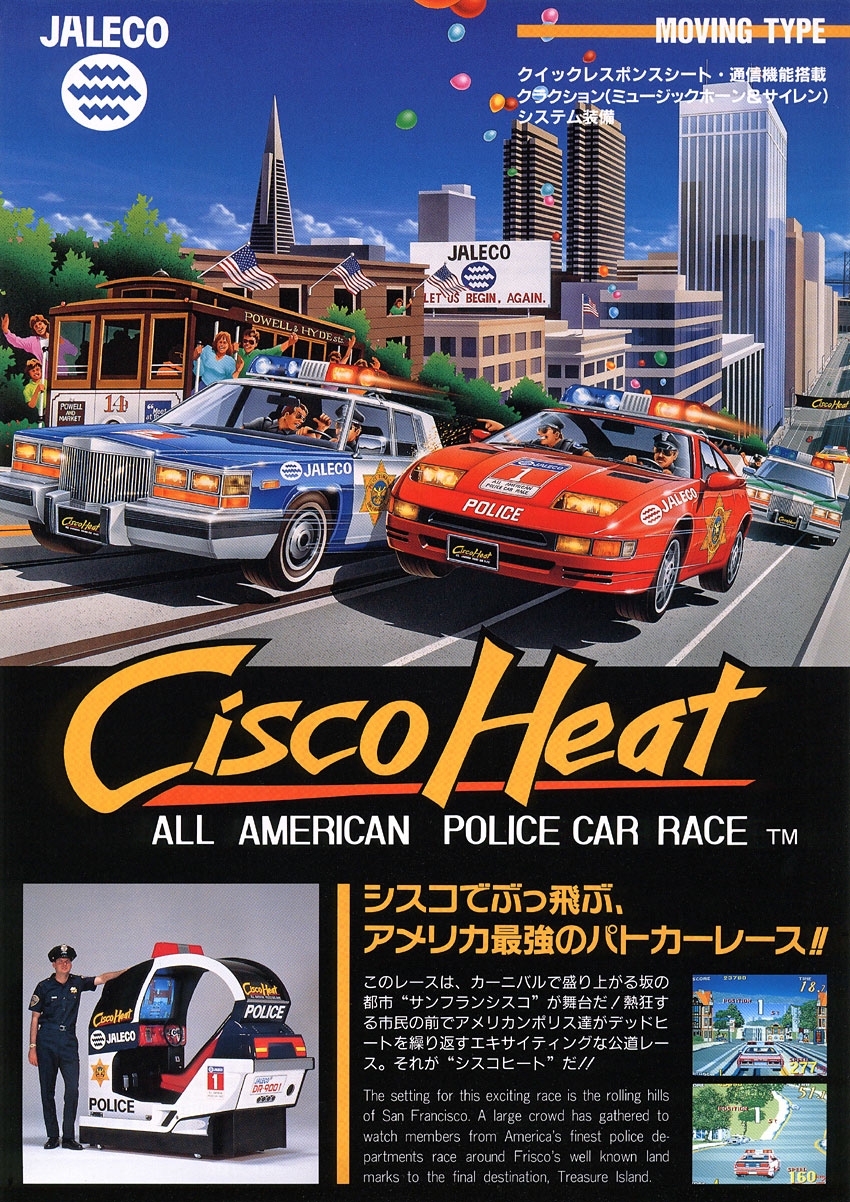
Cisco Heat is the best example. Modern summaries sometimes obscure the distinction by treating Big Run and Cisco Heat as if they were simply two Jaleco racing games made by the same in-house team. The more precise history is better: Big Run was developed externally by Bitbox; after Jaleco absorbed the studio, the former Bitbox staff made Cisco Heat from inside Jaleco. The people continued. The corporate relationship changed.
That before-and-after transition explains why Cisco Heat resembles Big Run while still belonging in the internal-development column. It also gives Jaleco’s racing history a continuity that runs through later products such as Grand Prix Star and eventually into the company’s much larger dedicated racing hardware of the 1990s.
Jaleco’s development identity was therefore not rebuilt only by hiring new graduates or artists off the street. It was also built through acquisition. An outside studio could become an internal team without its design instincts disappearing.
That matters when reading the logo on the cabinet. In 1989, the Jaleco name on Big Run sat above outside Bitbox development. In 1990, the same logo on Cisco Heat could genuinely represent internal Jaleco development by many of the same people.
The logo stayed still. The company underneath it changed.
Evidence: [E09]
From Mega System 1 to Mega System 32
View verified period flyer in the source archive · Archival reference; image file not yet acquired for publication.
By the late 1980s and early 1990s, Jaleco was no longer merely attaching its name to other companies’ boards. It had become a serious arcade-hardware company in its own right.
Mega System 1 gave Jaleco a flexible 16-bit platform on which internal and external teams could coexist. That is an important point: the board did not imply a single developer. Aicom’s The Astyanax could sit on Jaleco hardware next to games from Jaleco’s own staff, just as NMK-developed titles could enter the same commercial ecosystem. Hardware ownership and software authorship were related, but they were not identical.
Mega System 32 made that distinction even more visible. Introduced in the 1990s as Jaleco’s 32-bit arcade platform, it supported richer scaling, rotation and sprite effects and became the foundation for an eclectic set of products: boxing, shooting, puzzle games, mahjong, and large dedicated machines. Some were clearly developed inside Jaleco. Others came from NMK, Affect, or developers whose exact corporate role remains disputed.
The platform is therefore a useful physical symbol for the company itself. Jaleco controlled the commercial system, but creative authorship could still come from several directions.
Period advertising shows how aggressively the company wanted operators to see Mega System 32 as a next-generation platform. In 1994, Jaleco promoted F-1 Super Battle around newly developed 32-bit hardware, large displays, licensed racing presentation, pit and radio audio, and multiplayer linkage. The same advertising also placed Jaleco’s more physical amusement products beside its video hardware. The company was selling a complete arcade-floor identity, not merely cartridges or PCBs.
And yet the early history of Mega System 32 contains one of the best examples of why period advertising itself must be read cautiously.
Evidence: [E10]
Burning Square, Super Striker, and the danger of believing the catalog
In May 1994, Jaleco ran a full-page advertisement for Burning Square. The ad presented it as the second Mega System 32 release. On paper, that sounds definitive. A company is advertising the game, naming its hardware position, and presenting it to the trade. A conventional database built from advertisements could reasonably mark it as released.
The surviving record says otherwise.
Specialist reconstruction of the period indicates that Burning Square never reached normal commercial release. It joins Super Strong Warriors as a Jaleco title that was developed and shown or advertised far enough to look real in contemporary material, yet apparently stopped before operators received it as a finished product.
Then the “second Mega System 32 game” label appears again — attached to Super Striker.
Contemporary Coin-Op Journal coverage in October 1994 describes Jaleco’s Super Striker as a new product. The game used a rear-field soccer perspective, dynamic scaling and zoom effects, and eight national teams. Jaleco’s own October advertising explicitly promoted SUPER STRIKER as Mega System 32’s second title. Specialist chronology places its launch in December 1994.
And yet Super Striker is absent from MAME.
That absence is historically dangerous. Emulator lists are invaluable preservation tools, but they are not commercial catalogs. A game can be absent because no board has been dumped, because hardware has not survived publicly, or because the title disappeared before modern preservation communities could document it. Conversely, a prototype can be preserved perfectly and appear in MAME despite never having been commercially released.
At present, Super Striker is treated here as a strong commercial-release candidate rather than one of the 89 confirmed product families because the ideal final piece of period evidence — an operator/on-sale reference or equivalent direct proof — has not yet surfaced. The important point is not whether the count ultimately becomes 89 or 90. It is that Super Striker cannot responsibly be called unreleased merely because an emulator does not contain it.
That distinction is one of the central principles of this research.
Evidence: [E11]
The games MAME forgot: Shutokou Red Zone
Shutokou Red Zone pushes that preservation problem even further.
Period Game Machine material documents Jaleco promoting the title in 1995. Surviving artwork gives the name as Shutokou RED ZONE -SUPER CIRCUIT-. Specialist reconstruction treats it as a commercial release. The International Arcade Museum catalogs Red Zone as a 1995 Jaleco videogame. Modern MAME source, however, still places the Red Zone / Super Circuit family among undumped material.
The predictable result is confusion. Some modern lists turn “Super Circuit” into a separate game. Others label it a cancelled prototype. Still others list Red Zone and Super Circuit as if they were independent releases.
The evidence does not support that level of certainty. The safest interpretation is that a commercial Jaleco Shutokou Red Zone / Red Zone product existed, while “Super Circuit” currently functions as subtitle, branding, or possibly revision language rather than proof of a second unique game.
Again, the larger lesson is more important than the naming dispute. A history derived primarily from dumped ROMs would make this game nearly disappear. A history built from trade advertising, catalog material and operator records restores it to the company’s commercial story.
This is exactly the territory Arcade Side B exists to cover: products that were real enough for operators and manufacturers but became nearly invisible once software preservation became the dominant way arcade history was indexed.
Evidence: [E12]
Mega System 32 did not mean “made by Jaleco”
The mature Mega System 32 catalog makes the company’s development network impossible to ignore.
P-47 Aces and Desert War / Wangan Sensou were developed by NMK. Their presence on Jaleco’s 32-bit platform proves that the Jaleco–NMK relationship did not end with Argus, Psychic 5, P-47 or Saint Dragon. It survived into 1995, long after Jaleco had rebuilt its own internal arcade team.
Mahjong Angel Kiss points somewhere else again. Specialist developer research identifies Affect Co., Ltd. as the developer, with Jaleco publishing the game. Affect itself had a meaningful arcade history and can be traced through other mahjong and software-development work. Without role-aware research, Angel Kiss would simply become another “Jaleco game” and Affect would vanish.
Then there is Tetris Plus. Here the evidence is not clean enough to choose a single developer with confidence. Some sources describe Jaleco as developer and publisher. Others identify Bullet-Proof Software, or use a joint Jaleco/BPS attribution. The surviving arcade credits preserve individual staff names but do not settle the corporate relationship decisively. The correct historical answer, at least for now, is not to pick a side. It is to mark the corporate development role unresolved.
That uncertainty belongs in the final history. A clean table full of confident names would look authoritative and be less accurate.
Against those outside and unresolved projects sits The Game Paradise / Game Tengoku, whose surviving staff credits point strongly toward an internal Jaleco production. The game becomes almost a summary of the company’s in-house personality: colorful, self-referential, playful, packed with Jaleco iconography, and built by a staff whose names can be traced within the company.
Mega System 32 therefore did not unify Jaleco’s software authorship. It unified the commercial platform on which several different authorship models could coexist.
Evidence: [E13]
Jaleco leaves its own hardware behind: Super GT 24h and Over Rev

By the middle of the 1990s, Jaleco’s racing lineage had reached a point where the company no longer needed to tie its most ambitious driving games to its own arcade boards.
Super GT 24h, released in 1996, runs on Sega Model 2B hardware. That decision is historically significant. Model 2 was one of the defining 3D arcade platforms of the era, associated with Sega’s own high-profile games and built around technology far beyond Jaleco’s earlier 2D systems. For Jaleco to ship a major racing game on the same hardware ecosystem marked a shift from “Jaleco platform” thinking toward using whatever technology best fit the product.
The game also continued an old corporate theme. Racing had become one of the company’s most persistent arcade specialties: Big Run, Cisco Heat, the Grand Prix Star line, F-1 Super Battle, and now Super GT 24h. The underlying hardware changed dramatically, but the institutional interest in dedicated driving games did not.
Over Rev followed in 1997 on Sega Model 2 hardware as well. Together, the two games form a useful bridge between the old Bitbox-derived racing culture and Jaleco’s late-1990s arcade strategy. They also show that “Jaleco hardware” had stopped being a useful shorthand for “Jaleco arcade game.” The company could develop or publish a product on Sega’s platform while continuing to sell it as part of its own arcade identity.
That openness to outside hardware would matter again when Idol Janshi Suchie-Pai III moved onto Sega NAOMI in 1999.
By then, however, Jaleco had a larger problem than choosing a motherboard.
Evidence: [E14]
1998: a company under pressure
The late rhythm-game era makes more sense when placed against Jaleco’s financial condition.
For the fiscal year ended March 1998, Jaleco reported non-consolidated revenue of ¥7.098 billion, down 20.5 percent from the previous year, and a net loss of ¥1.947 billion. The weakness ran across several product categories. Coin-op game revenue fell 19.3 percent to ¥3.136 billion. Home videogame revenue fell 26.8 percent to ¥1.646 billion. Aquarium revenue fell 36.6 percent to ¥391 million.
One part of the amusement business moved in the opposite direction: arcade operations revenue rose 8 percent to ¥1.111 billion.
Those numbers do not prove that management looked at the balance sheet and ordered a music-game strategy. No surviving statement located for this project says that. But the timing is impossible to ignore. Jaleco’s product businesses were contracting sharply just before the company launched some of the largest, strangest and most physically ambitious machines in its history.
The wider Japanese arcade market was changing too. Music games had become one of the industry’s most visible growth areas. Konami’s Beatmania and Dance Dance Revolution were reshaping what a successful dedicated machine could look like. A player no longer had to sit at a standard cabinet with a joystick. The cabinet itself could become the attraction.
Jaleco responded aggressively.
The result was not one cautious experiment. It was a family of large-format machines built around music, movement, video and spectacle.
Evidence: [E15]
VJ: three monitors, 280 kilograms, and a fight with Konami
View verified period flyer in the source archive · Archival reference; image file not yet acquired for publication.
VJ: Visual & Music Slap is often treated as a minor Beatmania-era curiosity. In Jaleco’s company history, it deserves much more attention.
The machine was huge. Jaleco’s launch advertising described a three-monitor cabinet roughly 205 centimeters tall, 143 centimeters wide and almost a meter deep, weighing around 280 kilograms and drawing about 550 watts. This was not a low-risk PCB conversion. It was a physical commitment to a new kind of arcade product.
Although VJ materials carry a 1998 copyright, period trade advertising still described the game as “available soon” at the beginning of January 1999, with a mid-January launch planned. For a first-release chronology, VJ belongs in 1999.
Initially, it appears to have caught operators’ attention. By March 15, Game Machine ranked VJ fourth among dedicated video machines, with a 7.50 operator rating. That is a meaningful result for a product now remembered mostly through litigation trivia.
The litigation trivia, however, is where Jaleco history goes badly wrong.
Many modern database entries and retellings claim that Konami sued Jaleco over Rock’n Tread, Jaleco lost, the game was withdrawn, and the defeat pushed the company into bankruptcy before PCCW acquired it. Contemporary reporting does not support that chain.
On June 7, 1999, Konami sought a preliminary injunction in Tokyo District Court against the manufacture and sale of VJ, alleging infringement of an unpublished Beatmania patent. Jaleco denied infringement and said it would seek to invalidate the patent. On June 21, Jaleco filed for an invalidation review with the Patent Office.
Then the story moved in a direction that the popular legend usually omits. On July 23, Konami withdrew its preliminary-injunction application against Jaleco. Game Machine reported that Jaleco had disposed of VJ inventory because of poor sales and that Konami had not yet filed the contemplated main lawsuit against Jaleco. Konami redirected a similar effort toward Namco, which had operated a small number of VJ machines.
Jaleco did not simply retreat. In August it counterattacked, seeking an injunction against Konami’s Doremifa Grand Prix based on Jaleco utility-model rights associated with Hayaoshi Quiz Ouza Ketteisen. The broader patent conflict remained active into 2000. In August 2000, Game Machine was still describing Jaleco and Konami as engaged in competing provisional-injunction and patent-validity actions, even after Namco and Konami had reached a settlement.
That chronology is incompatible with the neat “Rock’n Tread lawsuit killed Jaleco” story.
The dispute was real. The parties were aggressive. VJ sales were evidently poor enough for Jaleco to dispose of inventory. Jaleco was financially weak. But the surviving contemporary evidence does not show a Rock’n Tread judgment bankrupting the company, nor does it show PCCW buying Jaleco as the aftermath of such a loss.
If anything, the truth is more interesting: Jaleco entered the late-1990s music-game boom with an enormous proprietary machine, became entangled in an industry-wide patent fight, fought back, and continued releasing rhythm products afterward.
Evidence: [E16]
Stepping Stage: Jaleco builds an arcade around the player’s body
If VJ was a visual/music performance machine, Stepping Stage moved the company fully into physical rhythm play.
Period operator charts prove that a Jaleco machine sold simply as Stepping Stage was commercially operating by mid-1999. In July it ranked second among dedicated video machines, behind Konami’s Dance Dance Revolution 2nd Mix. That is a striking placement for a Jaleco title in a genre dominated by a competitor whose games had effectively defined the market.
The naming becomes complicated almost immediately. Modern preservation identifies the dumped machine as Stepping Stage Special, while period operator charts often say simply Stepping Stage. Sources disagree about whether “Special” represents a separately launched product, a revision, or later naming attached to essentially the same commercial family.
For that reason, this research counts Stepping Stage / Stepping Stage Special as one product family unless stronger period sales material proves two distinct first-release products.
Stepping Stage 2 is easier to establish as a separate commercial generation. It appears in Game Machine’s dedicated-video charts around the turn of 2000, proving that operators had a real second product before the April 2000 JAMMA show. At that show, Jaleco displayed Stepping Stage 2 Supreme. The safest interpretation is that “Supreme” was a later revision or upgrade of an already-commercial Stage 2 line rather than proof of a wholly separate game debuting in April.
Then comes Stepping 3 Superior, one of the strangest machines in Jaleco’s catalog. Preservation research describes a large multi-monitor setup with illuminated floor pads and a Windows 98 PC used alongside Jaleco game hardware for music-video playback. Whatever the exact launch-month chronology, it is materially distinct hardware and belongs to the company’s late rhythm story as more than a software revision.
Taken together, the Stepping machines show Jaleco chasing a very different kind of arcade value from the one that had driven Exerion or Rod-Land. The attraction was no longer only the game program. It was the cabinet, the lights, the music, the player’s body, and the public performance of playing.
Evidence: [E17]
Rock’n Tread: the lawsuit story’s innocent bystander
The Rock’n line is where the false Konami story became attached to Jaleco history, but the games deserve to be considered on their own terms.
The original Rock’n Tread arrived in 1999 as Jaleco’s guitar-oriented rhythm machine. Its preserved credits identify a substantial internal product team: sound production, arrangement and composition, hardware, mechanical design, software, graphics and direction are all represented. This was not simply Jaleco placing its badge on an anonymous third-party rhythm game. It was a real Jaleco development effort involving both software and physical cabinet engineering.
The line expanded quickly. Rock’n Tread 2 reached commercial operation by late 1999 and appears in operator rankings around the turn of 2000. Rock’n 3 was explicitly presented as the third installment in the music-game series. Rock’n MegaSession used a distinct cooperative/twin-player concept and is sufficiently different in hardware and presentation to stand as its own product rather than a ROM revision.
The rapid sequence is revealing. Even after VJ’s weak sales and the Konami patent fight, Jaleco did not abandon music games. It doubled down with several related machines in the same year.
That makes the common claim that a Konami action against Rock’n Tread directly ended Jaleco particularly implausible. The period legal reporting consistently names VJ as the disputed Jaleco product. The Rock’n line continued to expand. The company remained active through 2000.
Rock’n 4 is the difficult endpoint. Several later histories give it a December 2000 commercial release under PCCW Japan, but the preserved MAME set is explicitly labeled a prototype. Until a period operator chart, shipment notice, or equivalent source resolves that conflict, this history leaves Rock’n 4 outside the confirmed commercial count.
That uncertainty is not an embarrassment. It is exactly what a preservation-minded history should show when the evidence disagrees.
Evidence: [E18]
One last conventional arcade thread: Suchie-Pai, Game Tengoku, and Dream Audition
View verified period flyer in the source archive · Archival reference; image file not yet acquired for publication.
The late music-game pivot did not erase Jaleco’s older videogame identity overnight.
The Idol Janshi Suchie-Pai series carried Jaleco’s character-driven mahjong line through the decade, eventually moving onto Sega NAOMI hardware for Suchie-Pai III. The Game Paradise in 1995 had already turned Jaleco’s own game history into raw material for a colorful self-referential shooter. And in 2000, Dream Audition became one of the company’s final clearly commercial dedicated arcade-video releases of the original Jaleco era.
Dream Audition is important because it helps mark the end without requiring guesswork. A Jaleco sales flyer survives, contemporary coverage of the home version describes it as based on an already released arcade game, and Game Machine later ranked it among operating dedicated video machines. Unlike Rock’n 4 or Rave Master, its commercial status is secure.
The contrast is useful. By 2000, Jaleco could still put a new dedicated game into arcades, but the company was no longer operating from a position of strength.
A new owner was already arriving.
Evidence: [E19]
PCCW did not buy “the remains of a bankrupt Jaleco”
On August 10, 2000, Pacific Century CyberWorks announced that it would acquire 81 percent of Jaleco.
PCCW’s own description of the deal is important because it directly contradicts another common simplification. The buyer did not present Jaleco as a bankrupt arcade maker being rescued after a lawsuit. PCCW described Jaleco as a strategic source of game software, Japanese-market knowledge and business infrastructure that could support its NOW broadband Internet service, Japanese content production and export, and data-center/web-hosting plans.
The transaction was completed on November 7, 2000 for ¥27 billion. PCCW financial reporting describes the acquired company, renamed Pacific Century CyberWorks Japan K.K., as a Japanese game-software business. At the end of 2000 PCCW reported a 77 percent interest after completion and subsequent ownership changes.
None of this means Jaleco was healthy. The 1998 results show substantial weakness, and later restructuring documents make clear that the business had been accumulating losses. The point is narrower: the acquisition was publicly framed as a strategic content and Internet expansion, and current evidence does not establish the Konami dispute as the cause of the transaction.
The difference matters. A company can be financially troubled and still be acquired because its staff, catalog, market position and infrastructure are valuable. Those two facts are not contradictory.
Evidence: [E20]
Spring 2001: the end of the original Jaleco coin-op operation
The cleanest endpoint for Jaleco’s arcade history is not the later dissolution of a Jaleco-branded corporation. It is the restructuring of the former company under PCCW Japan in spring 2001.
On March 30, PCCW Japan announced a major review of the businesses inherited from Jaleco. Contemporary Japanese reporting said the company would close its Oita factory, temporarily close five directly operated Tokyo amusement locations, reduce aquarium operations, outsource hardware development, and cut a workforce of roughly 300 by about half. The company wanted to erase approximately ¥3 billion in losses accumulated over the previous three years and redirect the game business toward network-oriented software.
Game Machine’s industry reporting was even more direct about the coin-op consequences: the former Jaleco operation had already stopped developing and manufacturing coin-operated games, while future game development would focus on network PC products.
That makes spring 2001 the historically useful end point for Jaleco as the arcade/coin-op company examined in this article.
The distinction is essential because the Jaleco name did not simply vanish. Corporate structures changed again. The game catalog continued to circulate. Old titles were reissued, licensed and adapted. By 2002 PCCW Japan was already making portions of the old arcade library available through new digital services. The Jaleco identity would later return in reorganized businesses, and the rights would eventually pass to City Connection.
But the industrial system that had produced and marketed arcade machines from the Japan Leisure era through Dream Audition was over.
That is the endpoint of this story.
Evidence: [E21]
Afterlife: the catalog survives the company that built it
Jaleco’s arcade business ended, but its games did not.
The rights moved through later corporate reorganizations and ultimately into City Connection, a company whose own name comes from a Jaleco game. City Connection now openly presents itself as the rights holder for the Jaleco catalog and licenses the old IP for modern products, events and releases.
That afterlife creates an unusual continuity. A game developed by Kawa, NMK, Aicom, CP.BRAiN, Bitbox, Affect, Psikyo or Cave may now sit inside what is commercially recognized as the Jaleco catalog, even though the original creative work came from somewhere else. The modern rights library therefore preserves the commercial umbrella while further obscuring the historical development network beneath it.
For preservation, both layers matter.
Jaleco was the company operators bought from, the brand players saw, the hardware manufacturer, the licensor, the client, the publisher and — sometimes — the developer. The outside studios were the people and companies that actually created large parts of the software. Neither layer cancels the other.
The most accurate Jaleco history is the one that keeps both visible at the same time.
Evidence: [E22]
Conclusion: read the credit behind the logo
Jaleco’s arcade history begins with Japan Leisure selling amusement equipment and ends with a broadband company dismantling the old coin-op operation. Between those points sits a catalog that looks straightforward until the developer credits are pulled apart.
The early company learned to operate through licensing and regional partnerships. Kawa Denshi Giken supplied defining early software. Zilec, Ashby and Falcon entered the catalog through other commercial relationships. NMK became a close, long-running development partner and supplied much of Jaleco’s harder arcade personality. Jaleco rebuilt its own internal team and produced games with a markedly different tone. Aicom delivered The Astyanax, bringing together creative lines from The Legendary Axe and Rastan. CP.BRAiN carried part of that personnel lineage forward. Bitbox was absorbed and transformed an outside racing team into an internal one. Affect, Psikyo, Cave and other developers continued appearing behind the Jaleco badge well into the 1990s.
Meanwhile Jaleco itself kept changing. It moved from standard video boards into proprietary multi-game hardware, huge linked racing cabinets, electro-mechanical hybrids, Sega Model 2, NAOMI, and finally three-monitor music machines, dance platforms and guitar games. Some products survive in MAME. Some were cancelled after being advertised. Some appear to have been commercially released yet remain undumped. Some survive only as conflicting fragments in trade magazines, flyers and preservation databases.
That is why the headline number for this project is worded carefully: 89 confirmed unique conventional arcade-video product families commercially associated with Jaleco, not 89 games developed by Jaleco.
The number is useful. The qualification is the history.
And perhaps no game demonstrates that better than The Astyanax. For decades it could be reduced to a familiar line — Jaleco, 1989. Behind that line are Aicom, Takemori, Nishimura, The Legendary Axe, Rastan, a Japanese and export program split, Jaleco hardware, an American conversion-kit strategy, and a development lineage that continues into CP.BRAiN.
The logo on the marquee was real.
It was only half the story.
Appendix A — Role-aware conventional arcade-video census
Scope and counting rule
This appendix is the final census basis for the 89 confirmed unique conventional arcade-video product families commercially associated with Jaleco from 1982 through 2000.
The count is deliberately broader than “games developed by Jaleco.” A title belongs here when the evidence supports a real commercial arcade-video relationship in which Japan Leisure/Jaleco developed, published, manufactured, licensed, distributed or otherwise presented the product to the arcade trade.
Excluded from the 89 are medal/gambling games, ticket redemption, cranes/prize machines, clearly mechanical or electro-mechanical/video hybrids, unreleased prototypes, cancelled projects, and simple ROM/revision/name variants. Where two names may describe one marketed product family, they are counted once unless period evidence proves separate commercial releases.
Role labels below describe the strongest current evidence. “Unresolved” is intentional; it is better than converting a Jaleco logo into an invented development credit.
1982 — 4 families
| Title / family | Current role assessment |
|---|---|
| Blue Print | Outside development — Ashby Computers & Graphics / Zilec lineage; Japan Leisure/Jaleco distribution. |
| Naughty Boy | Outside development — Kawa Denshi Giken; Japan Leisure/Jaleco publisher/licensor. Jaleco founder Yoshiaki Kanazawa later identified Kawa as developer. |
| Check Man | Outside development — Zilec-Zenitone; Japan Leisure/Jaleco Japanese commercial role. |
| Pop Flamer | Jaleco commercial title; developer unresolved. Kawa is plausible because of the Naughty Boy relationship and shared material, but not proven strongly enough to lock. |
1983 — 6 families
| Title / family | Current role assessment |
|---|---|
| Chameleon | Outside-development lineage likely, exact company unresolved. Common “Donga-Seiko” wording is historically suspect; TOSE/Toa-Seiko lineage remains the safer lead. |
| Exerion | Outside development — Kawa Denshi Giken; Jaleco publisher. |
| Grasspin | Outside development — Ashby/Zilec lineage, strong but period developer wording still less explicit than Dingo/Saturn. |
| Dingo | Outside development — Ashby Computers & Graphics; Jaleco license. |
| Saturn | Outside development — Zilec/Ashby lineage. Period Game Machine explicitly used “Jaleco/Zilec.” |
| Top Roller | Outside development — Falcon; Jaleco acquired the rights. Period Game Machine explicitly identifies Falcon as developer. |
1984 — 5 families
| Title / family | Current role assessment |
|---|---|
| D-Day | Outside development — E.L.S.; Jaleco commercial/publishing role. Embedded “BY ELS” evidence survives, with revision-date caveat. |
| Formation Z / Aeroboto | Developer unresolved. An original development team is historically documented, but its company identity remains unproven. |
| Gate-In! Wai Wai Jockey / Photo Finish | Outside development — Casio, strong secondary/preservation evidence; Jaleco publisher. |
| Parallel Turn | Jaleco commercial title; developer unresolved. |
| Pinbo | Jaleco commercial title; developer unresolved. |
1985 — 3 families
| Title / family | Current role assessment |
|---|---|
| City Connection / Cruisin' | Pre-Hect Jaleco personnel lineage; corporate developer label unresolved. Norihiro Atsumi was in Jaleco R&D by 1986; later Hect attribution is chronologically impossible as a 1985 corporate credit. |
| Field Combat | Developer unresolved. Do not backfill TOSE from the Famicom conversion onto the arcade original. |
| Vs. Ninja JaJaMaru-Kun | Jaleco commercial title; internal-vs-outside development not publication-grade locked. |
1986 — 3 families
| Title / family | Current role assessment |
|---|---|
| Argus | Outside development — NMK; Jaleco publisher/client. Firsthand Akihiro Yoshida testimony. |
| Momoko 120% | Jaleco commercial title; developer not yet publication-grade separated. |
| Valtric | Outside development — NMK; Jaleco publisher. |
1987 — 4 families
| Title / family | Current role assessment |
|---|---|
| Butasan | Outside development — NMK; Jaleco publisher. |
| Exerizer / Sky Fox | Jaleco commercial title; exact development-company role not deeply resolved. |
| Psychic 5 | Outside development — NMK; Jaleco publisher. Firsthand former-NMK evidence supports the relationship. |
| Ginga NinkyouDen | Jaleco commercial title; exact development-company role not publication-grade locked. |
1988 — 7 families
| Title / family | Current role assessment |
|---|---|
| Dynamic Shoot Kyousou | Jaleco commercial title; developer role still secondary/unresolved. |
| Iga Ninjutsuden / Ninja Kazan | Jaleco in-house — strong firsthand evidence from the rebuilt arcade group. |
| Kick Off: Jaleco Cup | Jaleco commercial title; exact development role not fully separated. |
| Makai Densetsu / Legend of Makai | Outside development — NMK; Jaleco publisher. |
| Moero!! Pro Yakyuu Homerun Kyousou / NEW Moero!! Pro Yakyuu Homerun Kyousou | One commercial product family for census purposes. Jaleco commercial product; exact development role not locked. |
| P-47: The Freedom Fighter / The Phantom Fighter | Outside development — NMK; Jaleco publisher. |
| Takeda Shingen / Shingen Samurai-Fighter | Jaleco in-house — strong firsthand evidence from Jaleco’s rebuilt arcade group. |
Excluded from the strict 1988 video count: Arm Champs — historically important Jaleco amusement product, but treated here as a physical/video arm-wrestling hybrid rather than conventional video.
1989 — 7 families
| Title / family | Current role assessment |
|---|---|
| Big Run: The Supreme 4WD Challenge | Outside development — Bitbox; Jaleco publisher. Bitbox was later absorbed into Jaleco. |
| Hachoo! | Outside development — Aicom; Jaleco publisher. |
| Jitsuryoku!! Pro Yakyuu | Developer unresolved. Modern sources conflict between TOSE and Jaleco; surviving credits do not settle the corporate identity. |
| Mahjong Daireikai | Outside development — NMK; Jaleco publisher/manufacturer. |
| Plus Alpha | Jaleco in-house — strong firsthand staff evidence. |
| Saint Dragon | Outside development — NMK; Jaleco publisher. |
| The Lord of King / The Astyanax | Outside development — Aicom; Jaleco publisher/presenter. Special-priority title; see main text. |
Excluded: Counter Force — period-confirmed prototype/unreleased.
1990 — 3 families
| Title / family | Current role assessment |
|---|---|
| Cisco Heat | Jaleco in-house after Bitbox absorption. A useful before/after contrast with Big Run. |
| Mahjong Kakumei | Jaleco commercial video title; exact developer unresolved. |
| Yousei Monogatari Rod Land / Rod-Land | Jaleco in-house — strong firsthand Tadaaki Moriya/Kouji Etou/Tsukasa Tawada evidence. |
Excluded: Alien Command (ticket redemption), Ganbare JaJaMaru Saisho wa Goo / Hop Step & Jump (medal/video hybrid), Big III 3-Reel Roulette (medal/roulette).
1991 — 6 families
| Title / family | Current role assessment |
|---|---|
| Mahjong Channel Zoom In | Commercial video; developer unresolved. Copyright 1990, current best commercial chronology March 1991. |
| Vandyke — Jaleco-licensed version | Outside development — UPL; Jaleco licensed/manufactured version. Included only because the census is broad company-associated output. |
| Phantasm / Avenging Spirit | Outside development — CP.BRAiN; Jaleco publisher. |
| E.D.F.: Earth Defense Force | Jaleco in-house — strong staff/roundtable evidence. |
| Grand Prix Star | Jaleco in-house — strong staff-lineage evidence. |
| B.O.T.S.S.: Battle of the Solar System | Outside development — MP Game Technology; Jaleco USA manufacture/marketing/publishing. First commercial launch December 1991; surviving software carries 1992 copyright. |
Excluded: Gun Baron (incomplete prototype), In Your Face (Aicom prototype/unreleased), Circus Circus and Arabian Nights (pusher/medal), Wonder Hunting and Mini Hunting (prize/crane), Joyful Cards / Jaleco 5-Reel Poker (gambling family).
1992 — 5 families
| Title / family | Current role assessment |
|---|---|
| 64th Street: A Detective Story | Outside development — CP.BRAiN; Jaleco publisher. Development/copyright material dates to 1991; commercial release March 1992. |
| Mahjong Kakumei II: Princess League | Jaleco commercial video; exact developer unresolved. |
| Big Striker | Outside development — CP.BRAiN lead; Beyond programming subcontractor; Jaleco client/publisher. Firsthand Hitoshi Akashi evidence. |
| Soldam | Jaleco in-house — Tadaaki Moriya says he planned it while at Jaleco. |
| Wild Pilot | Jaleco commercial/dedicated product; developer provisionally Jaleco, not yet firsthand-locked. |
Excluded: Arm Champs II (motor-driven physical/video hybrid), Wonder Hunting II (prize), gambling/slot family. B.O.T.S.S. is not counted again because its first commercial launch is placed in December 1991.
1993 — 5 families
| Title / family | Current role assessment |
|---|---|
| Cybattler | Jaleco in-house — strong surviving staff evidence. |
| F-1 Grand Prix Star II | Jaleco in-house — strong racing-team continuity. |
| Peek-a-Boo! | Jaleco commercial title; probable internal development, but company role remains below firsthand lock. |
| Hayaoshi Quiz Ouza Ketteisen / The King of Quiz | Jaleco commercial title; probable/strong-secondary internal development. |
| Idol Janshi Suchie-Pai Special | Jaleco commercial title; strong preserved-credit/secondary evidence for Jaleco development. Kenichi Sonoda character design. |
Excluded: Super Strong Warriors (exhibited prototype/unreleased), Chimera Beast (CP.BRAiN prototype/unreleased), Captain Flag / VS Super Captain Flag and Basket Bull (specialty/redemption), Rolling Panic (video-slot/gambling family derived from Excellent System’s Dream 9 Final).
1994 — 7 families
| Title / family | Current role assessment |
|---|---|
| Best Bout Boxing | Jaleco commercial title; current evidence supports Jaleco development/publishing. |
| F-1 Super Battle | Jaleco dedicated video/racing product; strong Jaleco internal/commercial identity. |
| Hayaoshi Quiz Grand Champion Taikai | Jaleco commercial quiz video. |
| Hayaoshi Quiz Nettou Namahousou | Jaleco commercial quiz video. |
| Idol Janshi Suchie-Pai II | Jaleco commercial mahjong video. |
| Battle K-Road — Jaleco region/licensed version | Outside development — Psikyo; Jaleco regional manufacture/distribution role. |
| Gunbird — Jaleco region/distribution version | Outside development — Psikyo; Jaleco regional publishing/distribution role. |
Outside the locked seven: Super Striker — strong likely December 1994 commercial release candidate but still missing the final direct operator/on-sale proof. Burning Square — heavily advertised but apparently unreleased. Scud Hammer and World PK Soccer — physical/video hybrids. Ticket-redemption products are also excluded.
1995 — 6 families
| Title / family | Current role assessment |
|---|---|
| P-47 Aces | Outside development — NMK; Jaleco publisher. |
| Shutokou Red Zone / Red Zone -Super Circuit- | Commercial Jaleco product strongly supported; exact title/subtitle/revision identity still imperfect. “Super Circuit” is not counted separately. |
| Mahjong Angel Kiss | Outside development — Affect Co., Ltd.; Jaleco publisher. |
| Desert War / Wangan Sensou | Outside development — NMK; Jaleco publisher. |
| The Game Paradise / Game Tengoku | Strong Jaleco in-house development from surviving credits. |
| Tetris Plus | Corporate developer relationship unresolved — Jaleco/BPS evidence conflict; Jaleco publisher/commercial identity secure. |
1996 — 3 families
| Title / family | Current role assessment |
|---|---|
| Gratia: Second Earth | Jaleco commercial title; detailed corporate development role still not strongly separated. |
| Ryuusei Janshi Kirara Star | Jaleco commercial mahjong video; exact development-team role not fully locked. |
| Super GT 24h | Jaleco dedicated racing product on Sega Model 2B hardware; development detail remains less documented than the commercial identity. |
Excluded: World PK Soccer V2 (physical/video soccer-kicking hybrid) and prize machines such as Skating Shot.
1997 — 4 families
| Title / family | Current role assessment |
|---|---|
| Over Rev | Jaleco dedicated racing product on Sega Model 2 hardware; strong Jaleco commercial identity. |
| Tetris Plus 2 | Jaleco commercial title; corporate developer relationship retains the same Jaleco/BPS caution as the first game. |
| Vs. Janshi Brandnew Stars | Jaleco commercial mahjong video; developer role not fully separated. |
| Junior Grand Prix Star II | Jaleco dedicated children’s driving-video product; included as conventional dedicated video rather than mechanical hybrid. |
1998 — 1 family
| Title / family | Current role assessment |
|---|---|
| Uo Poko | Outside development — Cave; Jaleco license/publishing role. Cave’s own history dates it to 1998; current MAME identifies Cave (Jaleco license). |
Excluded: VJ promotional/copyright material from 1998; commercial launch belongs to January 1999. Builder’s Block/Landmaker is not counted as a Jaleco arcade release without direct arcade evidence.
1999 — 9 families
| Title / family | Current role assessment |
|---|---|
| Idol Janshi Suchie-Pai III | Jaleco commercial mahjong video on Sega NAOMI. |
| VJ: Visual & Music Slap | Jaleco internal/commercial product; January 1999 launch. The documented Konami patent dispute centered on this title. |
| Stepping Stage / Stepping Stage Special | One commercial product family for census purposes. Period operator charts use Stepping Stage; preservation commonly uses Special. |
| Stepping Stage 2 / Stepping Stage 2 Supreme | One commercial product family unless separate first-sale proof emerges. Stepping Stage 2 was commercially charting by the turn of 2000; Supreme is treated as a later revision/upgrade. |
| Stepping 3 Superior | Distinct Jaleco rhythm/dance product with materially different three-monitor, Windows-98-assisted architecture. |
| Rock’n Tread | Strong Jaleco internal product identity from preserved staff credits. |
| Rock’n Tread 2 | Distinct commercial product; period operator-chart presence. |
| Rock’n MegaSession | Distinct two-player cooperative rhythm product/cabinet. |
| Rock’n 3 | Distinct third-installment product; period trade wording supports separate identity. |
Not counted separately: VJ Dash — revision/upgrade absent proof of separate first-release product. Release-unproven: Rave Master — exhibited at the 2000 JAMMA show but no equivalent commercial-operation proof yet.
2000 — 1 family
| Title / family | Current role assessment |
|---|---|
| Dream Audition | Definite Jaleco commercial dedicated-video release. Period operator rankings confirm it in operation. |
Unresolved: Rock’n 4 — current MAME labels the preserved set a prototype, while specialist histories claim a December 2000 commercial release. It remains outside the 89 until contemporary on-sale/operator evidence resolves the conflict.
Census total
Year blocks: 1982 4; 1983 6; 1984 5; 1985 3; 1986 3; 1987 4; 1988 7; 1989 7; 1990 3; 1991 6; 1992 5; 1993 5; 1994 7; 1995 6; 1996 3; 1997 4; 1998 1; 1999 9; 2000 1.
Total: 89 confirmed unique conventional arcade-video product families commercially associated with Jaleco under this project’s broad scope.
If all three principal unresolved release cases — Super Striker, Rave Master and Rock’n 4 — are someday proven to have entered normal commercial operation as distinct products, the comparable broad total would rise to 92.
Appendix B — Unresolved and excluded-title register
The entries below are preserved because uncertainty itself is historically meaningful. They are not silently discarded, and they are not promoted to fact merely to make the census look complete.
Principal commercial-status questions
Super Striker — 1994
Current status: strong likely commercial release candidate, outside the locked count.
Evidence for real product status includes Coin-Op Journal coverage describing gameplay, Jaleco trade advertising calling it Mega System 32 #2, and a U.S. trademark filing showing serious product preparation. Specialist reconstruction places release in December 1994. What is still missing is the ideal contemporary operator/on-sale/shipment confirmation.
This is a high-priority Arcade Side B “lost commercial game” case because its absence from MAME should not be confused with proof that it never shipped.
Rave Master — 2000 show appearance
Current status: exhibition proven; commercial release unproven.
GameSpot’s April 2000 JAMMA coverage confirms Jaleco publicly showed the game. No comparably strong operator ranking, on-sale notice or shipment evidence has yet surfaced. It remains outside the released count.
Rock’n 4 — 2000
Current status: genuine source conflict.
Current MAME identifies the preserved original set as a prototype. Arcade-history and Japanese chronology sources describe a December 2000 commercial release under PCCWJ. Until a contemporary sales or operation source is found, the project does not choose one claim simply because it is convenient.
Significant development-credit uncertainties
- Pop Flamer: Kawa Denshi Giken is plausible but not confirmed strongly enough to lock.
- Chameleon: commonly repeated “Donga-Seiko” attribution is historically problematic; TOSE/Toa-Seiko lineage remains a lead, not a final corporate credit.
- Formation Z: a distinct original development team is documented, but the team/company identity is unresolved.
- Parallel Turn / Pinbo: Jaleco commercial products; developer identity unresolved.
- Field Combat: do not infer TOSE’s Famicom-port role onto the arcade original.
- Jitsuryoku!! Pro Yakyuu: modern sources conflict between TOSE and Jaleco.
- Mahjong Kakumei / Mahjong Kakumei II: commercial Jaleco video titles, exact developer identity unresolved.
- Wild Pilot: likely/provisional Jaleco development, but not yet firsthand-locked.
- Tetris Plus / Tetris Plus 2: Jaleco commercial identity is secure; corporate development evidence conflicts between Jaleco and BPS/Bullet-Proof Software interpretations.
- Shutokou Red Zone: release is strongly supported, but title/subtitle/revision relationships around “Red Zone” and “Super Circuit” remain imperfect.
Promoted, shown or preserved — but excluded as unreleased
- Counter Force — ATE ’89 prototype; period reporting says further improvement was required.
- R&T — prototype/early identity of Rod-Land, not a separate commercial family.
- Gun Baron — incomplete 1991 prototype; completion was reportedly not imminent.
- In Your Face — unreleased Aicom/Jaleco project.
- Chimera Beast — unreleased CP.BRAiN/Jaleco project.
- Super Strong Warriors — exhibited in 1993; current evidence supports prototype/unreleased status.
- Burning Square — fully advertised as Mega System 32 #2, but current reconstruction says it never commercially shipped.
Deliberately excluded specialty amusement
These products belong to the Jaleco company story but not to the 89 conventional-video total:
- Arm Champs and Arm Champs II — physical/video arm-wrestling hybrids.
- Ganbare JaJaMaru Saisho wa Goo / Hop Step & Jump — medal/video hybrid.
- Alien Command — ticket redemption.
- Big III 3-Reel Roulette — medal/roulette.
- Joyful Cards / Jaleco 5-Reel Poker and related 1992 poker/slot products — gambling/medal family.
- Circus Circus / Arabian Nights — pusher/medal.
- Wonder Hunting, Mini Hunting, Wonder Hunting II, Skating Shot — prize/crane family.
- Captain Flag / VS Super Captain Flag, Basket Bull, Alley Cats, Spider Stompin’ / Spider Splattin’ — redemption/specialty.
- Scud Hammer — video/mechanical hammer game.
- World PK Soccer and World PK Soccer V2 — physical soccer-kicking/video hybrids.
- Rolling Panic — video-slot/gambling-family treatment in this project rather than conventional arcade video.
Sources and evidence notes
These evidence notes correspond to the [E##] markers in the narrative. They are intentionally compact: period/primary sources are preferred first, firsthand developer testimony second, and preservation/technical sources third.
E01
- Former Jaleco developer roundtable (Shooting Gameside translation): https://shmuplations.com/jaleco/
- GDRI developer/company research hub used for cross-checking: https://gdri.smspower.org/
E02
- Game Machine, Apr. 15, 1983 — Pop Flamer licensing and Apr. 1 Jaleco name change: https://onitama.tv/gamemachine/pdf/19830415p.pdf
- Game Machine, Dec. 1, 1983 — Exerion licensed to Taito America: https://onitama.tv/gamemachine/pdf/19831201p.pdf
- Corporate chronology cross-check (Japan Leisure from Oct. 3, 1974): https://www.mobygames.com/company/5485/encom-holdings-co-ltd/
E03
- GDRI — Kawa Denshi Giken: https://gdri.smspower.org/wiki/index.php/Kawa_Denshi_Giken
- Game Machine, Dec. 15, 1983 — Exerion #1 table-video ranking: https://onitama.tv/gamemachine/pdf/19831215p.pdf
- Game Machine, Dec. 1, 1983 — Exerion/Taito America licensing: https://onitama.tv/gamemachine/pdf/19831201p.pdf
E04
- Game Machine, Oct. 1, 1983 — Top Roller/Falcon rights report: https://onitama.tv/gamemachine/pdf/19831001p.pdf
- Game Machine, Nov. 1, 1983 — period Jaleco/Zilec context: https://onitama.tv/gamemachine/pdf/19831101p.pdf
- Current MAME source tree — preservation cross-checks: https://github.com/mamedev/mame
E05
- Former Jaleco developer roundtable: https://shmuplations.com/jaleco/
- GDRI — NMK: https://gdri.smspower.org/wiki/index.php/NMK
E06
- Former Jaleco developer roundtable — rebuilt internal arcade team: https://shmuplations.com/jaleco/
E07
- Cash Box, Oct. 28, 1989 — Astyanax kit / Big Run dedicated reporting: https://www.worldradiohistory.com/Archive-All-Music/Cash-Box/80s/1989/CB-1989-10-28.pdf
- GDRI — Aicom: https://gdri.smspower.org/wiki/index.php/Aicom
- GDRI — Toshiyuki Nishimura: https://gdri.smspower.org/wiki/index.php/Toshiyuki_Nishimura
- Astyanax U.S. sales flyer: https://flyers.arcade-museum.com/videogames/show/2229
- The Lord of King Japanese flyer: https://flyers.arcade-museum.com/videogames/show/3687
- Current MAME Mega System 1 source: https://github.com/mamedev/mame/blob/master/src/mame/jaleco/megasys1.cpp
- Game Machine, Jan. 15, 1990: https://onitama.tv/gamemachine/pdf/19900115p.pdf
- Game Machine, Feb. 1, 1990: https://onitama.tv/gamemachine/pdf/19900201p.pdf
E08
- GDRI — CP.BRAiN: https://gdri.smspower.org/wiki/index.php/CP.BRAiN
- GDRI — CP.BRAiN actual mentions: https://gdri.smspower.org/wiki/index.php/CP.BRAiN_%28actual_mentions%29
- GDRI interview — Hitoshi Akashi / Big Striker development chain: https://gdri.smspower.org/wiki/index.php/Interview%3AHitoshi_Akashi
- Game Machine, Nov. 1, 1991 — 64th Street still incomplete: https://onitama.tv/gamemachine/pdf/19911101p.pdf
- Game Machine, Mar. 15, 1992 — 64th Street commercial-era coverage: https://onitama.tv/gamemachine/pdf/19920315p.pdf
E09
- GDRI — Bitbox: https://gdri.smspower.org/wiki/index.php/Bitbox
- Former Jaleco developer roundtable: https://shmuplations.com/jaleco/
E10
- Current MAME Mega System 1 source: https://github.com/mamedev/mame/blob/master/src/mame/jaleco/megasys1.cpp
- Current MAME Mega System 32 source: https://github.com/mamedev/mame/blob/master/src/mame/jaleco/ms32.cpp
- Game Machine, Jun. 1, 1994 — Jaleco dedicated/32-bit hardware promotion: https://onitama.tv/gamemachine/pdf/19940601p.pdf
E11
- Game Machine, May 1, 1994 — Burning Square advertising: https://onitama.tv/gamemachine/pdf/19940501p.pdf
- Game Machine, Oct. 1, 1994 — Super Striker promotion: https://onitama.tv/gamemachine/pdf/19941001p.pdf
- Coin-Op Journal, Oct. 1994 — Super Striker product description: https://elibrary.arcade-museum.com/magazines/j-coj/coin-op-journal--1994-10--19-10/coin-op-journal--1994-10--19-10-192.pdf
- Specialist reconstruction of Jaleco/MS32 period advertising: https://postback.geedorah.com/foros/viewtopic.php?id=341&p=8
E12
- Game Machine, Mar. 15, 1995 — Shutokou Red Zone period coverage: https://onitama.tv/gamemachine/pdf/19950315p.pdf
- Red Zone Jaleco information sheet: https://flyers.arcade-museum.com/videogames/show/2735
- Current MAME Mega System 32 source / undumped list: https://github.com/mamedev/mame/blob/master/src/mame/jaleco/ms32.cpp
E13
- GDRI — NMK: https://gdri.smspower.org/wiki/index.php/NMK
- GDRI — Affect: https://gdri.smspower.org/wiki/index.php/Affect
- Current MAME Mega System 32 source: https://github.com/mamedev/mame/blob/master/src/mame/jaleco/ms32.cpp
- Game Tengoku surviving arcade credits: https://www.mobygames.com/game/51594/game-tengoku-the-game-paradise/credits/arcade/
E14
- System 16 — Sega Model 2 hardware reference: https://system16.com/hardware.php?id=715
- Current MAME Model 2 source: https://github.com/mamedev/mame/tree/master/src/mame/sega
E15
- Game Machine, Jul. 1, 1998 — Jaleco fiscal results: https://onitama.tv/gamemachine/pdf/19980701p.pdf
E16
- VJ Visual & Musical Slap Jaleco flyer: https://flyers.arcade-museum.com/videogames/show/6101
- Game Machine, Jan. 1/15, 1999 — VJ launch advertising: https://onitama.tv/gamemachine/pdf/19990101p.pdf
- Game Machine, Mar. 15, 1999 — VJ operator ranking: https://onitama.tv/gamemachine/pdf/19990315p.pdf
- Amusement Press, Jul. 1, 1999 — Konami/Jaleco VJ patent dispute: https://www.ampress.co.jp/backnumber/bn1999.07.01.htm
- Amusement Press, Aug. 15, 1999 — Konami withdrawal / Jaleco invalidation effort: https://www.ampress.co.jp/backnumber/bn1999.08.15.htm
- Amusement Press, Aug. 1, 2000 — dispute still centered on VJ: https://www.ampress.co.jp/backnumber/bn2000.08.01.html
E17
- Game Machine, Jul. 1, 1999 — Stepping Stage commercial ranking: https://onitama.tv/gamemachine/pdf/19990701p.pdf
- Game Machine, Jul. 15, 1999 — Stepping Stage commercial ranking: https://onitama.tv/gamemachine/pdf/19990715p.pdf
- Game Machine, Jan. 1/15, 2000 — Stepping Stage 2 / Rock'n line: https://onitama.tv/gamemachine/pdf/20000101p.pdf
- Game Machine, Feb. 1, 2000 — continuing operator rankings: https://onitama.tv/gamemachine/pdf/20000201p.pdf
- GameSpot, Apr. 27, 2000 — Jaleco JAMMA show: Stepping Stage 2 Supreme / Rave Master: https://www.gamespot.com/articles/jamma-show-jaleco/1100-2450028/
E18
- Current MAME Jaleco/Mega System source tree: https://github.com/mamedev/mame/tree/master/src/mame/jaleco
- Arcade Italia — Rock'n 4 preserved set labeled prototype: https://adb.arcadeitalia.net/dettaglio_mame.php?game_name=rockn4
- Japanese specialist chronology — conflicting Rock'n 4 commercial claim: https://cf276763.cloudfree.jp/game/list/ac_ra.html
E19
- Dream Audition Jaleco sales flyer: https://flyers.arcade-museum.com/videogames/show/3686
- Game Machine, Nov. 1, 2000 — Dream Audition operating ranking: https://onitama.tv/gamemachine/pdf/20001101p.pdf
- Game Tengoku Jaleco flyer: https://flyers.arcade-museum.com/videogames/show/3144
E20
- PCCW announcement — Jaleco acquisition strategy: https://www.pccw.com/media-centre/news/detail.page?locale=en&pressId=20000928-00000337
- PCCW 2000 transaction reporting: https://www.pccw.com/staticfiles/PCCWCorpsite/About%20PCCW/Investor%20Relations/Announcements/20001222.pdf
- PCCW 2000 annual/Form 20-F report: https://www.pccw.com/staticfiles/PCCWCorpsite/About%20PCCW/Investor%20Relations/Financial%20Results/PCCW_Annual_Report_On_Form_20-F_2000.pdf
E21
- Game Machine, May 1, 2001 — former Jaleco/PCCW Japan coin-op exit: https://onitama.tv/gamemachine/pdf/20010501p.pdf
- PCCW 2001 annual report / restructuring context: https://www.pccw.com/staticfiles/PCCWCorpsite/About%20PCCW/Investor%20Relations/Financial%20Results/2001_annualreport.pdf
E22
- City Connection — current Jaleco catalog/licensing statement: https://city-connection.co.jp/jaleco/